
Upgrade is pursuing a Nevada banking charter to complement its existing banking relationships.
Upgrade applied for a Nevada bank charter to fund its $53 billion credit business, adding regulatory options amid a fintech charter push.
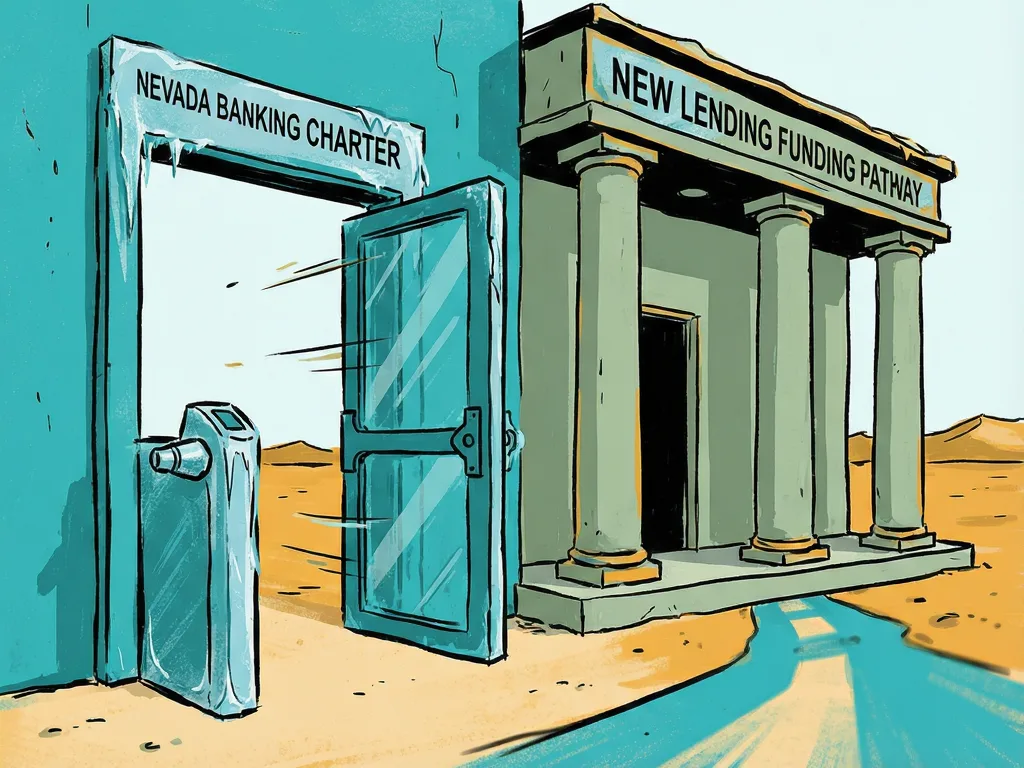
Upgrade Bank Applications Could Give Upgrade More Funding Options After $53 Billion in Credit
Core judgment
Upgrade's applications to create a proposed Upgrade Bank turn a consumer credit platform into a candidate for a regulated banking role. The immediate point is not just another product launch: if the Nevada Financial Institutions Division and the Federal Deposit Insurance Corporation approve the plan, Upgrade could fund its credit business with more internal flexibility instead of relying only on its existing bank partnerships. The release frames that as greater flexibility and additional options to fund credit products. The risk is equally clear: the company has applied, not yet secured approval, and the regulatory meaning of a bank charter is being contested across the industry.
What Upgrade is proposing
The release says Upgrade submitted applications to establish the proposed Upgrade Bank. Upgrade offers mobile banking, buy now, pay later, personal loans, credit cards and auto financing to mainstream consumers. Since its founding in 2016, the company has delivered over $53 billion in credit to more than 8.5 million customers, according to the release.
Those figures give the application a scale-based argument: Upgrade is not trying to build a bank around an unproven loan book. It is trying to give an established lending business another funding structure. The addition of Upgrade Bank to the company's existing business and bank partnerships would give Upgrade greater flexibility and additional options to fund credit products, the release said.
A new bank could sit inside the same consumer finance platform and change how capital, risk and customer relationships are managed. That is the strategic center of the story.
Leadership as a credibility test
Upgrade named Virginia Varela, its head of banking strategy, as CEO of Upgrade Bank. Varela has held CEO, president or board positions at four banks, per the release. That choice matters because a bank application is judged partly on whether the proposed institution has people who understand bank supervision and the regulatory expectations attached to it.
"We are excited at the prospect of establishing a new bank that will advance Upgrade's mission of bringing responsible and affordable credit to consumers," Varela said in the release. The quote aligns the bank plan with the company's consumer credit positioning rather than presenting it as a narrow balance-sheet maneuver.
A broader charter push
PYMNTS reported in September that FinTech and digital asset companies are pursuing bank charters to create regulated institutions with different powers and different roles inside their existing businesses. Upgrade's application fits that pattern, but it also faces the same uncertainty: a charter can change a company's relationship with regulators, customers and funding markets.
PYMNTS reported in February that what "banking" refers to is increasingly up in the air as regulators issue or weigh new charters for national banks, state-chartered commercial or savings banks, federal or state savings associations, industrial loan companies, credit unions and special-purpose banks. The Office of the Comptroller of the Currency said in August that it had received 40 de novo applications during the previous 18 months. PYMNTS said those applications show renewed demand for federal charters, as that figure was close to the 48 applications the Office of the Comptroller of the Currency received during the 14 years from 2011 through 2024.
That comparison is the strongest background fact in the source. It shows that demand for new charters has risen sharply after a long period of few applications. It does not mean every applicant will succeed. It means regulators are being asked to decide, again and again, what kind of company should be allowed to call itself a bank.
Valuation, customer focus and limits
Upgrade was valued at over $7.3 billion in an October 2025 funding round in which it raised $165 million. It was reported at the time that Upgrade focuses on extending affordable credit to mainstream United States consumers rather than younger or lower-income borrowers often targeted by other FinTechs.
That focus helps explain why a bank charter may be useful. Mainstream consumer credit can depend on durable funding, predictable underwriting and a brand promise of responsible access. A bank could give Upgrade more direct control over the regulated part of that model. But the source does not say when a decision will be made, what funding model the bank will use, or how the charter would change fees, rates or product availability.
What readers should watch
The key uncertainty is approval. Upgrade has submitted applications, not obtained a bank. The company's existing partnerships already support its credit products, so the immediate customer experience may not change even if the application succeeds. If it is approved, the most important test will be whether Upgrade Bank actually improves funding flexibility without increasing regulatory complexity or operational risk.
This is independent informational analysis, not an official Upgrade communication. It is not investment advice. Credit products may involve fees, and eligibility or regional restrictions may apply.
SubjectsUpgrade BankNevada charterfintech bankingconsumer creditBank Funding
Read next



Letters 0
- No letters yet. Be the first to write in.