
Paymentology States That AI Agents Must Prove Their Trustworthiness Before Transferring Money
AI payments agents need evidence, reversibility, permission limits, and shadow testing before earning authority in money movement.
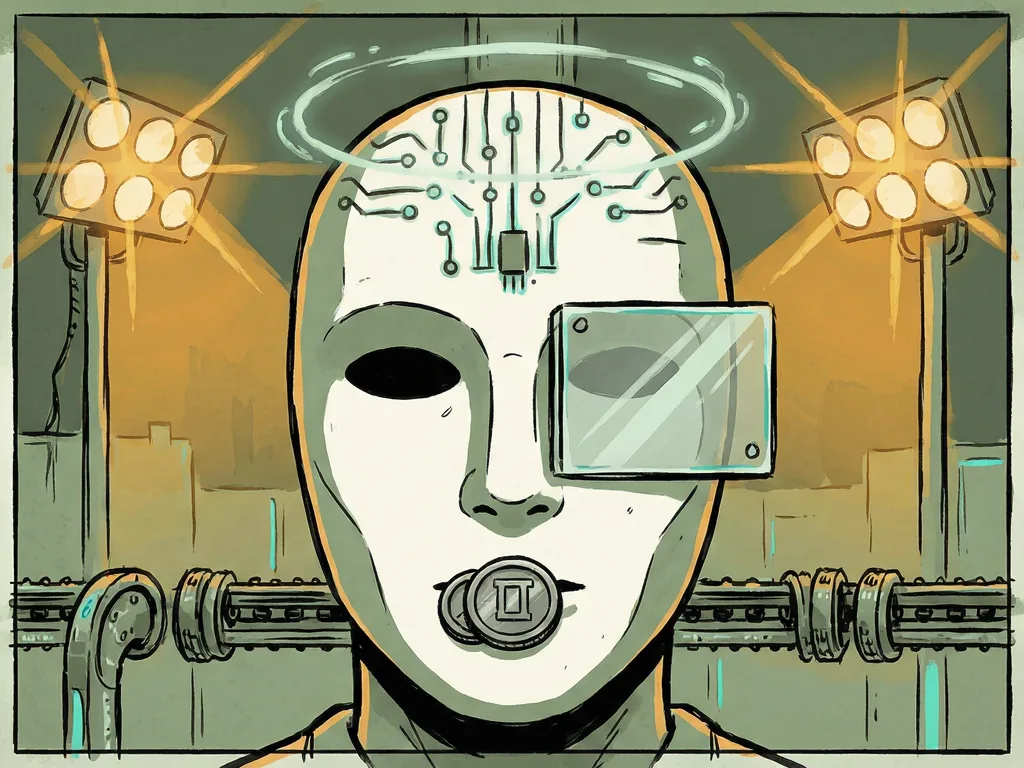
Core Judgment: Authority Is the New Bottleneck
Payment infrastructure has long been built to answer questions about human behavior. Is the person using the card really the cardholder? Is the account authorized? Is the transaction fraudulent? Artificial intelligence agents add a different question: even if the machine is legitimate, was it allowed to make that specific decision?
In the October edition of the PYMNTS series “What’s Next in Payments,” titled “The Last Thing a Human Will Need to Approve,” Paymentology Chief Technology Officer Tim Joslyn framed the central issue bluntly: the technology is moving faster than the liability frameworks. His larger point is not that automation is the problem. The problem is how organizations interpret and consume what automation does for them in a safe way.
That distinction changes how enterprises should approach agent deployment. AI autonomy is often discussed as a capability: once a model is accurate enough, the human supervisor can be removed. Joslyn described something closer to underwriting. In his framing, autonomy is earned with evidence. The mistake would be to assume that because a system can make a decision, it should make that decision.
The practical unlock in agentic payments is therefore not building agents that can do everything. It is defining exactly what each agent is allowed to do.
From Authentication to Authorized Machine Action
Payments institutions already live with automated decision-making. Fraud models make many authorization decisions automatically. Chargebacks and disputes increasingly incorporate automated decisioning. These processes can be complex, but they are also repetitive enough to produce evidence about how automation performs.
That evidence matters because it creates a path toward expanding machine authority. It also explains why some parts of payments may become automated sooner than others. The deciding factor is not how sophisticated a task is. It is how reversible the outcome is when something goes wrong.
A mistaken card decline can often be overridden. A poorly executed card portfolio migration or an incorrectly initiated large-value transfer can create consequences that are harder to unwind. Joslyn’s view is that the higher the risk attached to a decision, the more likely it is to remain a human decision for longer. The dividing line for automation is reversibility, not complexity.
This also reframes the future of the human approval step. The last human in the payments loop may not disappear simply because AI becomes trustworthy. It may disappear when financial institutions figure out who takes the loss when AI gets something wrong. In that sense, the human button remains where the stakes are concentrated. Wherever the maximum mistakes can be made, the human control point sits.
Permission Boundaries Are the Real Product Feature
Enterprises can manage machine authority incrementally in a way similar to how financial institutions manage other forms of risk exposure. One approach Joslyn described is “shadow mode,” where an agent receives the same information as a human and records the decision it would have made without actually executing it. The organization can then compare machine decisions against real-world outcomes before gradually increasing the agent’s authority.
The analogy is a junior employee shadowing a more senior leader. The junior does not immediately take over the role. The junior observes, records, and is evaluated.
The same logic can apply to payments agents. An agent could receive permission to perform a particular action, below a particular dollar threshold, for particular counterparties, under particular conditions. Successful performance could expand that mandate. If an institution is confident the agent is making the same decisions as the human, it may be willing to hand over more authority. But the final leap must be evidence-based.
This matters because the question is no longer only whether the machine can act. It is whether the machine is authorized to act in that way, in that context, and with those limits.
Spending Agents Turn Ambiguity Into Economic Risk
The problem becomes harder once agents start spending money.
Paymentology is already seeing tightly scoped versions of this future. Joslyn pointed to a customer deploying an agentic-style banking experience in which users can conversationally instruct the system to send someone $100. That command is relatively simple because its parameters are clear: the amount, the recipient, and the action are all defined.
A request to an agent saying, “Go and buy me a red jumper,” is different. Price, merchant, size, style, and acceptable substitutions are unstated variables. The agent must either ask questions or infer what the user meant. That ambiguity becomes economically important the moment money changes hands.
This is where emerging models of intent capture become relevant. Joslyn pointed to frameworks that record the user’s intent, the parameters given to the agent, and the limitations placed on its authority. Together, that information creates an audit trail for machine decision-making.
The future control question may expand beyond authentication. Financial institutions may need to determine not only whether a transaction was authenticated, but whether an authenticated agent behaved within its authenticated mandate. That is a more difficult institutional problem because it requires permissions, logs, and boundaries to be built into the transaction itself.
Liability Is the Missing Market Infrastructure
The hardest question is not technical. It is legal and organizational.
If something goes wrong and an agentic payment is made that should not have been made, or a decision is made that should not have been made, who is responsible? Is it the programmer? Is it the person who instructed the command in the first place? Is it the deployer, the institution, the user, or another party? Joslyn said there is not yet a clear liability model.
That absence creates a strategic constraint for agentic payments. Technology can move faster than liability frameworks, but financial systems cannot safely scale without knowing who bears the loss when an autonomous transaction fails. The result is not that agents stop working. The result is that their authority becomes narrower, slower to expand, and more dependent on evidence.
Joslyn estimated that the liability question will need to be actively worked through over the next six to 12 months because agentic technology is moving quickly. That timeframe suggests the next phase of agentic payments will not be defined by a single breakthrough model. It will be defined by the boring but decisive work of permission design, audit trails, reversibility controls, and responsibility allocation.
What Enterprises Should Do Before Autonomy Expands
For enterprises, the practical lesson is to treat AI authority as a risk exposure that must be granted, measured, and reviewed.
A strong deployment path starts with narrow permissions. An agent should not begin with broad spending power. It should begin with a defined action, a defined amount, a defined set of counterparties, and a defined set of conditions. Shadow mode can provide the first layer of confidence. Real execution under tight limits can provide the second. Expansion should follow evidence, not enthusiasm.
Enterprises should also design around reversibility. The question is not simply “Can the agent complete this payment?” It is “If the agent is wrong, can the institution unwind the outcome cleanly?” If the answer is no, human control should remain for longer.
The audit trail is the other necessary foundation. If an agent makes a decision, the system should capture what the user intended, what the agent was allowed to do, what parameters it received, what limitations constrained it, and what action it actually took. Without that trail, disputes become harder to resolve and liability becomes harder to assign.
What Readers Should Take Away
For readers, the shift from cardholder authentication to agent authorization is more than a technical upgrade. It changes what “safe payments” means. A payment can be legitimate and still be unauthorized in the deeper sense: the machine may have the credentials, but not the right decision-making mandate.
Agentic payments will likely become more useful first in narrow, well-defined cases where the instruction is clear, the amount is limited, and the consequence of failure is manageable. The “send someone $100” example is useful because it is bounded. The “buy me a red jumper” example is warning because it is open-ended. Ambiguity becomes expensive when money moves.
The next stage of agentic payments will therefore be shaped less by how intelligent agents appear and more by how clearly institutions can define what they are allowed to do.
This article is an independent informational analysis, not an official statement from Paymentology or PYMNTS, and not investment advice. Payment services can involve fees and regional restrictions that vary by provider, and readers should verify applicable terms before relying on any service.
SubjectspaymentsAI agentsautomationtrustrisk
Read next



Letters 0
- No letters yet. Be the first to write in.