
The Financial Crimes Enforcement Network Paves the Way for Digital Identity Verification in Bank Customer Checks, With Caveats.
US financial regulators clarify that digital credentials can meet customer identity rules, but banks must prove systems establish true identity.
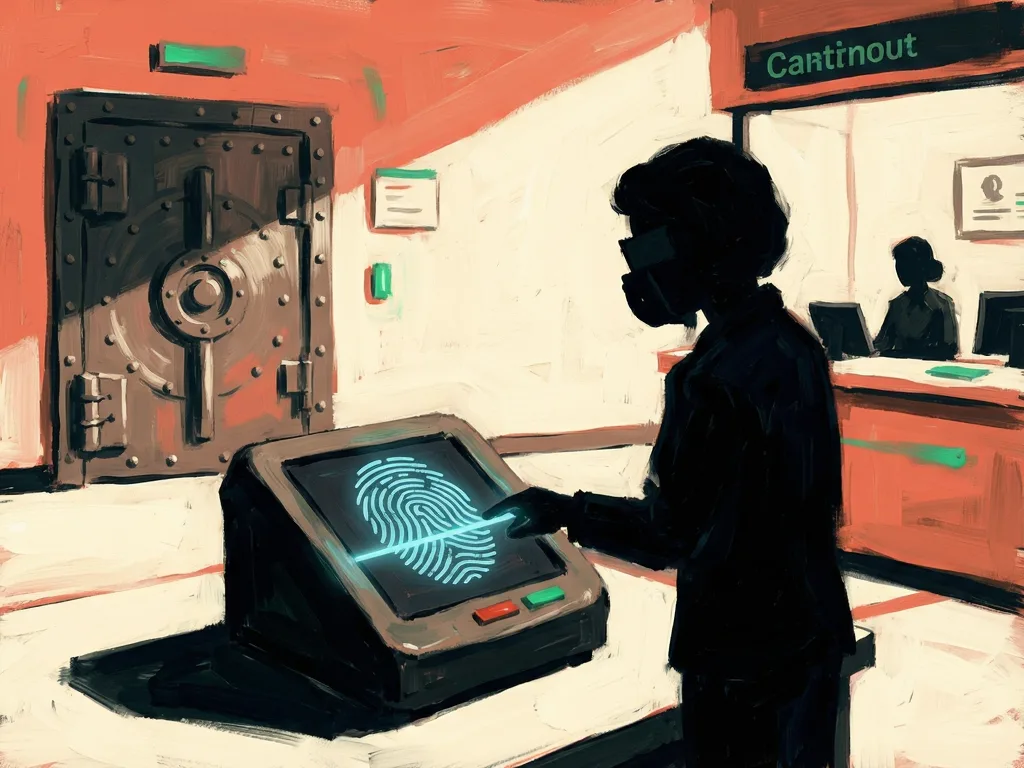
On September 8, the Financial Crimes Enforcement Network, together with staff from federal banking agencies, issued two frequently asked questions addressing state-issued mobile driver’s licenses and other government-issued verifiable digital credentials under the Bank Secrecy Act’s Customer Identification Program requirements. The core judgment is narrow: qualifying digital credentials can satisfy existing documentary identification requirements, but institutions must ensure their systems can use those credentials to establish the reasonable belief that they know a customer’s true identity.
A Legal Obstacle Was Removed, Not a Compliance Burden
The guidance was issued jointly with staff from the Federal Reserve, the Federal Deposit Insurance Corporation, the National Credit Union Administration and the Office of the Comptroller of the Currency. It does not require institutions to accept digital credentials or establish new supervisory expectations. Instead, it clarifies how existing requirements under 31 Code of Federal Regulations, Section 1020.220 apply to emerging identification technologies.
Anderson said the central issue is not whether digital identification is legally acceptable, but whether banks’ technology, records and exception-handling procedures can support a defensible identity-verification decision. That framing matters because the guidance converts a legal question into an operational one. A bank may be permitted to use a qualifying credential, but it must still prove that the credential was processed in a way that supports the identity determination.
What Counts as a Verifiable Digital Credential
The frequently asked questions distinguish verifiable digital credentials from electronic images of traditional identification documents. A verifiable digital credential contains information about an individual that is digitally signed by the issuing authority, cryptographically bound to a device and protected by an activation factor, such as a personal identification number, fingerprint or facial recognition.
Under the guidance, an unexpired government-issued verifiable digital credential may qualify as documentary identification if it establishes nationality or residence, includes a photograph or comparable safeguard and can be processed by the institution’s technology. The institution’s Customer Identification Program must also permit its use.
Unlike a photograph or screenshot of a driver’s license, a verifiable digital credential can provide cryptographic evidence concerning the credential’s issuer and integrity. That distinction is not cosmetic. It changes what an onboarding system is expected to check.
Why the Distinction Changes Onboarding Design
For banks and financial technology vendors developing digital onboarding systems, the practical implication is that extracting information from a digital image is not the same as authenticating a credential. A system that reads a name, address or date of birth from an image does not establish that the credential’s signature, device binding or status has been authenticated.
This creates a design boundary between document capture and credential verification. The first may produce data fields. The second must produce evidence that the credential is genuine, unexpired, issued by an acceptable authority and linked to the customer’s device and authentication factor. If the institution cannot process those signals, the credential does not become documentary identification merely because it is digital.
What Banks Still Have to Prove
Banks generally may rely on qualifying government-issued credentials, but indications of fraud must be considered when determining whether the institution reasonably believes it knows the customer’s identity. Anderson Insights emphasized that even a technically valid credential cannot resolve discrepancies involving sanctions screening, account records, addresses, device risks or previous customer information.
That point defines the main risk. A credential can be valid while the surrounding customer profile is not. A bank may accept a cryptographically sound mobile driver’s license and still encounter a mismatch in an address, a suspicious device pattern, a prior customer record or a sanctions screening result. In those cases, the credential alone cannot satisfy the law’s reasonable-belief standard.
Institutions therefore need procedures for requesting additional documentation, applying nondocumentary verification methods, suspending onboarding or escalating potential fraud. The guidance also leaves existing customer due diligence, beneficial ownership, sanctions compliance and suspicious activity monitoring obligations unchanged.
Where the Guidance Does Not Reach
Anderson noted that the guidance’s scope is limited to banks and credit unions. Broker-dealers, investment advisers, money transmitters and other financial intermediaries must assess their own applicable identification requirements. This limitation is important for readers who assume that a rule aimed at bank Customer Identification Program requirements automatically applies across the financial sector. It does not.
Risks for Digital Onboarding Systems
For institutions adopting digital credentials, Anderson recommended documenting supported credential formats, issuing authorities, account types and verification channels before implementation. That documentation is not merely administrative. It creates the record trail that regulators may need when assessing whether a bank’s Customer Identification Program decisions were defensible.
Vendor diligence should examine issuer authentication, cryptographic key management, credential expiration and revocation checks, privacy protections, record retention and system reliability. Each item points to a different failure mode. If issuer authentication is weak, the system may accept forged credentials. If key management is unclear, the signature validation may be unreliable. If expiration and revocation checks are missing, the system may treat a stale credential as valid. If record retention is poor, the institution may have difficulty proving what it knew at the time of onboarding.
Institutions should also test how systems respond to altered credentials, unsupported issuers, lost devices, failed authentication and inconsistent customer information. These tests matter because real onboarding failures are rarely clean. A lost device can break cryptographic binding. A failed authentication factor can block the intended verification path. Inconsistent customer information can turn a technically valid credential into a compliance exception.
Banks remain responsible for Customer Identification Program compliance even when vendors provide the underlying technology. That sentence is one of the most consequential parts of the guidance. Outsourcing the tool does not outsource the decision. If a vendor’s system misclassifies a credential, fails to process a revocation or produces incomplete records, the bank still owns the identity-verification outcome.
A Practical Shift
The guidance removes a legal obstacle to digital identification without reducing institutions’ accountability for verification decisions. The compliance challenge shifts toward demonstrating that digital onboarding systems can reliably authenticate credentials, identify exceptions and produce sufficient records to substantiate customer identity determinations.
For banks, the immediate work is not to decide whether digital credentials are conceptually acceptable. They are acceptable only within a narrow set of conditions. The work is to build a defensible verification path: know which credentials are supported, know how they are validated, know what happens when they fail, and keep records that can survive review. For vendors, the implication is similar: the market may provide the credential technology, but the bank must be able to prove the technology worked in the specific onboarding decision.
This is an independent informational article, not official guidance, and it is not investment advice. The source material does not identify fees or regional restrictions; institutions may impose their own documentation requirements, and customers may encounter different responses depending on the institution’s systems and procedures.
SubjectsFinancial Crimes Enforcement NetworkDigital IdentityKYCbank complianceOnboarding
Read next


Letters 0
- No letters yet. Be the first to write in.