
Square Introduces a Voice AI-Powered Kiosk to Help Quick-Service Restaurants Address Staffing Shortages
Square's new Kiosk uses voice AI and a 21.5-inch touchscreen to simplify ordering, loyalty, and payments for quick-service restaurants.
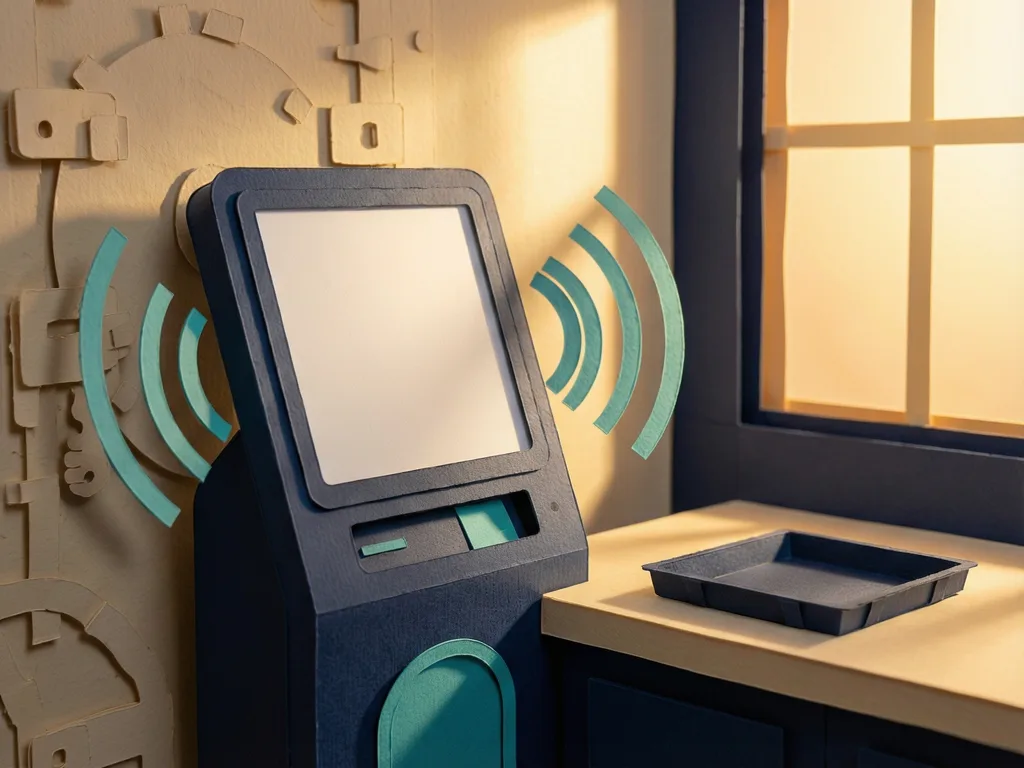
Square Kiosk Puts a 21.5-Inch Touchscreen and Conversational Voice AI in Front of Quick Service Restaurant Operators
Core judgment
Square Kiosk’s announcement points to a shift from self-service hardware to an operator-side workflow layer. The company is not merely selling a touchscreen for quick service restaurant operators. It is packaging a conversational voice layer, a 21.5-inch touchscreen display, loyalty and check-in integration, and payment hardware into one counter experience. The central question for operators is whether the system can reduce friction at the point of sale without replacing the judgment that staff still provide.
The value proposition is narrow but concrete. According to the release, the new Square Kiosk is designed for quick service restaurant operators and includes an agentic, conversational voice layer that understands a seller’s menu, listens to customers and responds in real time. It can answer menu questions, offer suggestions and popular options, handle modifications and work through substitutions. That matters because self-ordering screens often fail when customers need explanation or customization, not just tapping through a fixed interface.
Square’s own framing makes the same point. Thomas Templeton, global hardware lead at Square parent company Block, said in the release that conversational AI does what existing self-ordering solutions cannot. He also framed the benefit for quick service restaurant operators who often have to do more with less. He said whether answering menu questions or making informed recommendations, Square Kiosk raises the bar on what guests can expect from self-service while giving staff the time back to focus on hospitality and the tasks that matter the most. The claim is not that AI eliminates labor; it is that the device may move routine menu explanation away from staff.
The hardware and account layer
The product’s other components show Square is trying to make the kiosk more than a voice terminal. The release says the Square Kiosk includes a 21.5-inch touchscreen display that supports rich menus and item imagery, a personalized check-in that allows guests to connect to their Neighborhoods profile or Square Loyalty account to earn and redeem rewards, and a fully integrated payments and barcode scanner.
Each element answers a different operational pressure. A large screen with item imagery can make menu browsing more intuitive, especially in quick service settings where customers are scanning options while in line. Personalized check-in ties the ordering moment to loyalty programs and Neighborhoods profiles, which could make rewards redemption more visible at the counter. Integrated payments and barcode scanning reduce the need for separate devices and may shorten the path from order to payment.
The hardware therefore works best if it is treated as an entry point to Square’s wider merchant system. The device can collect an order, identify a customer, suggest items, handle changes, and complete payment. For a quick service restaurant operator, that bundle may be more relevant than any single feature, because the bottleneck is often the flow between ordering, customization, loyalty, and checkout.
The voice-agent trend around the release
The release sits inside a broader pattern that PYMNTS reported in August: AI voice agents are taking over the retail sales floor. PYMNTS said that with new models, these agents can hold real sales conversations, ask the same probing questions a floor associate would and adapt as a shopper’s needs shift. That context explains why Square’s voice layer is being positioned as a sales assistant rather than a simple order prompt.
An OpenAI report cited in the source includes a statement from Akira Fukabori, CEO of voice agent developer avatarin, that helps clarify the ambition. “Customers do not want a chatbot. They want intelligence. ‘I need a refrigerator for a family of four, but my kitchen is small. Which one should I choose?’ Real customer service means being able to answer that question.” The refrigerator example is not about restaurants, but the underlying idea transfers: customers want a system that can understand constraints, ask follow-up questions and make a recommendation. In a restaurant setting, the equivalent may be dietary preferences, portion size, ingredient availability or a substitution request.
Square’s wider platform moves
Square’s other recent moves suggest the kiosk is part of a wider platform push. The company announced an integration with Apple Business that lets Square sellers use their Square Dashboard to manage their presence across Apple apps. It added 30,000 more sellers to Neighborhoods, its local commerce network that connects Square sellers with Cash App customers. It also launched a new conversational AI offering in tandem with Google.
Those announcements matter because a kiosk is only as useful as the merchant systems it touches. If Square sellers can manage presence across Apple apps, participate in Neighborhoods, connect with Cash App customers and use a Google-linked conversational AI offering, then Square Kiosk may become one physical node in a larger digital storefront. The strategic question is whether the device can pull those pieces into a single counter workflow without adding complexity for staff.
Uncertainty, limits and disclosure
The source material does not explain how the voice layer performs in noisy restaurant environments, whether it supports multiple languages, how it handles ambiguous orders, or what guardrails exist for wrong recommendations. Those are practical risks for a quick service restaurant where speed and accuracy are central. If the system asks too many questions, it may slow ordering. If it answers too confidently, it may create errors in customization or substitutions.
The release also does not disclose pricing, fees, regional restrictions or availability, or implementation requirements. Without those details, operators cannot compare Square Kiosk against existing self-ordering solutions on cost, contract terms or deployment effort. There is no evidence in the source that the product is available in any specific market or that it is suitable for every quick service restaurant format.
No investment or purchasing advice is offered. This is an independent informational analysis, not an official statement from Square, Block, Apple, Google, OpenAI, PYMNTS or avatarin.
SubjectsSquare Kioskvoice AIQuick-Service RestaurantsSelf-OrderingRestaurant Staffing
Read next


Letters 0
- No letters yet. Be the first to write in.