
Buy Now, Pay Later Providers Expand Beyond Grocery Shopping to Increase Their Share of Consumer Wallets
Buy now pay later providers seek default wallet share as grocery use saturates; food, home and limits sustain overlap.
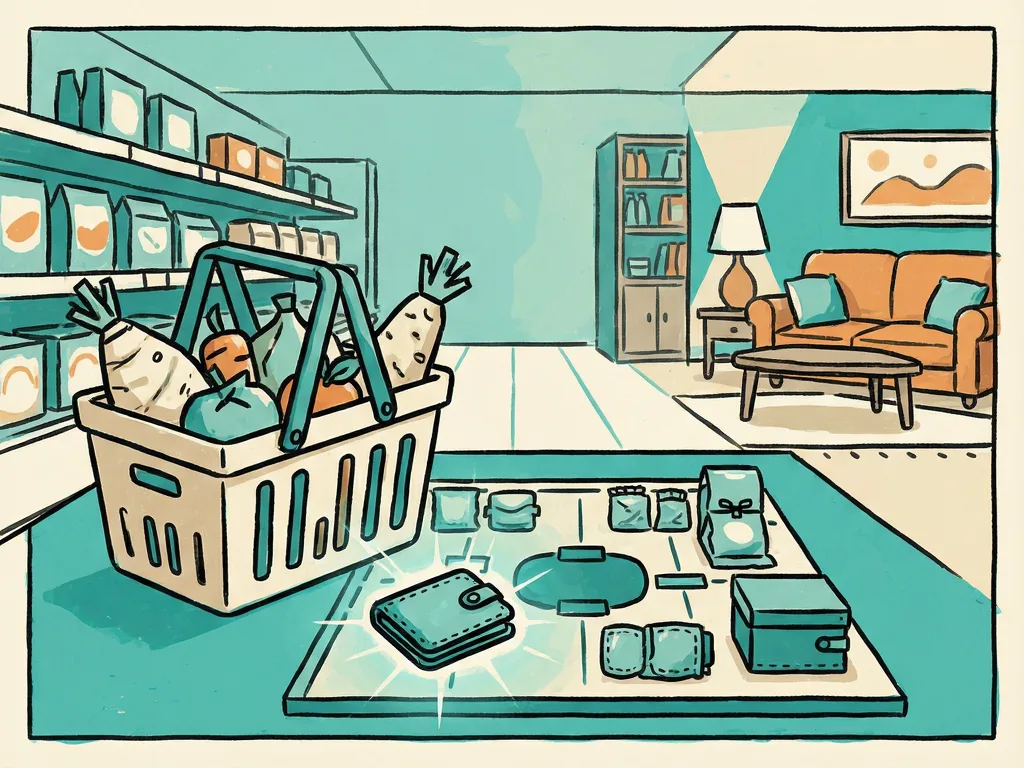
The central finding from PYMNTS Intelligence’s “Beyond Pay in 4: How BNPL Providers Compete for First Choice” is that the competition is not primarily about whether consumers accept installment payments. It is about which provider gets selected when a consumer already has several buy now, pay later options.
Groceries and restaurants look nearly saturated as entry points. Between 87% and 96% of users associated with Affirm, Afterpay, Klarna and PayPal Pay Later report using buy now, pay later for groceries. Restaurant use is similarly broad, ranging from 81% to 88%. When all four provider bases sit near the top of a category, differentiation narrows.
Provider overlap creates a multi-wallet problem
The report shows substantial overlap. Affirm reaches 50% of buy now, pay later users, Afterpay 48%, Klarna 47% and PayPal Pay Later 41%, and most consumers use two or more providers. A consumer’s Pay Later wallet can therefore contain several options for different purchases.
That structure changes the growth problem. Providers may not need to persuade a consumer to use buy now, pay later at all. They may need to become the default for the next transaction within the same spending category.
Food delivery separates Klarna and PayPal Pay Later from Affirm and Afterpay
Food delivery provides one of the clearest examples. Eighty-one percent of Klarna users and 80% of PayPal Pay Later users report buy now, pay later use for food delivery. The figure falls to 71% among Affirm users and 66% among Afterpay users, creating a 15-percentage-point difference between the highest and lowest shares.
The gap matters because food delivery is not a niche checkout moment. It is a recurring purchase setting where a provider can either become routine or be displaced by another Pay Later option already present in the same consumer’s wallet.
Home services show the largest divide
Home services are even more divided. Sixty percent of PayPal Pay Later users report buy now, pay later use in the category, compared with 49% of Affirm users, 42% of Klarna users and 39% of Afterpay users. The 21-point spread is substantially larger than the nine-point range for grocery use.
This is where the data suggest the most room for movement. Grocery use approaching 90% or more across all four customer bases leaves less differentiation. Food delivery and home services leave considerably more room for providers with lower penetration to deepen usage among customers they already have.
Customer mix and repayment frequency also differ
The report also finds differences in the customers each provider reaches and how frequently they repay. Affirm reaches 58% of subprime buy now, pay later users, while Klarna reaches 55% of users earning at least $150,000. Among consumers who make monthly buy now, pay later payments, Affirm reaches 57%, followed by Afterpay at 51%, Klarna at 43% and PayPal Pay Later at 38%.
These figures show that overlap is not the same as interchangeability. Affirm appears strongest among subprime users and monthly payers, while Klarna has a higher share among users earning at least $150,000. PayPal Pay Later’s higher food-delivery and home-service shares contrast with its lower monthly-payment reach.
Product limits give consumers reasons to keep multiple providers
Product limits differ as well. Pay in 4 ceilings range from $249.99 at Affirm to $5,000 at Afterpay, while the providers also offer different longer-term financing options. Those differences give consumers reasons to keep multiple buy now, pay later relationships available depending on the merchant, purchase amount and repayment period.
This is the practical mechanism behind multi-provider behavior. If one provider cannot handle a larger transaction, or another is not positioned where the consumer is buying, the user can switch without abandoning installment payments.
What the percentages do and do not show
The data offer a view of where each customer base is already using installment payments and where penetration remains lower. They do not provide transaction volume, total category spending, merchant acceptance rates or methodology details such as sample size. The percentages describe reported use among users associated with each provider, not a complete ranking of market power.
Providers already share much of the same grocery customer base, but they do not occupy the same position across every part of consumers’ spending. The tighter grocery and restaurant ranges suggest a mature baseline. The wider food-delivery and home-service gaps suggest where the next competitive battle may be fought.
For readers, the implication is specific: a provider with high grocery penetration may still have weak share in a neighboring category. Winning more of an existing user’s buy now, pay later purchases may depend on closing those category gaps, giving a consumer who already has several Pay Later choices a reason to select the same one for the next purchase.
This is an independent informational analysis, not official guidance from PYMNTS Intelligence, Affirm, Afterpay, Klarna or PayPal Pay Later. It is not investment advice. Buy now, pay later availability, fees, interest and regional restrictions vary by provider, merchant and location; users should review terms before making a purchase.
SubjectsBuy Now Pay Laterinstallment paymentsConsumer WalletsFood DeliveryHome Services
Read next

Letters 0
- No letters yet. Be the first to write in.