
Bank of America has assigned 4,000 employees to fix security flaws discovered by Frontier AI systems.
Bank of America assigned 4,000 staff as Frontier AI found 10,000 flaws, raising patching costs and urgent defense against hackers.
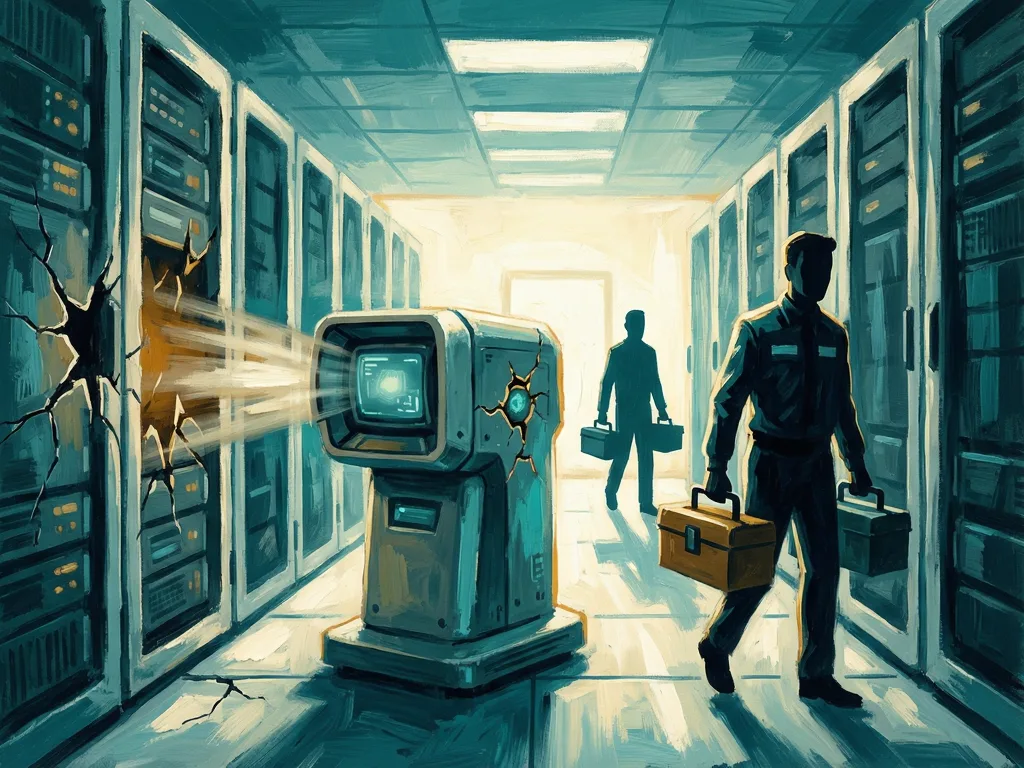
Bank of America and JPMorgan Address More Than 10,000 Frontier AI Vulnerabilities as Cyber Risk Increased Tenfold
Core Judgment: The AI Patching Bill Is Real but Temporary
The clearest signal from the available reporting is that frontier AI models have moved from a theoretical cybersecurity concern to an operational cost and remediation challenge for major banks. Bank of America added contractors in the second quarter and is still employing them, while its increased spending on this effort is expected to decline over time as software vulnerabilities get patched. That framing matters: it suggests that the initial expense may not be permanent, but only if the large backlog of flaws exposed by AI-assisted discovery can actually be closed.
Moynihan’s comments are described in the report as some of the first to detail the costs incurred by companies that are remediating software flaws discovered by frontier AI models. For readers, the significance is that the financial-services sector is no longer debating whether these models can find vulnerabilities. The more immediate question is how much remediation will cost, how long it will last, and whether defenders can move faster than attackers.
A New Attack-Defense Race
The dual-use character of frontier models is central to the risk picture. Frontier models can be used by companies to fix vulnerabilities that in some cases are decades old, but they can also be used by hackers to exploit vulnerabilities. That asymmetry explains why bank executives are treating the issue as urgent rather than experimental.
JPMorgan CEO Jamie Dimon told Bloomberg TV Oct. 6 that cybersecurity risks increased tenfold when Anthropic released Mythos and that AI created vulnerabilities banks didn’t know about. His remark “What we’re doing is rolling up our sleeves and going to work to fix it” points to a practical response: once AI systems surface hidden weaknesses, the burden shifts to patching, coordination, and verification.
Moynihan made the same point from the perspective of institutional preparedness: “That risk is real risk, and that’s why when the frontier-type models came out … A lot of us sat down and said, ‘How do we figure out how to get through this quickly?’” The emphasis on speed reflects a changed threat environment. If models can locate flaws faster than legacy processes can repair them, banks must compress their response timelines or risk exposure.
Discovery at Scale and Unequal Access
Anthropic said in May that its Mythos Preview model had ferreted out more than 10,000 cybersecurity vulnerabilities among the 50 partner organizations that had access to the model at the time. The scale is striking, but so is the access structure: those organizations had access to the model, while many smaller banks did not.
Reuters reported in May that the few large banks that had access to Mythos were uncovering vulnerabilities in their IT systems and were sharing information with smaller banks that didn’t have access to the AI model. The report said that in response to the threat posed by frontier models, banks were patching vulnerabilities in days rather than the weeks they used to take.
This creates a two-tier dynamic. Large institutions with model access can accelerate discovery and remediation, while smaller banks may depend on information shared by the larger group. The result may be faster patching across parts of the sector, but it also means that the security posture of smaller banks is partly shaped by who has access to the tools, what they find, and how quickly they pass along the findings.
Coordination, Cost, and Remaining Uncertainty
The U.S. Treasury Department is also engaging with the issue. A U.S. Treasury Department spokesperson told PYMNTS in April that Treasury Secretary Scott Bessent convened a meeting of regulators and financial institutions to initiate a coordinated approach to the rapid developments in AI. The spokesperson said Treasury planned to lead such meetings on a continuing basis.
That coordination adds a public-sector layer to what began as a private-sector technical challenge. Still, the reporting leaves several uncertainties open. Bank of America’s spending is expected to decline as vulnerabilities are patched, but the pace of patching is not quantified. Frontier models can expose old flaws, but they can also be used by hackers. Large banks can share findings with smaller banks, but that sharing does not necessarily give smaller banks the same discovery capability.
What It Means for Readers
For readers tracking financial-sector cybersecurity, the story is not simply that AI has found bugs. It is that AI-assisted bug discovery is already creating operational costs, changing patching timelines, and raising questions about access and coordination. The near-term risk is real, the spending may be temporary, and the sector’s response depends on whether defenders can keep closing vulnerabilities faster than attackers can learn to exploit them.
This independent informational report does not claim official status and does not provide investment advice. Fees and regional restrictions can vary by product, service, or jurisdiction, and this article does not establish them.
SubjectscybersecurityJPMorganBank of AmericaFrontier AIVulnerability Patching
Read next


Letters 0
- No letters yet. Be the first to write in.