
Ebanx now supports recurring wallet payments in Nigeria through OPay.
Ebanx and OPay enable recurring wallet payments in Nigeria, helping subscription merchants reach mobile users in a low-card market.
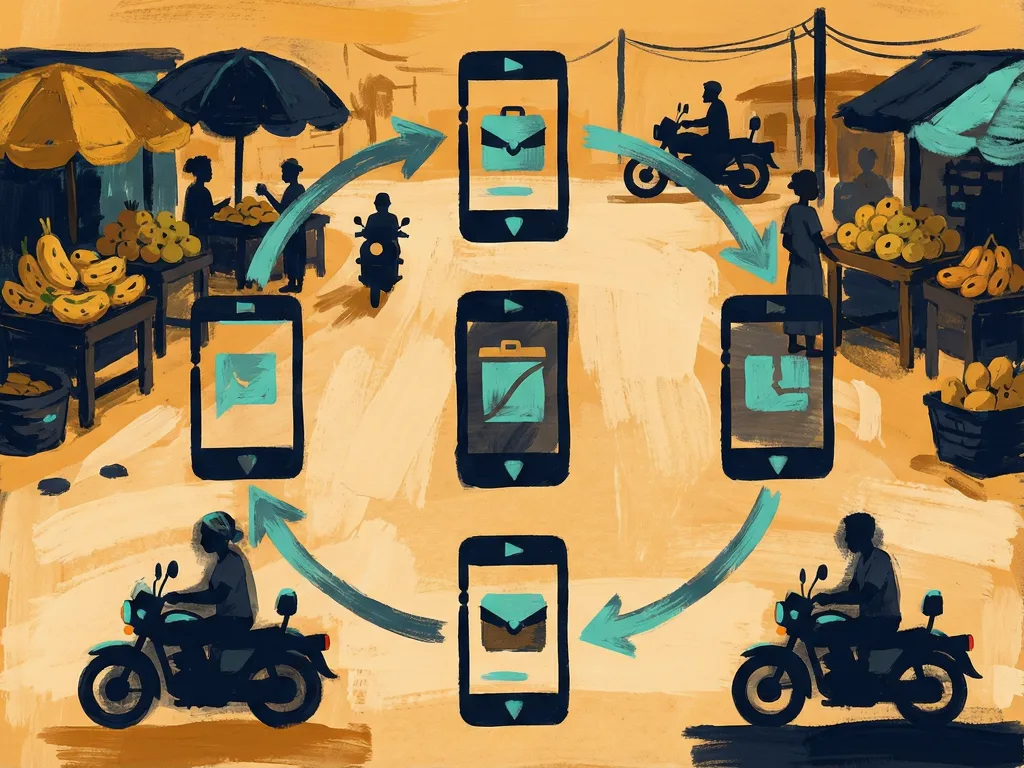
The core reading is that Ebanx and OPay are not just adding another checkout option in Nigeria. They are building a recurring-payment pathway for international subscription businesses in a market where credit card ownership remains limited. Consumers can authorize recurring charges through the OPay app, enabling merchants to collect subsequent subscription payments without requiring customers to approve each transaction individually. The release describes this as the first offering of OPay Direct Debit by a global payments company.
A low-card market with a high mobile-wallet base
Nigeria's payment profile helps explain the launch. OPay has 40 million monthly active users in Nigeria, representing about one-third of the country's adult population. Credit card ownership among Nigerian adults is 5%, while mobile phone penetration is 84%. That combination creates a clear gap: many adults can be reached through mobile phones, but only a small share can be reached through card-based subscription flows.
For global merchants, the expansion offers another route to subscription revenue in markets where conventional card payments are less widely used. The OPay launch gives international subscription businesses another way to collect payments in a market where card ownership is limited. It also turns the OPay app into a recurring-payment surface.
OPay frames the partnership as access to global digital services
OPay Chief Commercial Officer Elizabeth Wang said the partnership with Ebanx is more than transaction processing and is shaping the future of digital payments across the region. She said it will give Nigerians an easy, fast and convenient way to pay for global digital services they love, from streaming platforms to online tools.
That position matters because it links the payment method to streaming platforms and online tools, not just local transfers. For OPay, the launch is a way to deepen the relevance of its 40 million monthly active users. For Ebanx, it is a way to bring subscription merchants closer to consumers who rely on local wallets and bank transfer systems.
Ebanx is assembling a recurring alternative-payment network
The launch follows Ebanx's introduction of recurring alternative payment methods through South Africa's Capitec Pay. The company now offers such services in 13 emerging markets across Asia, Africa and Latin America, reaching consumers who rely on local wallets and bank transfer systems.
The Nigeria launch is the latest in Ebanx's broader efforts to expand payment access in emerging markets. In September, the company reached out to Latin American gamers through local payment methods and expanded into Pakistan through digital wallets JazzCash and Easypaisa, PYMNTS reported. In December, Ebanx expanded network token processing in Latin America and the Caribbean, including Colombia, Peru and the Dominican Republic.
This pattern shows Ebanx is combining several payment approaches: recurring alternative payment methods, local payment methods for Latin American gamers, digital wallets JazzCash and Easypaisa in Pakistan, network token processing in Latin America and the Caribbean, and now OPay Direct Debit in Nigeria.
The United States adds a broader behavioral context
The release also places the Nigeria move next to a separate United States payment signal. In the United States, digital bank customers stand apart from others in how they pay. The PYMNTS Intelligence report "Pay by Bank Deep Dive: Digital Bank Users Are Ready to Switch" found in January that digital wallets are their leading choice for retail purchases, subscriptions, rideshare and account-to-account transactions.
The comparison shows that recurring and wallet-based payments are not only an emerging-market route. Digital bank customers in the United States already prefer digital wallets across retail purchases, subscriptions, rideshare and account-to-account transactions. Nigeria differs because the constraint is stronger: only 5% of Nigerian adults hold credit cards. The direction, however, is similar—subscription payments are moving away from card-only flows and toward app-based, wallet-based and account-to-account methods.
What readers should watch next
The main uncertainty is whether authorization through the OPay app converts smoothly into repeated subscription collection. The release says merchants can collect subsequent subscription payments without requiring customers to approve each transaction individually. That is a benefit for merchants, but it depends on consumers understanding what they have authorized. If the authorization process is unclear, cancellations or failed payments could become a risk.
Another question is the economics and availability of the service. The release does not specify fees, merchant terms or regional restrictions. This is not investment advice; fees and regional restrictions may vary by service and market.
Still, the strategic signal is clear. Ebanx and OPay are connecting a global payments company to one of Nigeria's largest mobile-wallet user bases. With 40 million monthly active users, 5% credit card ownership and 84% mobile phone penetration, Nigeria offers a test of whether subscription businesses can grow in markets where cards are scarce but mobile phones are common.
Subjectspaymentsmobile walletsNigeriasubscriptions
Read next



Letters 0
- No letters yet. Be the first to write in.