
HSBC Introduces a Hong Kong Dollar Stablecoin for Daily Payments
HSBC adds a Hong Kong dollar stablecoin to PayMe for instant transfers and payments, framing it as regulated infrastructure ahead of wholesale expansion.
Core Judgment
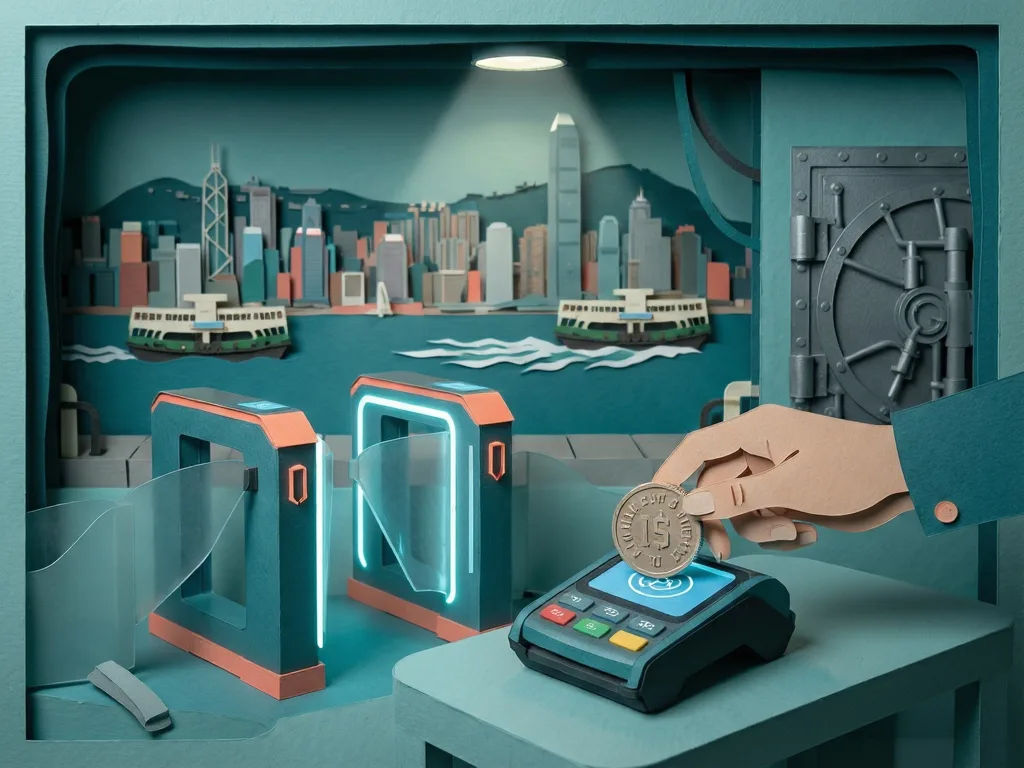
HSBC RedCoin’s appearance in PayMe is less a speculative crypto rollout than a bank-led payment test. The release describes a Hong Kong dollar-denominated product licensed and regulated by the Hong Kong Monetary Authority, made available on the bank’s digital wallet PayMe on Friday. Its immediate significance is practical: users can activate a stablecoin wallet inside an existing app and use it for instant transfers to friends and family, as well as direct payments at more than 100,000 merchants.
What Changes for PayMe Users
The change is not that HSBC is offering a new standalone digital asset app. It is that stablecoin functionality is being placed inside PayMe, a familiar consumer wallet. Once users activate the stablecoin wallet in the app, they can send stablecoins instantly to friends and family and pay directly with stablecoins at more than 100,000 merchants.
For readers, the key question is whether the experience feels as routine as existing PayMe transfers. The release gives the merchant count, but it does not specify fees, dispute-handling terms, or the full conditions of merchant acceptance. The launch therefore reads as a controlled entry point: a regulated issuer, a defined currency, a known wallet, and a stated merchant network.
Why HSBC Frames It as Infrastructure, Not Just a Coin
Maggie Ng, CEO, Hong Kong and head of retail banking and wealth, Hong Kong at HSBC, described the broader shift as money, assets and information moving away from traditional financial rails toward networks that are always on, data-rich and increasingly programmable. She positioned the product as a practical way to help customers in Hong Kong manage that shift while supporting the real economy, with the trust and security of a global bank behind it.
John O’Neill, managing director, digital assets and currencies at HSBC, said the launch is only the beginning and that HSBC will soon add more products, including expansion into wholesale corporate and institutional use cases. That statement separates the retail feature from a narrow consumer pilot. It suggests HSBC sees digital money as a multi-layer strategy: consumer payments first, then corporate and institutional workflows.
The Corporate Rail Behind the Retail Launch
PYMNTS reported on Oct. 1 that HSBC offers a Tokenized Deposit Service. The service allows participating corporate customers to convert deposits into digital tokens and move those funds between blockchain wallets in real time, 24/7. The report also says the tokens remain digital records underlying commercial-bank deposits rather than becoming separate crypto assets.
That distinction matters. A consumer stablecoin wallet may be marketed as a payment tool, while a tokenized deposit is closer to a digital representation of a bank deposit. The source material does not fully explain the legal or technical relationship between HSBC RedCoin and the Tokenized Deposit Service, but it shows two parallel tracks: retail use through PayMe and corporate deposit tokenization for participating clients.
Evidence From Interbank Settlement
In August, HSBC and Standard Chartered announced that they completed the first interbank transaction executed on Swift’s blockchain-based ledger. The companies said the live cross-border transaction demonstrated interbank operability and helped advance industry progress on 24/7 cross-border payments. They also described it as a milestone in the use of tokenized deposits by regulated financial institutions to issue, transfer, record and settle tokenized deposits through Swift’s blockchain-based ledger.
This earlier work helps explain why HSBC is treating digital money as settlement infrastructure rather than only a consumer asset. If tokenized deposits can move between regulated institutions and settle across borders, the same rails may eventually support corporate treasury flows, trade finance, or wholesale payments. The PayMe launch gives the bank a familiar user interface; the interbank work points to the plumbing underneath.
What Remains Unclear
The main uncertainties are adoption, economics and scope. The release gives a merchant count, but it does not say how many merchants accept stablecoin payments directly, what fees apply, how refunds or disputes are handled, or what regional conditions beyond PayMe activation may limit use. It also does not state whether the wholesale corporate and institutional products will use the same stablecoin wallet experience or the tokenized-deposit model described by PYMNTS.
For readers, the launch is meaningful because it moves digital money from abstract discussion to a usable app feature with a regulated issuer and a stated merchant network. But the more consequential question is whether this becomes a routine payment method or a pilot that eventually shifts corporate settlement. The source material supports both interpretations: it gives immediate retail functionality, and it explicitly points to broader products to come.
The source material does not disclose fees or full eligibility terms; readers should review official product terms for costs and restrictions. This is independent analysis and not an official HSBC communication. This is not investment advice.
Subjectsstablecoindigital paymentstokenized depositsHong Kong DollarPayMe
Read next


Letters 0
- No letters yet. Be the first to write in.