
Coinbase Customer Data Was Exposed by a Vendor Breach
Coinbase reports an Amplitude vendor breach exposed a small subset of customer contact data, with no impact on Coinbase systems or funds.
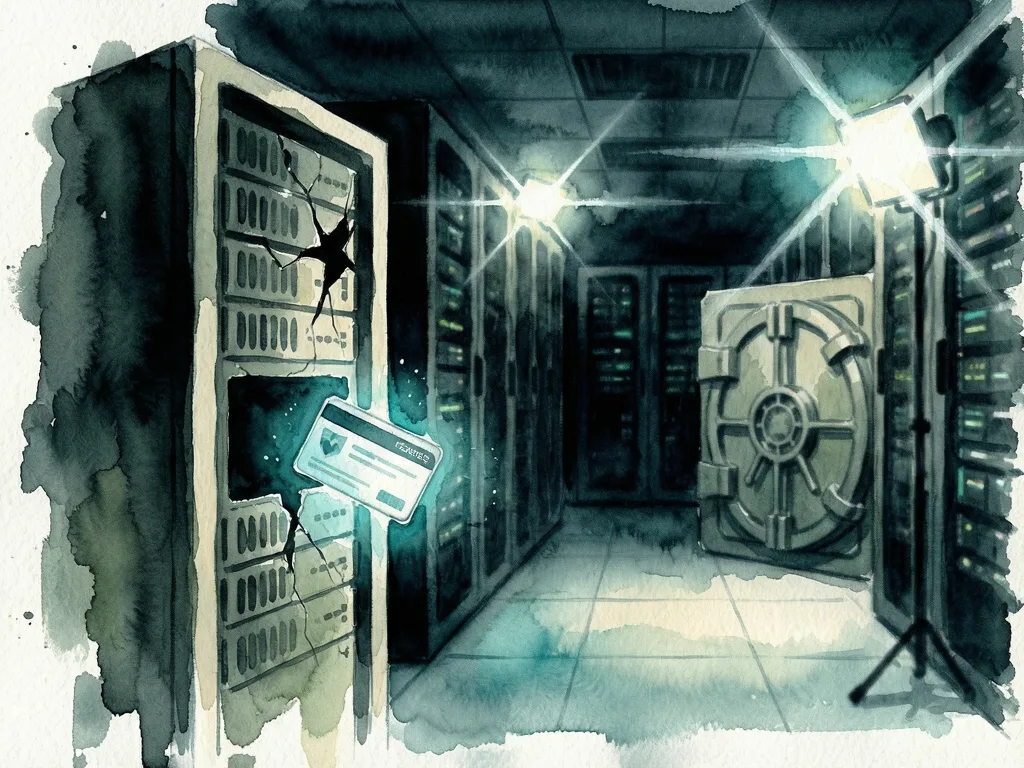
The most important point from Coinbase's latest public statement is not simply that an exchange was involved, but where the exposure appears to sit: in a third-party analytics relationship, not in the exchange's own systems or customer funds. Coinbase acknowledged the incident late Tuesday (Oct. 27) and said its support unit had posted on social media platform X that Amplitude, an analytics vendor, experienced a security incident which impacted a small subset of Coinbase customer contact data, among other Amplitude customers. Coinbase added that it had found no evidence of unauthorized access to Coinbase systems and that customer funds were not impacted. The company also said it was notifying impacted customers and regulatory agencies in accordance with its legal obligations.
That framing matters because it shows how a security incident can travel through a vendor relationship even when an exchange's core custody infrastructure is not shown to be compromised. For readers, the immediate question is narrower than whether Coinbase itself was breached. The better question is: what customer contact data was exposed, how much of it was affected, and what can an attacker do with information that helps a scam appear familiar?
The vendor path is a familiar attack surface
Coinbase's statement pointed to Amplitude rather than to its own network. Amplitude is described as an analytics vendor, which means it may handle product usage or customer-related data on behalf of businesses. The public statement does not specify which fields were affected, how many customers were involved, when the incident began, or what root cause Amplitude found. Those missing details are the main uncertainty. They also limit how much can be concluded about severity.
What can be concluded is that the incident fits a broader pattern described in research by PYMNTS Intelligence in the report “Vendors and Vulnerabilities: The Cyberattack Squeeze on Mid-Market Firms.” That research examined the danger third-party vendor breaches pose to businesses, especially middle market companies. It found that fraudsters often use social engineering tactics, including impersonating a familiar vendor to trick an employee into paying a bogus invoice. Hackers also want to capture sensitive information or systems to enable extortion in the form of blackmail or ransomware.
The report said that very often hackers use social engineering to breach third-party vendors or suppliers as the first step in an attack. Once a vendor is compromised, attackers can initiate malicious contact with a target company using the friendly front of a trusted partner. One example given in the report is emailing urgent payment requests from a stolen email account. The report also said compromised third parties can open software or infrastructure backdoors into systems at an otherwise well-protected target company.
The numbers from that research make the vendor route concrete: 38% of fake invoice scams stemmed from compromised vendors or suppliers, while 43% of phishing incidents had their roots in third-party breaches. Those figures do not prove that Coinbase customers were targeted with phishing, but they show why exposed contact data can be dangerous: it gives attackers a more credible starting point for messages that look like they come from a known service or vendor.
Crypto losses are often outside audited code
The Coinbase-Amplitude notice arrives in a context where the crypto sector has been dealing with a wave of security incidents. The public statement says this incident follows a number of breaches involving crypto companies in the past few months. A separate finding released last month by CoinGecko showed that hacks and thefts had cost crypto platforms more than $3.6 billion in the previous 18 months.
CoinGecko's research also challenged a common assumption: that security audits alone keep crypto products safe. The report found that most of those incidents, resulting from cyberattacks and stolen passkeys, occurred even though the companies had performed security audits. It added that most of the attacks involved areas that checks do not typically cover.
The report said audit reports often fail to capture the full spectrum of risk. It said most exploits on audited systems target external infrastructure, unaudited code updates, or systemic features manipulated via governance attacks. It also found that only about 11.0% of these incidents involved in-scope smart contract flaws, though those flaws still resulted in $396.0 million in losses.
That distinction is important. A smart contract audit can examine defined code paths, but it may not fully assess external systems, vendor integrations, operational workflows, credential handling, or governance mechanisms that can be manipulated. The $396.0 million loss figure shows that in-scope smart contract flaws can still be costly, but the larger $3.6 billion figure shows that the broader operational and infrastructure environment carries a much wider exposure.
What this means for customers and companies
For customers, the Coinbase statement offers two reassurances: no evidence of unauthorized access to Coinbase systems and no impact on customer funds. But the notice of impacted customers and regulatory agencies means some data exposure is being treated seriously enough for formal notification. Customer contact data may not directly move funds, yet it can be used to build more convincing phishing, impersonation, or social engineering attempts. The PYMNTS research supports that concern by linking third-party breaches to a large share of phishing and fake invoice scams.
For companies, especially those using analytics, customer relationship, or other third-party software, the lesson is that vendor risk is not just a procurement checklist. It is part of the attack surface. A vendor breach can create a pathway into an organization's communication environment, customer data, or operational processes. The PYMNTS report highlights that attackers often begin by compromising vendors or suppliers, then use trust and familiarity to reach the target company.
The uncertainty remains around how this specific Coinbase incident unfolded. The public statement does not say what categories of contact data were exposed, how many customers were affected, or whether Amplitude has identified a complete remediation plan. Those details will determine how much risk remains after notification.
The broader risk is ecosystem trust
The deeper issue is that crypto platforms depend on layers of software and partners: exchanges, analytics vendors, identity tools, infrastructure providers, and governance systems. When one layer fails, the visible damage may be limited, but the hidden damage can be a loss of confidence. That is why Coinbase's emphasis on customer funds not being impacted is significant: it tries to separate data exposure from custody loss.
At the same time, the CoinGecko data shows that confidence cannot rest on audits alone. The $3.6 billion loss figure over 18 months and the finding that most incidents occurred despite security audits suggest that the industry's most expensive failures are often not simple code bugs. They are gaps in external infrastructure, unaudited updates, stolen passkeys, governance manipulation, or third-party relationships.
Disclosure: This is an independent informational article, not investment advice. Cryptocurrency services may involve fees and regional restrictions that vary by provider.
Subjectsdata breachCryptoCoinbaseAmplitudevendor security
Read next
-
Wall Street is pushing for tokenized stocks, but some of its largest companies do not want them traded that way.
-
Nubank and Mercado Pago suspend crypto services, revealing third-party screening
-
Coinbase has secured final approval from the Office of the Comptroller of the Currency for a national trust bank.

Letters 0
- No letters yet. Be the first to write in.