
AI and Embedded Finance Set Higher Standards for Payment Controls
Faster payments shrink control windows, embedded finance shifts interfaces, and AI fraud demands real-time trust and compliance visibility.
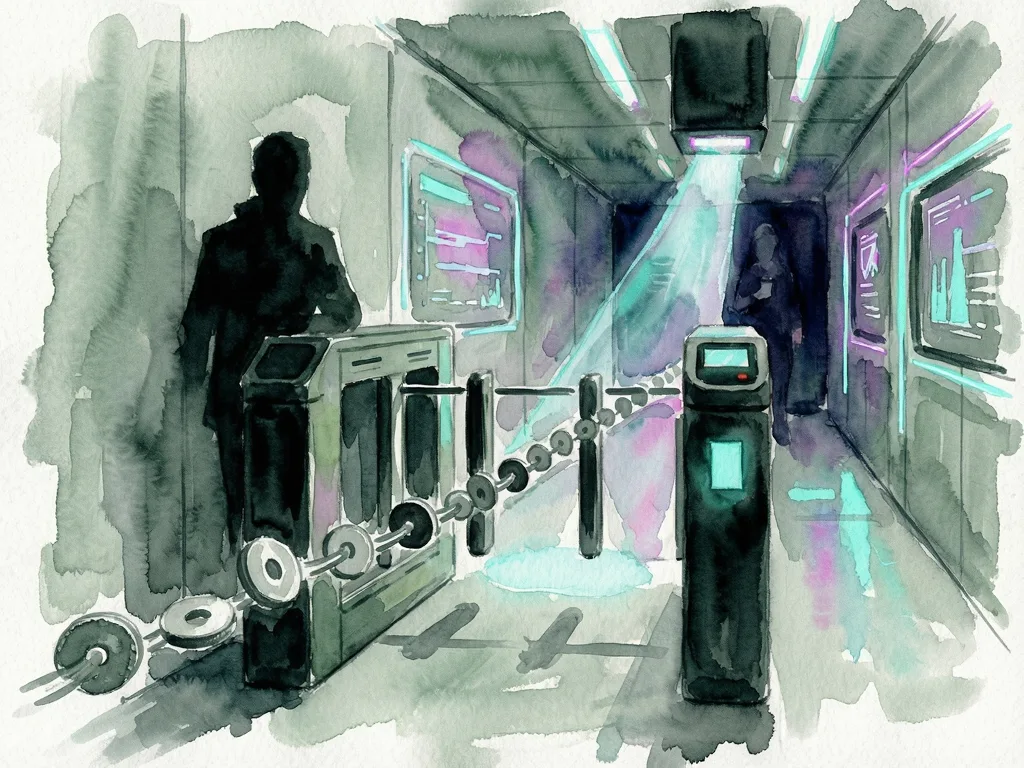
The central judgment from a PYMNTS interview with Taranjit Singh, senior vice president and Technical Fellow for Corporate Payments at WEX, is that faster payments do not simply make money move more quickly. They compress the time available to catch a bad transaction, reconcile an exception, or determine whether the party moving money is who it claims to be. The pressure therefore shifts away from the visible customer experience and toward infrastructure that customers rarely see.
Faster payments compress the window for control
Singh frames payment technology around three persistent demands: expanding access to capital, moving money faster at lower cost, and strengthening trust through security and compliance. Those goals can appear complementary, but speed changes the operating conditions around each one.
When transaction flows accelerate, the time for manual review, exception handling, and trust verification shrinks. A payment that once could be paused, reviewed, or reconciled within a broader batch cycle now may need to be assessed in real time. That makes the underlying control layer more important, not less.
The risk is not only technical. It is operational and institutional. If faster payment systems are not matched by equally fast visibility into exceptions, the benefit of speed can be offset by later reconciliation costs, fraud exposure, or compliance failures.
Embedded finance moves customer experience away from banking interfaces
Financial services now operate inside invoicing, software as a service, and other business workflows. That places more of the customer experience outside traditional banking interfaces. A payment decision may happen inside a billing system, a procurement workflow, or a software platform rather than inside a bank screen.
Singh notes that embedded features amplify the pressures. Even as distribution expands, payment providers still retain responsibility for compliance, anti-money laundering controls, and risk frameworks. The interface may be embedded, but the obligations are not embedded by default.
This creates a practical question for readers: when a financial service appears inside another product, who is still responsible for the controls behind it? The distribution model may be broad, but the accountability for money movement, sensitive data, fraud, and regulatory obligations remains with the payment provider.
Trust becomes a set of mechanics, not a marketing claim
For Singh, trust includes the mechanics behind a transaction. That means questions such as who carries regulatory responsibility, how money settles, how risk is assessed, and whether the ledger remains accurate as volume rises.
This reframes trust as something measurable. It is not only a brand promise or a user interface experience. It is the result of settlement design, risk assessment, ledger consistency, and operational visibility.
The article also points to a structural risk: separating fraud and risk management across providers can create blind spots. An integrated provider may be able to see both customer-facing payments and the underlying movement of funds. A fragmented setup may create a situation where one party sees the payment, another sees the risk signal, and another sees the settlement record, but no single view connects them in time.
That is the deeper implication of faster payments. The danger is not merely that a transaction is too fast to review. It is that different parts of the system may be fast while the controls remain slow.
AI versus AI puts fraud into the software supply chain
Artificial intelligence is altering the risk calculation because attackers and payment companies can draw on the same class of technology. Singh describes an “AI versus AI” environment in which criminals can use generative AI to synthesize identities while financial institutions deploy AI to identify suspicious behavior.
This changes the nature of fraud detection. Identity fraud is no longer only about stolen credentials or obvious anomalies. Generative tools can make synthetic identities more convincing, while fraud attempts may be coordinated across software workflows rather than isolated in a single payment channel.
Singh’s warning about the software supply chain is especially important: “Your overall payment security is as strong as the weakest software vendor in your supply chain.”
That statement expands the attack surface beyond the payment provider itself. If payments are embedded across invoicing systems, software platforms, and business workflows, then the security posture of each connected vendor matters. A payment system may be strong, but a weak linked vendor can become the failure point.
Data becomes the difference between useful AI and noisy AI
Singh grounds his case for AI-driven defenses in data. WEX has 40 years of proprietary payments data, and models can combine contextual information with institutional knowledge and compliance guardrails. Without those inputs and feedback loops, AI can produce false positives and poor financial decisions.
This is where the claim carries incremental value for readers. AI alone is not a security solution. The quality of the data, the context, and the feedback loop determine whether AI improves decisions or adds noise.
Payments data is not just transaction volume. It includes patterns of customer behavior, settlement flows, risk signals, exception types, and compliance history. If a model does not know the institutional context, it may flag harmless activity too often or miss harmful activity that looks ordinary in isolation.
The uncertainty is real. Faster AI adoption can improve detection, but it can also create operational friction. Too many false positives can slow legitimate payments and push staff to ignore warnings. Too few detections can increase fraud exposure. The challenge is tuning models with the right data and the right guardrails.
AI also matters after authorization
The interview does not treat AI as only a pre-payment fraud tool. Singh points out that AI also has a role after authorization. Treasury and payment operations still devote labor to reconciliation, exception handling, and combining structured and unstructured information.
That is a less glamorous but important part of payments. Authorization is not the end of the transaction lifecycle. Money still has to settle, records must reconcile, disputes may need to be handled, and exceptions must be resolved.
Models may bring structured and unstructured sources together and manage more complex post-payment workflows. But this requires clear data architecture and workflow ownership. If AI is used without operational integration, it may generate insights that no team can act on quickly enough.
Speed still depends on pre-AI infrastructure fundamentals
Singh emphasizes that speed depends on fundamentals that predate AI. Infrastructure needs visibility into faster money movement, modular and API-driven architecture, and compliance, know your customer, anti-money laundering, and risk controls embedded directly into workflows.
Reconciliation is part of the same equation. Faster transaction processing offers limited operational value if discrepancies take days to identify. In other words, speed at the front end is not valuable if slowness remains in the back end.
This is a practical risk for institutions building modern payment stacks. They may accelerate authorization while leaving settlement, reconciliation, and exception management too slow. The result can be a system that feels fast to customers but remains fragile inside.
APIs do not prove a payment system is safe
The same discipline applies when evaluating newer infrastructure. APIs reveal little about ledger architecture, consistency, transaction capacity, recovery times, encryption, or the controls operating behind a payment call.
This is an important counterpoint to the idea that modern interfaces automatically mean modern risk management. An API may make integration easy, but it does not by itself show whether the underlying ledger can scale, whether recovery is fast, whether controls are embedded, or whether the provider can support reporting and risk mitigation.
Institutions need to examine those underlying capabilities before relying on an interface to move money. The visible layer may be simple, while the payment system behind it must answer harder questions about accuracy, resilience, and control.
Modernization should begin with a dependency map
Singh says he favors continuous modernization over large replacement projects that can take years while business requirements change. Before replacing components, institutions need a detailed map of system dependencies and a common record for customers, transactions, contracts, and pricing.
His warning is direct: “You cannot modernize a system which you haven’t thoroughly mapped.”
This is where the article moves from payments technology to institutional strategy. Many modernization projects fail not because the new system is wrong, but because the old system was not fully understood. Dependencies, data records, contract terms, pricing logic, and operational exceptions may be hidden across teams and platforms.
Continuous modernization may mean upgrading in layers, preserving control, and reducing the risk of a multi-year replacement project that is finished too late. It may also mean building a common record before introducing faster or AI-enabled workflows.
Singh’s priorities for the next several years
Singh says his priorities for the next several years follow from that foundation. Technology, product, and compliance teams need shared workflows. New infrastructure should use flexible APIs and common standards where possible. AI should operate within security, regulation, and risk management rather than outside them.
Those priorities suggest that the next phase of payments is not just about speed. It is about aligning product development, compliance, and operations so that controls move as quickly as transactions.
This is also a warning against treating AI as an external add-on. If AI sits outside governance, it may create new blind spots. If it sits inside security, regulation, and risk management, it may become part of the control layer.
What readers should take from the WEX view
For readers evaluating embedded payments, faster transaction rails, or AI-assisted fraud controls, the practical takeaway is that speed changes the timing of risk, not the amount of risk. The more distributed and embedded the payment experience becomes, the more important it is to understand the control layer behind the interface.
The questions worth asking include whether a provider can see both customer-facing payments and underlying fund movements, whether compliance and risk controls are embedded into workflows, whether reconciliation can keep pace with transaction speed, and whether the data behind AI models is contextual, institutional, and governed by guardrails.
Faster payments can expand access, reduce cost, and improve experience. But they also expose weak infrastructure, fragmented controls, and unmanaged software dependencies. The real test is whether the system can remain accurate, secure, and reconcilable as volume and speed rise.
This article is independent informational reporting based on the PYMNTS interview and is not an official WEX statement. It is not investment advice. Payment services and embedded financial features can involve fees, and availability may be subject to regional restrictions.
Subjectspayment controlsembedded financeAI fraudfaster paymentstrust mechanics
Read next

Letters 0
- No letters yet. Be the first to write in.