
Mercado Bitcoin Loses $40 Million in Its Most Recent Cryptocurrency Hack
Mercado Bitcoin absorbed a $40 million hack, Binance faced $6.3 billion theft, and customer protection depends on reserves, recovery, and regulation.
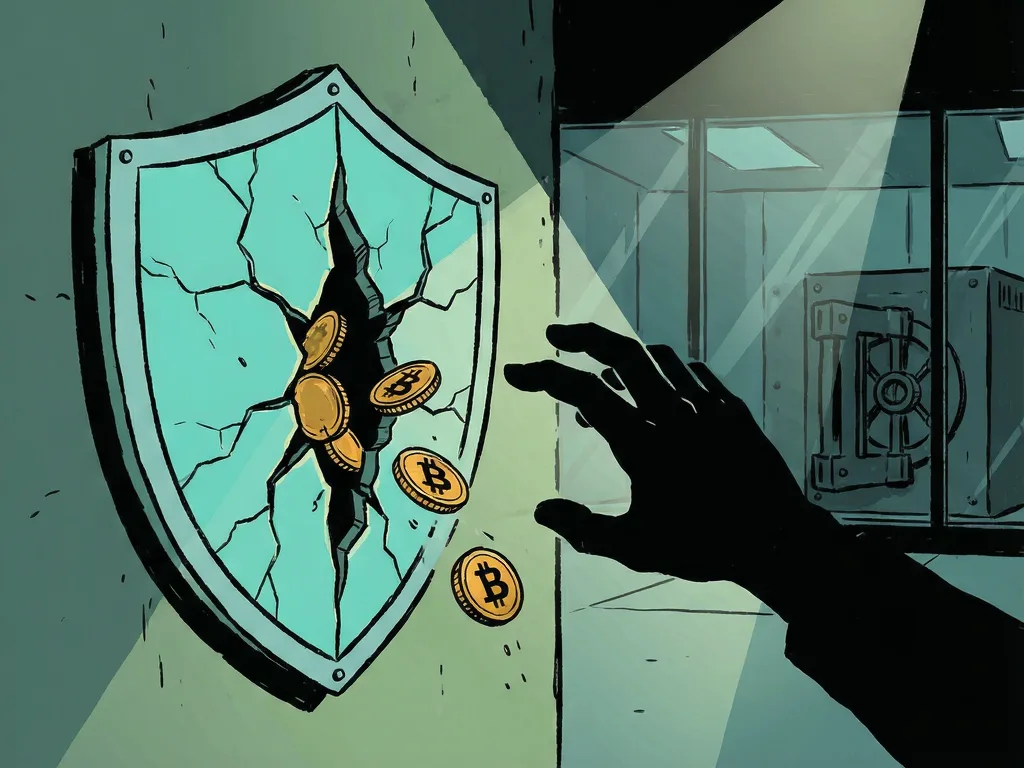
This independent informational article provides no investment advice. The central judgment is that two crypto-security incidents reported in the same period show different stress tests for exchanges: a $40 million loss absorbed by Brazilian cryptocurrency broker Mercado Bitcoin, and a larger Binance incident involving a reported record $6.3 billion theft and net customer withdrawals approaching $5 billion. The common thread is that customer protection after a breach depends on an exchange's willingness and ability to replace missing assets, contain operational damage, and prove reserves.
Mercado Bitcoin's loss is placed on the broker, not on customers
Mercado Bitcoin is reported to absorb a $40 million loss from the incident, with no customer losses expected. The attack targeted hot wallets but was quickly contained, according to the report. The company is investigating the incident, following the assets and working with authorities and relevant partners. No customer data was leaked, and the company temporarily suspended access to its application as a precaution.
That sequence gives the event a narrower immediate profile than a data breach: the exposure is asset movement rather than personal information. However, the suspension and asset-following work show that containment is not only a technical question. The exchange must also manage access, investigate movements, and coordinate with authorities and partners before customers can treat the platform as normal.
Binance's larger theft turns balance-sheet commitments into a trust test
The Mercado Bitcoin breach came days after Binance, described in the source as the world's largest crypto exchange, was the victim of a crypto heist in which hackers stole a record $6.3 billion. Net customer withdrawals were approaching $5 billion as of Monday morning, the report said. Binance said it intends to cover the losses in full, PYMNTS reported Friday, October 30.
PYMNTS separately reported that the commitment places the immediate financial burden on the exchange rather than making customers wait for investigators to recover the proceeds. That is the practical difference between a promise to make customers whole and a longer recovery process. If an exchange must fund a large loss, its ability to replace missing assets and prove reserves becomes the real buffer against customer uncertainty.
Recovery mechanics split sharply between stablecoins and Bitcoin
The source report notes that recovery takes different routes depending on the theft. Tether and Circle froze about $3 billion after the Binance hack. Issuer-controlled stablecoins have an avenue for intervention after funds depart an exchange.
That contrast matters because not all assets have the same intervention points. Sandeep Pyapali, founder and CEO of stablecoin infrastructure company Mesta, outlined conditions for making good on Binance's promise: "User balances are only truly safe if the exchange replaces the missing assets quickly, reopens withdrawals in an orderly way and proves its reserves again."
Bitcoin, by comparison, has no issuer with equivalent powers, Eric Jardine, head of research at Chainalysis, told PYMNTS. Authorities typically need the private keys or help from an exchange or another custodian holding the funds. Stablecoin issuers could immobilize stolen funds before an attacker moves or converts them, then help recovery via the applicable legal process, though this does not guarantee restitution.
Regulatory pressure is being built around Binance's incident
Meanwhile, Commodity Futures Trading Commission Chairman Michael Selig is using the Binance incident to make his case for bringing offshore cryptocurrency exchanges under federal supervision. The source report does not say whether that argument has advanced beyond his stated use of the incident.
For readers, the unresolved part is not whether exchanges should absorb losses, but how quickly and verifiably they can do so. The report does not provide fee schedules or regional access restrictions, and users should check a service's current terms and availability independently. What the incidents make clear is that customer protection after a theft depends on asset type, issuer intervention powers, custodial controls, and the exchange's financial capacity to replace missing assets.
SubjectsRegulationcrypto securityBinanceMercado BitcoinExchange Reserves
Read next


Letters 0
- No letters yet. Be the first to write in.