
The Payment Expert Podcast features Edwin Coe discussing the collapse of Guavapay and the limits of safeguarding electronic money.
Guavapay collapse shows bank-like apps are not banks. Electronic money safeguards may not protect users, leaving young and unbanked users exposed.
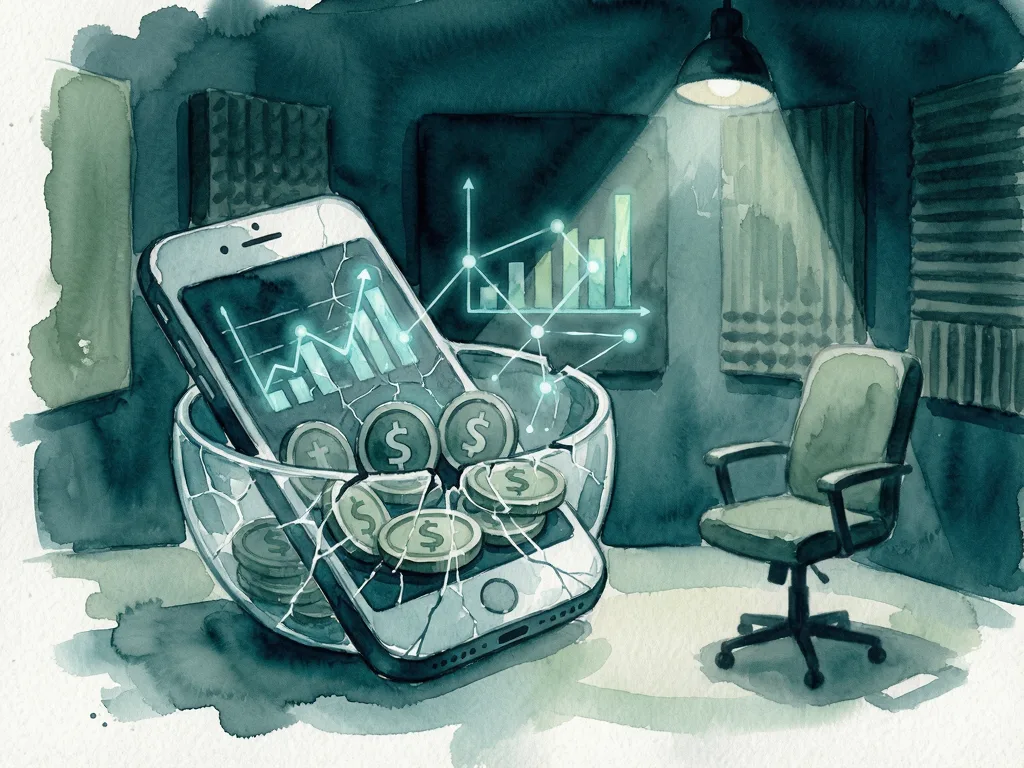
The central lesson from Guavapay is that the legal form of a payment account can be more important than its user interface. Charlotte Kessler, a commercial disputes and class actions lawyer at Edwin Coe, said payment apps that look like bank accounts leave younger users, and people who struggle to open a bank account, most exposed when an e-money firm fails. David Greene, Senior Partner at the same firm, added that customers of the collapsed e-money institution Guavapay are unlikely to get all of their money back. The two lawyers spoke on the Payment Expert Podcast about the shortfall and what consumers should check before trusting a payment app.
Guavapay agreed restrictions with the Financial Conduct Authority (FCA) in September 2025 and entered compulsory liquidation in January 2026. Repayments began after the regulator intervened but stopped partway through, Greene said. That left many customers with only part of their balance returned. Of the safeguarded funds meant to cover the rest, Greene said: “As far as I understand from the liquidator, there’s no money in the bank.”
Why a familiar app can hide an unfamiliar legal risk
MyGuava, the app associated with Guavapay, let customers view their transaction history, send money abroad and pay by card. Kessler said: “It functions so similar to a conventional bank account that it’s really hard for consumers to understand that it’s not a bank account.”
The gap matters because an e-money customer is buying a means of payment rather than depositing money for safekeeping. That distinction is legal, not visual. A customer who sees a balance, a card, transaction history and transfers may infer deposit protection, but the source of that inference is the app’s design, not the legal status of the money. Kessler doubts most account holders understand the difference.
Greene said Guavapay’s registration as a small electronic money institution put it at what he called “the lowest point of regulation” for FCA oversight. He found that odd for a firm with “a very substantial marketing budget.” The firm did tell customers it was not a bank and that their funds sat outside the Financial Services Compensation Scheme. Kessler questioned whether the disclosure went far enough.
The practical result is a mismatch between expectation and protection. A customer may open an app because it offers a balance, a card, transaction history and transfers. Those features create a bank-like mental model. But if the provider is an e-money firm, the customer’s claim may be tied to safeguarding obligations and liquidation, not deposit protection.
The users most exposed to a failed payment app
Kessler said under-30s use e-money apps at a marginally higher rate. She also said people who cannot open a conventional bank account are drawn to electronic money institutions because they are easier to join. That combination creates concentrated exposure. Younger users may be less likely to have a long history of comparing financial products, while people excluded from traditional banking may rely on the app as their primary store of value.
The risk is not only that the app fails. It is that the failure may arrive after the user has placed money in a structure that does not work the way a bank deposit does. If the user treats the app as a place to keep money, rather than as a route for payments, the legal distinction becomes more painful during liquidation.
What £26 billion of safeguarded funds shows about sector risk
The FCA said e-money institutions safeguarded about £26 billion in 2024. That figure shows the scale of customer money held outside the conventional banking system. It also explains why regulators have focused on safeguarding rules. The stricter CASS 15 safeguarding rules took effect in May this year. A month later the regulator ordered Euro Exchange Securities to stop providing e-money services, citing weaknesses in its safeguarding.
Those facts do not prove that every e-money firm is unsafe. They show that the sector is large, that the rules have been tightened, and that regulators are willing to act when safeguarding is weak. For customers, the lesson is to treat safeguarding as a compliance requirement that must be verified, not as a promise that automatically makes an app as safe as a bank.
Why liquidation can reduce the final recovery
Guavapay’s liquidators now have to establish whether safeguarding accounts were held properly. Kessler said: “As far as we know, there is at least a shortfall,” and urged customers to register their claims.
The next problem is cost. Pursuing recoveries costs money, and that money comes out of what customers are owed. Liquidators are paid from the company’s assets and rarely chase claims unless the returns justify the cost. Greene stressed he knew nothing to suggest Guavapay’s former office holders could be pursued. He gave a simple example: “Let’s say Guavapay owes £10,000. If liquidators are spending money pursuing those that might have some liabilities, that money is going to come out of that £10,000.”
This creates a difficult arithmetic for customers. Even if some assets exist, the cost of identifying them, bringing claims and recovering them may be too high relative to the possible return. A shortfall may remain after expenses. The question of whether the FCA’s oversight was adequate may be answered in due course, Greene said, but “that doesn’t do the creditors much good. They’d actually like their money.”
What customers should check before trusting a payment app
Kessler’s practical advice is to look up the legal entity behind any payment app on the FCA’s firm search. Customers should also check whether the provider promises safeguarding or Financial Services Compensation Scheme protection. She called those “two quite different things.”
Safeguarding is the regulatory obligation on the firm to protect customer money in a specified way. Financial Services Compensation Scheme protection is a separate protection route. If an app does not explain which applies, the customer may be assuming protection that does not exist.
Greene’s advice was narrower and more defensive: keep balances small, spread them across providers and treat an e-money account “as it is, which is just a payment process.” That approach reduces exposure without requiring customers to understand every technical rule. If the account is only used to move money quickly, a larger balance does not sit there waiting for a failure.
The broader implication is that app design can outrun consumer understanding. A provider can market a simple interface while operating under a lighter regulatory category. The customer sees convenience; the legal structure sees payment services. Guavapay’s collapse turns that gap into a recovery problem.
This article is general information, not legal or financial advice. Fees, product availability and regulatory protection can vary by provider and region.
Subjectselectronic moneyFCAGuavapaypayment appssafeguarding
Read next

Letters 0
- No letters yet. Be the first to write in.