
Stagnation, Not Competition, Poses the Greatest Risk to Private Label Card Programs.
Private label cards need digital loyalty, wallet access, and secure checkout to stay relevant; stagnation can make them invisible.
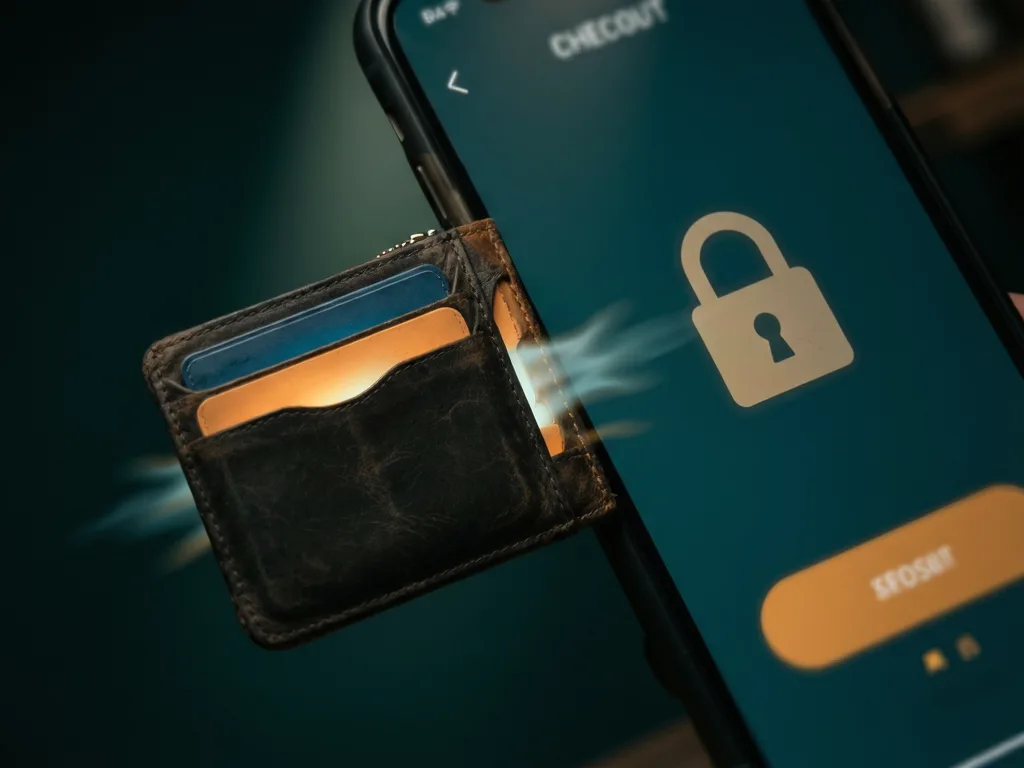
Target Circle Card Highlights Risks in Private Label Payment Systems Built 10 to 15 Years Ago
Core judgment
The Target Circle Card is useful here not as a consumer product review, but as a marker of where private label payments are headed. It shows that a card can succeed when payments, loyalty, convenience, and digital access are combined. The broader issue is that many private label programs still depend on older payment infrastructure, and some mid-tier retailers, benefits providers, or fleet card issuers built systems 10 to 15 years ago. That age gap matters because closed-loop cards were designed for controlled environments, while today’s customers expect instant digital use, wallet integration, and secure checkout across channels.
The appeal of Target Circle Card goes beyond rewards
Private label cards are often introduced through perks. The Target Circle Card is described as one of the leading examples of the private label card model, showing how payments can be integrated with loyalty and rewards to drive customer engagement. But its appeal is not limited to cashback rewards and delivery perks.
Like other leading private label programs, it offers convenience and security. Customers can pay in stores and across apps, websites, and digital wallets. That combination is important because loyalty programs often struggle when they sit beside payment rather than inside it. A card that only rewards purchases may be used when convenient. A card that can be added to a digital wallet, managed in an app, and used across channels becomes easier to keep near the customer.
The contrast with older private label programs is sharper than it may first appear. Many programs have not embraced these capabilities. Some continue to rely primarily on physical cards, including basic magnetic-stripe cards without chips, and use more traditional security measures. As consumer expectations shift toward seamless digital experiences, those limitations become harder to ignore.
Alex Weaving, Chief Commercial Officer for Digital Payment Solutions at IDEMIA, frames the risk bluntly: when private label issuers fail to keep up, their payment cards risk becoming invisible in customers’ everyday payment journeys, moving from out of the wallet to out of mind, and ultimately out of use. His point is that modernization is not just a card upgrade. With the right strategy, private label issuers can transform payment cards, whatever their form factor, from a payment instrument into a strategic platform for brand engagement, loyalty, and long-term growth.
Why the closed-loop model is under pressure
The defining strength of a private label card is its closed-loop structure. The issuer controls where and how the card is accepted. That gives flexibility to tailor programs to different brands and use cases, from retail to employee benefits to fleet networks.
For brands, the closed-loop model can create value in several ways. It can provide customer data, greater control over the payment experience, and opportunities to integrate payments more closely with rewards and loyalty. A retailer, for example, may care less about general-purpose acceptance than about repeat purchases at its own stores. An employee benefits provider may need credentials accepted across a larger merchant network. The model is not inherently wrong; it is purpose-built.
The pressure comes from changed customer behavior. Customers now expect seamless digital experiences, including instant access to newly approved cards and easy integration with mobile wallets. When they must wait for a physical card to arrive, manually enter card details at checkout, or navigate separate processes for payments and rewards, friction can undermine engagement.
Security presents another challenge. Closed-loop products are not inherently more secure, especially when programs rely on magnetic-stripe cards or authentication by text message, which can leave them vulnerable to skimming, phishing, and credential compromise.
Weaving describes the situation as a critical tension: the strengths of the closed-loop model are no longer sufficient in a world where consumers expect instant, seamless, and secure experiences across every channel. A closed-loop model that has not evolved alongside changing consumer expectations can limit acceptance, slow modernization efforts, expose security vulnerabilities, and create friction in the customer experience.
Security is the foundation, not a feature
For issuers still using outdated payment technologies, moving to chip cards and contactless payments is an important first step. These upgrades can improve in-store security and convenience. But they do not, by themselves, address the risks associated with digital payments.
The source points to a specific legacy problem: some mid-tier retailers, benefits providers, or fleet card issuers built their infrastructure 10 to 15 years ago and still run non-tokenized primary account number-based systems, especially in e-commerce. That exposes sensitive credentials and slows the transition to digital payment experiences.
This matters because physical card security and digital credential security are not the same problem. A chip card can reduce card-present fraud, but an online checkout, app payment, or stored card credential can still leak the underlying card number if the system is not tokenized. True card security, according to the quoted perspective, demands end-to-end tokenization across every transaction channel: mobile, in-store, and online. A fragmented tokenization landscape means a single weakness can expose the entire ecosystem.
Tokenization replaces a card’s primary account number with a unique digital credential for payment and storage. When implemented consistently across channels, it reduces exposure of the underlying card number during digital transactions. The security logic is straightforward: if a token is compromised, the real card number is not immediately exposed. The practical difficulty is consistency.
Achieving that consistency can be a hurdle. A program might support tokenization in mobile wallets while continuing to store actual card numbers in its app or e-commerce systems, leaving gaps in its security strategy. This is where many modernization projects become complex. It is not enough to add a wallet option or a new checkout flow. The issuer needs to consider the entire credential lifecycle through an omnichannel lens, from issuance and storage to transmission and use.
Weaving’s broader point is that security is no longer only about stopping fraud. It is also about enabling better experiences and protecting customer trust. In that framing, tokenization becomes the foundation of private label cards in the digital world, enabling wallets, one-click checkout, card-on-file, and future commerce models.
The app becomes the control center
If security is the foundation, the mobile app is the visible surface where many modern private label programs will win or lose relevance. The app is described as one of the most important channels in a modern private label program because it brings payments, card management, and rewards together in a single interface, giving customers a central place to interact with the brand.
A well-designed app can let users tap to pay with an emulated digital card, add a newly approved card to a digital wallet immediately, receive real-time transaction alerts, and manage card settings. It can also make rewards easier to track and redeem while surfacing offers that encourage repeat engagement.
The example given is Monizze Pay, by Belgian employee benefits provider Monizze. Integrated directly into the Monizze app, it enables users to make contactless payments with their meal, eco and gift vouchers on iOS and Android. The issuer retains control of the customer journey, brand experience, and payment environment.
That last detail is strategically important. Many modern payment features push brands toward third-party platforms. Digital wallets, embedded checkout, and app-based payments can create convenience, but they can also dilute control. Monizze Pay illustrates how an issuer can use digital payment functionality while keeping the customer relationship inside its own environment.
E-commerce is another priority. Embedded payment options, such as a dedicated buy button, can keep a private label card top of mind as consumers shop on an issuer’s website or app. When paired with tokenized credentials and streamlined authentication, these features can simplify checkout while keeping payments connected to the broader loyalty ecosystem.
Agentic commerce changes the next problem
The source also looks ahead to artificial intelligence. As AI takes on a greater role in commerce, private label programs should begin planning for agentic commerce, in which AI agents help consumers navigate purchases or initiate transactions on their behalf.
This is a subtle but meaningful shift. If consumers delegate more actions to digital interfaces, issuers, including private label card issuers, will need credentials and payment infrastructure that support secure, controlled integration with AI-driven shopping experiences.
The risk is not simply that AI agents will make purchases. The risk is that payment programs built for human-initiated checkout may not have the credential controls, tokenization, and permissioning needed for agent-driven transactions. A system that works for a customer clicking a button may not be ready for an AI agent acting on behalf of a customer.
Physical cards still matter, but they must connect
Digital innovation should not come at the expense of the physical card. For many customers, a physical card remains the primary entry point to a payment and loyalty program, and it is a tangible reminder of the brand. Combined with contactless functionality and digital capabilities, it can help bridge the gap between in-store and online interactions.
The opportunity is not to choose between physical and digital. The opportunity is to make physical and digital cards work together as part of a cohesive payment experience. A physical card can introduce the brand. A digital wallet can speed use. An app can manage rewards. Tokenization can make card-on-file and checkout safer. If those pieces are disconnected, the program becomes a bundle of features rather than a coherent experience.
Acceptance strategy has no single answer
While digital capabilities across mobile apps and e-commerce are becoming non-negotiable, issuers still have important decisions to make about the future of their programs.
Some may choose to preserve the traditional closed-loop model to maintain greater control over acceptance, costs, and the customer experience. Others may seek to expand beyond those boundaries.
One option is to co-badge a private label card with an international payment network, allowing customers to retain program perks while using the card across a wider range of merchants and payment environments. Alternatively, issuers may expand acceptance via partner networks that connect their credentials to new use cases.
Technology choices also influence these possibilities. Proprietary contactless technologies may suit programs that prioritize tightly controlled, closed-loop acceptance, while the source’s chip-card-based solutions can support interoperability depending on the implementation.
Ultimately, these decisions should reflect the program’s specific objectives. A retailer may prioritize repeat purchases at its own stores, while an employee benefits provider may need credentials accepted across a larger merchant network. There is no universal acceptance strategy for private label programs. The right approach depends on the issuer’s business model, customer expectations, and long-term growth ambitions.
Why the source’s perspective matters
The article’s recommendations are not neutral consumer advice. They come from a payments technology perspective, with IDEMIA as the quoted company and with a closing reference to IDEMIA Secure Transactions. The source says technology providers such as IDEMIA Secure Transactions can help issuers define and execute a modernization roadmap, from chip-card and contactless migration to digital card enablement and e-commerce readiness such as one-click payment options and agent-driven transactions. They can also support more advanced capabilities, including tokenization strategies designed to connect physical and digital payment experiences securely.
Weaving notes that major leading private label payment schemes have already invested in their own tokenization capabilities by partnering with IDEMIA Secure Transactions and leveraging that expertise. By issuing proprietary network tokens, they can gain greater control over digital payment experiences while strengthening security across their ecosystems.
This is a useful observation, but it also requires caution. The recommendation to modernize with tokenization, digital enablement, and partner support aligns with the interests of a technology provider. The underlying facts are still important: closed-loop models are under pressure, older infrastructure can create risk, and inconsistent tokenization can leave gaps. But readers should treat the vendor perspective as one input, not as a final verdict on every private label card program.
What this means for readers
For customers, the practical implication is that private label cards are increasingly judged less by whether they exist and more by how easily they can be used. A card that can be added to a wallet, managed in an app, and used across digital channels is more likely to stay in everyday use. A card that requires waiting for physical delivery, manual entry at checkout, or separate loyalty tracking is more likely to fade.
For issuers, the implication is that modernization is not simply adding a digital feature or replacing an outdated card. It requires a holistic strategy that preserves the control and loyalty advantages of private label products while minimizing friction and vulnerabilities. Modernization can also be complex, requiring decisions around security, credential management, digital enablement, and acceptance.
The source closes by pointing readers to a position paper titled “Are Private Label Cards Ready for the Next Generation of Secure Payments?” The paper is presented as a deeper look at key considerations and recommended strategies for building a modern private label payment experience.
Reader note
This is not investment advice. The source material does not specify fees or regional restrictions, and no such details are added here.
Subjectspayment modernizationprivate label cardsclosed-loop paymentsTarget Circle Cardloyalty rewards
Read next


Letters 0
- No letters yet. Be the first to write in.