
The World Bank is partnering with Circle and Citigroup to explore the use of stablecoins for payments
World Bank tests USD Coin payments via Circle and Citi for faster, cheaper transfers, while keeping scope narrow amid stablecoin currency concerns.
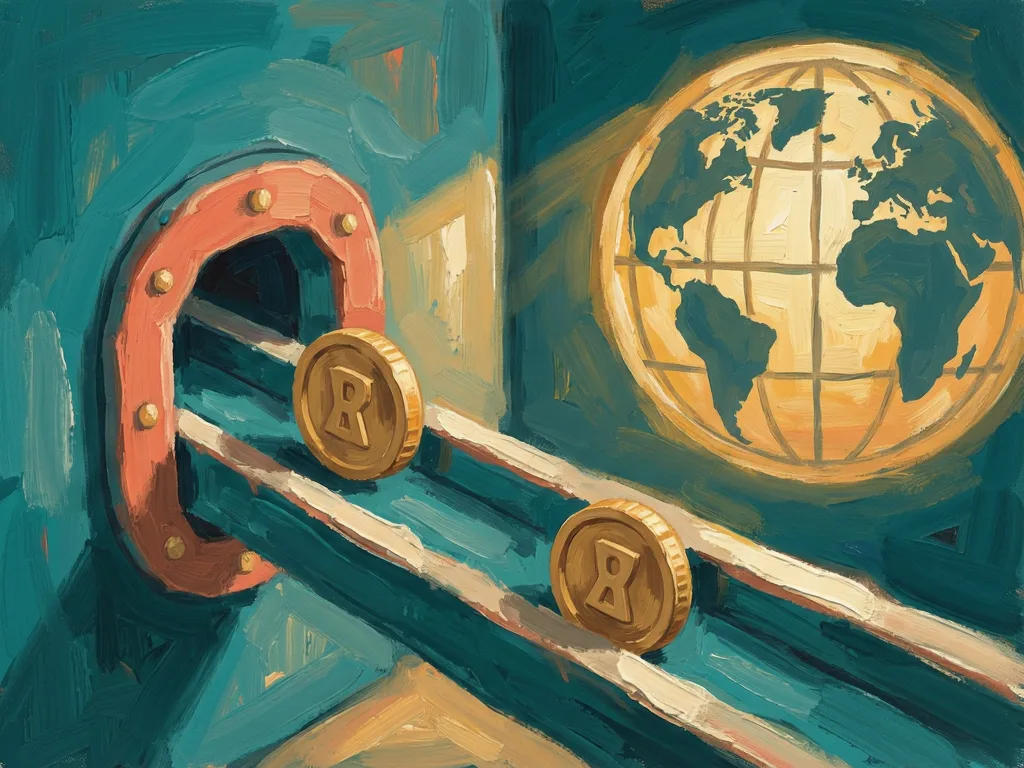
Core judgment: The World Bank Group is not declaring a new monetary system. It is testing whether a US dollar stablecoin, USDC, can move money to borrowing countries faster and at a lower cost while using existing banking relationships. The decision is best read as an operational experiment. Its boundaries are clear: it starts with countries that allow digital assets, relies on Circle for issuance and transfer tools and on Citi to connect the project to banking networks, and sits beside an older warning that stablecoins can threaten local money and central bank control.
The pilot is a plumbing test
The World Bank Group said Tuesday it would explore using Circle’s USDC stablecoin to get money to borrowing countries faster and at a lower cost. According to a press release, the group will work with Citi and Circle to see how payments in stablecoins tied to the US dollar could fit into the banking network it already uses to send money abroad.
Circle would provide the tools for USDC issuance and transfers, including the token symbol USDC. Citi would connect the project to existing banking networks. The group plans to start with borrowing countries that allow the use of digital assets.
That design matters. The stablecoin is not presented as a replacement for the World Bank’s current cross-border payment path. It is being examined as a possible addition to it. The choice of Citi suggests the pilot is meant to remain inside established banking channels rather than bypass them. The condition that countries must allow digital assets also limits the scope and signals sensitivity to local monetary policy and legal constraints.
Why speed and cost matter
The World Bank is a development bank owned by its member countries. It lends to governments in low- and middle-income countries and gives grants to some of the poorest, helping fund schools, health clinics and clean water systems.
For a lender and grant maker, payment movement is not just back-office detail. If funds reach project implementation more quickly, schools, clinics and water systems can advance with less delay. If transfer costs are lower, more of the allocated money can remain available for those uses. The source does not quantify how much time or money the stablecoin route could save, so the economic case remains an assumption to be tested.
Transparency work already exists
The bank began rolling out blockchain tool FundsChain in 2025 to let project teams and auditors see where the money goes. The bank says the tool now covers more than 350 projects in 96 countries.
This context is important because the World Bank is not approaching digital rails with a blank slate. It has already invested in a ledger-based system aimed at payment visibility. The stablecoin pilot may therefore be evaluated against existing transparency expectations: whether it improves traceability, whether it adds operational complexity, and whether it can be audited as easily as the bank’s current payment arrangements. The press release does not state that USDC payments will be integrated with FundsChain, so any connection should be treated as possible rather than confirmed.
The 2023 warning remains a political limit
The World Bank in 2023 warned that widespread use of stablecoins could displace local money and make it harder for central banks to manage economies.
That warning explains the cautious framing. If stablecoin payments were used directly at scale, they could create demand for dollar-linked digital money in places where local currencies are still the main medium of exchange. That could complicate monetary policy and exchange-rate management. By starting with borrowing countries that allow digital assets and by working through Citi, the World Bank appears to be testing a narrow route before any broader rollout. The unresolved question is whether even a narrow route can avoid spill-over effects if it becomes common practice.
The final-mile cost problem
In June, CGAP, a research group based at the World Bank, examined using stablecoins to deliver humanitarian aid. The report found that stablecoins can make it easier for an aid agency to move money across borders. However, when recipients are paid directly in stablecoins, they may have to pay to convert them to local currency.
This is the key risk for readers who care about real-world outcomes. A payment can be faster and cheaper at the institutional level while still leaving an extra cost at the point where money becomes spendable locally. If a government, contractor or beneficiary must convert USDC into local currency, the stablecoin may remove one friction but create another. The net saving depends on whether the conversion cost is lower than the cost of the existing cross-border payment process.
A separate crypto finance signal
The source also lists a related story: an Abu Dhabi royal backs a 49% stake in a Trump-linked crypto bank venture, according to WSJ. That fact belongs to a different transaction and does not show a link between that venture and the World Bank pilot. It does, however, place the stablecoin discussion inside a wider private-sector effort to connect digital assets with banking and institutional finance.
What to watch next
The meaningful test will be whether the World Bank can keep the experiment limited to countries that allow digital assets, preserve central bank concerns, and prove a concrete payment advantage. Readers should look for three things: whether payments are used mainly between institutions or also reach end recipients; whether conversion fees are measured at the final mile; and whether the stablecoin route can be audited with the same clarity as existing systems, including the transparency work already underway through FundsChain.
This is independent informational analysis, not official World Bank communication and not investment advice. Stablecoin payment arrangements may involve conversion fees and are regionally restricted to jurisdictions that allow the use of digital assets.
SubjectsstablecoinsUSDCCross-border paymentsdigital assetsWorld Bank
Read next



Letters 0
- No letters yet. Be the first to write in.