
OakNorth secures Federal Reserve and Office of the Comptroller of the Currency approval for a US license.
OakNorth's acquisition of Community Unity Bank won Federal Reserve and Office of the Comptroller of the Currency approval, making it the first foreign digital bank with a US national banking charter. The license lets the UK lender take deposits and lend directly, reducing partner reliance and supporting growth in a market where it has provided about $3.5 billion. Its focus is lower mid-market businesses with $5 million-$100 million revenue, especially commercial real estate and commercial and industrial financing. The charter may enable checking, savings, payments and accounting integrations, while OakNorth plans US hiring.
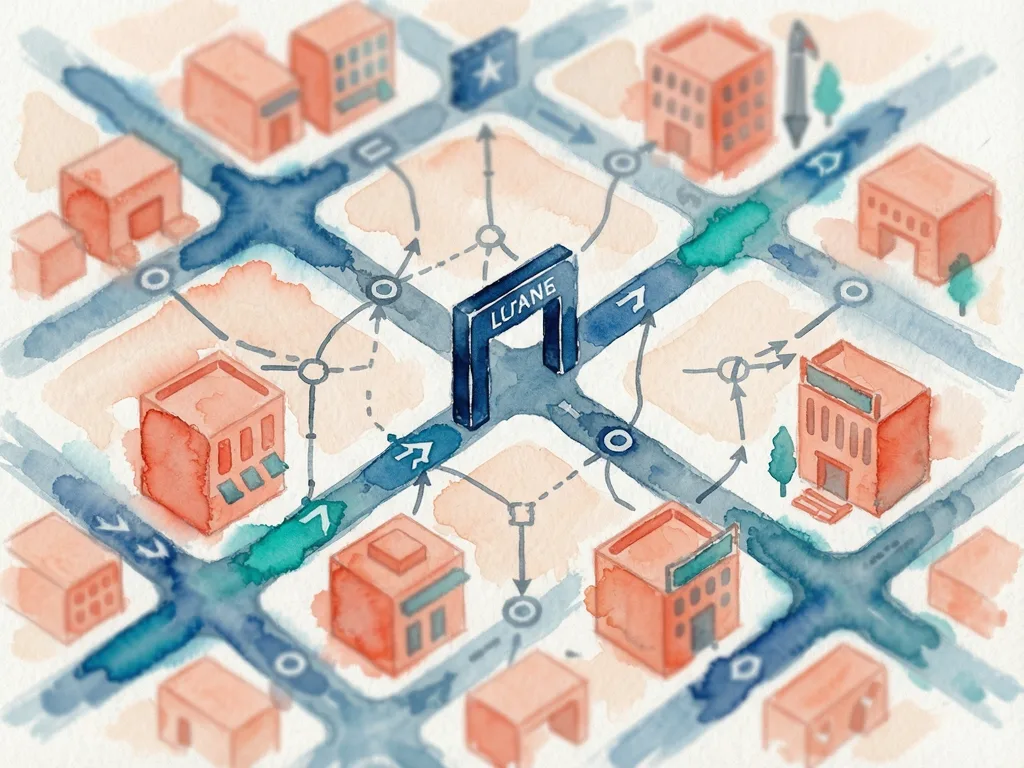
OakNorth Becomes First Foreign Digital Bank With a United States National Banking Charter After $3.5 Billion Lending Push
Core judgment
OakNorth’s acquisition of Michigan-based Community Unity Bank has been approved by the Federal Reserve and the Office of the Comptroller of the Currency, and the British digital lender said Friday that makes it the first foreign digital bank to gain a national banking charter in the United States.
The significance is not simply that a UK-founded lender bought a US bank. It is that OakNorth can now move from a partner-dependent model to a direct banking model in America. With a US banking license, the company said it will be able to take deposits and make loans directly through its US bank, rather than relying on partners. That changes the economics of its US expansion, because deposit funding is usually central to scaling lending.
The approval also gives OakNorth a platform to deepen a market it has already entered. The company entered the US market in 2023 and has since provided roughly $3.5 billion in lending to American businesses, the company said. The US has become important enough that, at the time of the charter approval, it accounted for roughly 40% of OakNorth’s new lending volume, according to the company.
What OakNorth is building around
OakNorth’s US strategy is concentrated on the lower mid-market, a segment often overlooked by large banks but too big for many consumer-oriented fintech lenders. The company targets entrepreneur-led businesses with revenue between $5 million and $100 million, with a focus on commercial real estate and commercial and industrial financing.
That focus matters because the lower mid-market is where credit decisions often depend less on automated consumer scoring and more on business context: cash flow, industry conditions, management quality, contracts, collateral and growth plans. OakNorth says its model emphasizes “forward-looking data insights” rather than backward-looking credit assessments, with the goal of making faster lending decisions.
Rishi Khosla, OakNorth’s CEO, framed the approach as a deliberate departure from traditional banking. “When we founded OakNorth, we set out to build a bank that works around the needs of proven entrepreneurs, rather than expecting them to fit into traditional banking models,” Khosla said in a statement Friday. “We believe ambitious businesses deserve a financial partner that understands where they’re going, not just where they’ve been.”
This positioning suggests OakNorth is trying to compete not by becoming a mass-market US bank, but by becoming a specialized lender and, eventually, a broader financial operating partner for smaller business clients.
Why the charter changes the operating model
Before the charter, OakNorth could lend in the US, but it needed partners to provide some of the core banking infrastructure. A national banking charter allows the company to take deposits and make loans directly through its US bank. That is a meaningful step for a digital lender because deposits can reduce reliance on wholesale funding and allow the company to keep more of the economics of the customer relationship.
The regulatory approval could also let OakNorth follow a path it has taken in its native UK. The company said the green light could support services such as checking and savings accounts, payments and accounting integrations for businesses. Those services are not merely add-ons. For entrepreneur-led companies, banking, lending and accounting connectivity can become a single workflow, increasing switching costs and improving the lender’s data position.
London-based OakNorth plans to hire tens of employees in the US as it grows its business there, Khosla told Reuters. The hiring plan indicates the company is not treating the charter as a symbolic milestone alone. It is preparing to build out a larger local operation.
The timing and regulatory signal
The deal arrived in a changing US policy environment. OakNorth is one of the many firms pursuing a US banking license after Donald Trump’s return to the White House. The company announced its acquisition of Community Unity roughly two months after the US president’s second term began.
But the approval itself did not move at the pace often associated with a sharply accelerated regulatory posture. It took 20 months for US regulators to approve OakNorth’s application. The source describes that timeframe as more closely mirroring the evaluations typical of the Biden era than the shorter interval favored recently.
That detail is important. The charter shows that a foreign digital bank can obtain a US national banking charter, but it also shows that the process can still be long and institutionally demanding. The approval is therefore not proof that regulatory speed is guaranteed for other digital lenders. It is evidence that a well-executed application can clear the Federal Reserve and the Office of the Comptroller of the Currency, but over a timeline closer to traditional charter review.
OakNorth’s own public explanation for its US entry also points to a market gap. Khosla said in March 2025 that, in the summer of 2023 following the collapse of several US banks focused on serving the lower mid-market, the company saw an opportunity to help fill the funding gap those businesses were experiencing.
That context matters because the lower mid-market can be sensitive to bank failures and credit tightening. When lenders retreat, businesses with revenues of $5 million to $100 million may find financing slower, more expensive or harder to access. OakNorth is positioning itself as a faster and more data-aware alternative.
Competitive implications
Khosla anticipates that OakNorth’s model will give it an advantage against community banks competing for the lending needs of smaller businesses. “We can deliver speed, reliability and consistency for our customers, which enables us to win against community banks, regional banks and the like,” Khosla told Reuters.
The claim rests on three possible advantages. First, digital lenders can often move faster because underwriting workflows are more standardized and data-intensive. Second, a forward-looking underwriting approach may be more useful for growing businesses than a purely historical credit assessment. Third, once OakNorth can offer accounts, payments and accounting integrations, it can compete for the entire financial stack, not just the loan.
Still, the competitive picture is uncertain. Community and regional banks may retain advantages in relationship depth, local knowledge, deposit trust and familiarity with small-business borrowers. OakNorth also faces execution risk: a digital lender with a US charter must now operate as a US bank, including customer acquisition, funding, compliance, servicing and credit discipline in a new market.
What this means for readers
For entrepreneur-led businesses in the lower mid-market, the approval creates a more concrete option: a UK-founded digital lender that can now provide direct US banking and lending services. For the US lending market, it signals that foreign digital banks can pursue a national charter route, though the timeline can be lengthy.
For other fintech and digital banking firms, OakNorth’s case may serve as a practical data point. A US charter is still possible, but it may require patience, a bank acquisition and a clear regulatory path. The 20-month approval timeline suggests that regulators still evaluate foreign digital bank applications through a traditional scrutiny lens, even in a more politically active licensing environment.
The next question is whether OakNorth can convert the charter into a broader US deposit and business-banking franchise. The company has already built a US lending track record of roughly $3.5 billion and says the US now represents about 40% of new lending volume. The charter gives it the legal and operating foundation to build on that. Whether it can scale deposits, integrate services and win consistent business against local banks remains the real test.
Disclosure: This is an independent informational article, not an official OakNorth communication, and it is not investment advice. Banking services may involve fees and may be subject to regional restrictions.
SubjectsFederal ReserveOakNorthdigital bankUS national banking charterlower mid-market lending
Read next


Letters 0
- No letters yet. Be the first to write in.