
Bessent says banks have been at the forefront of cybersecurity for decades.
Bessent says banks face constant cyberattacks but remain resilient; AI-era fears are overstated, while outages may reflect security updates.
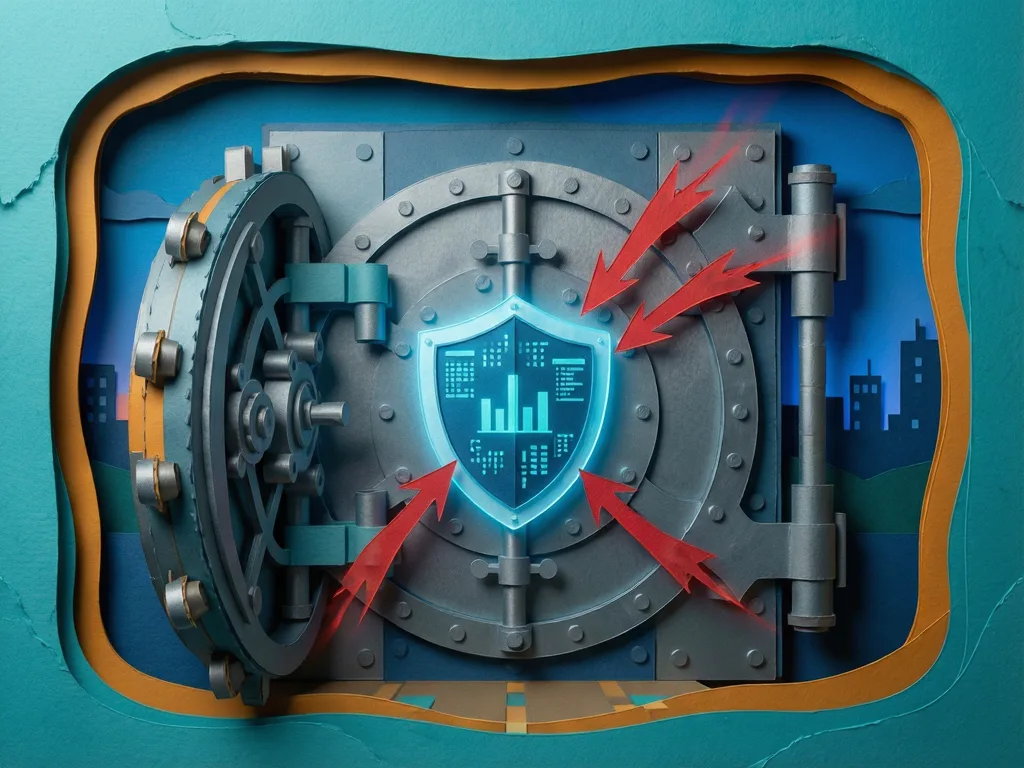
Scott Bessent Said Consumers Should Not Worry About Banks as AI Advances
Treasury Secretary Scott Bessent said Sunday on CBS’s Face the Nation that consumers should not worry about the safety of financial institutions as artificial intelligence advances. His core judgment was simple: banks are not being reassured because they are free of incidents, but because they have operated under constant cyber pressure for decades.
Resilience, not absence of attack
Bessent said, “Banks have been at the forefront of cybersecurity for decades,” and added, “They experience attacks every day, every week, every month. And they are by far the most resilient companies in the U.S. economy.”
The argument reframes the risk. A bank that is attacked regularly may look exposed, but Bessent presented that same history as proof of durability. The question for consumers, in his view, is not whether threats exist, but whether the institutions can continue operating under them.
That message had context. Bessent appeared following a week marked by technology outages across multiple business and government sectors, including financial services. Asked whether consumers should worry about financial institutions in an age of AI, he said they should not.
Outages as the cost of defensive updates
Bessent said recent outages affecting banks are in part due to patching their security systems in response to threats AI could pose. This is the analytical pivot in his statement: visible disruption is linked to invisible protection.
He compared the process to a vaccine. “I think the American people should think of it as a vaccine,” he said. “Your arm may hurt, you may feel a little bad the next day, but it increases your long-term immunity and resiliency.”
For readers, the analogy suggests that short-term inconvenience may be accepted when it is tied to stronger defenses. It also creates a testable expectation: if the updates improve long-term resilience, the cost should be temporary. If the cost recurs without clear security benefit, the analogy becomes weaker.
What remains uncertain
The statement does not identify which bank outages were caused by which patches. It does not quantify the threat that AI could pose to financial institutions. It also does not promise that consumers will avoid service disruption.
The source gives Bessent’s public reassurance, the Sunday CBS’s Face the Nation setting, and the broader context of technology outages across multiple business and government sectors. It does not provide technical evidence, fee information, or regional restrictions.
What the message means for consumers
Consumers are being told that banks’ history of facing cyberattacks every day, every week, and every month is a reason not to panic about AI-era threats. Bessent’s position is that the most resilient companies in the U.S. economy are already used to pressure, and that security updates may be part of the reason recent disruptions occur.
This article is independent informational commentary, not investment advice. The source does not specify fees or regional restrictions.
Subjectsconsumer bankingcyber resilienceScott Bessentbank cybersecurityAI advances
Read next


Letters 0
- No letters yet. Be the first to write in.