
Banks are rushing to close security gaps as the risk of major technology outages increases.
AI exposes weaknesses faster than banks can safely patch, causing tech outages as regulators scrutinize resiliency and third-party risks.
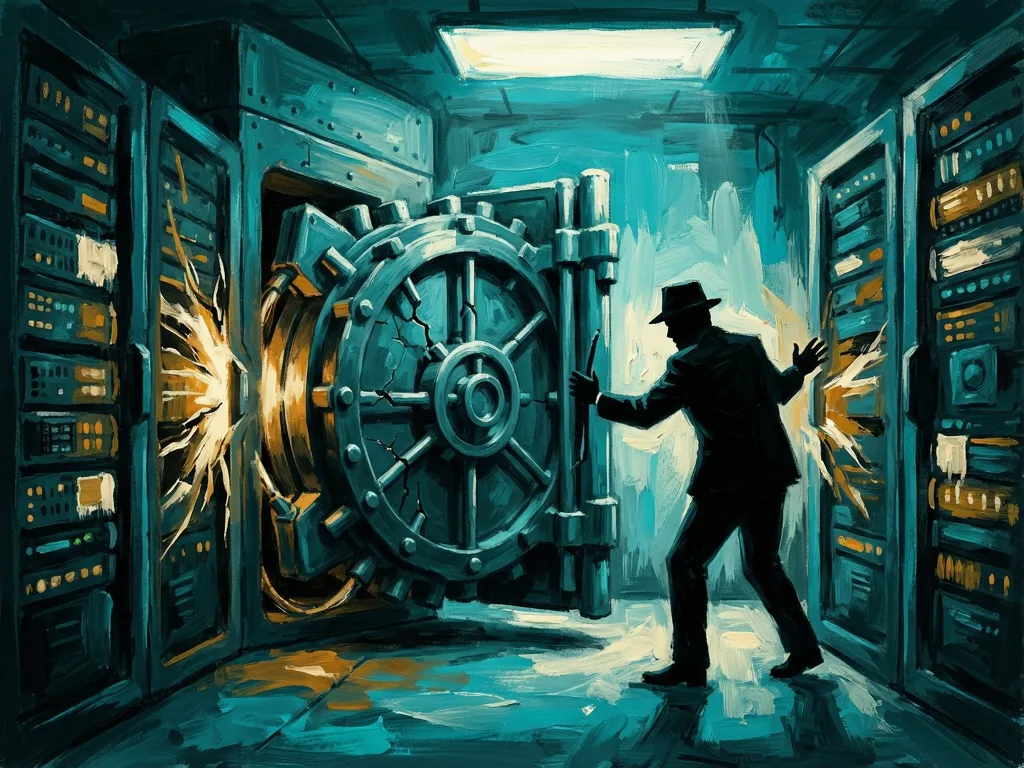
More Technology Outages Are Likely as AI Models Expose Vulnerabilities Across the Last Eight Days
Core judgment: The outage wave is a patching problem, not only a security breach problem
Experts told Banking Dive Wednesday that more technology outages similar to those in the past week are likely because artificial intelligence models are exposing system vulnerabilities, including at banks. Microsoft, the Federal Aviation Administration, JPMorgan Chase, United Airlines, Apple and the National Security Agency all encountered outages over the last eight days, Cybersecurity Dive reported Thursday. The pattern points to a practical tension: institutions are under pressure to patch weaknesses, but each patch or internal change can disrupt services while testing catches up.
Justin Herring, a New York-based partner at Mayer Brown, described the situation as a period of heavy updating. New vulnerabilities are being found, and every update that changes internal systems creates an opportunity for unexpected breakage. In theory, organizations could eventually reach a point where vulnerabilities are discovered at roughly the same rate they are patched. Herring said during a live virtual event co-hosted by Banking Dive and Cybersecurity Dive that such an equilibrium is not expected in the foreseeable future.
Scale and uncertainty: patching is being pushed faster than normal
Citi CEO Jane Fraser addressed the topic Wednesday during an interview with Bloomberg. She said she understood why the recent collection of outages felt unsettling, but argued that the level of simultaneous patching across the world’s technology stack is fivefold and tenfold higher than previously seen. That makes failures less surprising than they might appear. Fraser added that outages and downtime should be expected for a while as technology is upgraded and vulnerabilities are patched, and that the process will ultimately make institutions more resilient. She linked that resilience to the power of AI models, which can become a problem in bad actors’ hands.
Herring said most large banks are grappling with the same issue and racing to address weaknesses. The capacity to find vulnerabilities has grown much faster than the capacity to fix them, he said. He contrasted bank system updates with updating an iPhone: after a change, institutions must check whether anything else has broken, which requires extensive testing.
Regulator questions focus on AI use, outage risk and patching side effects
Banks involved in Anthropic’s cyber defense initiative Project Glasswing have been inundated with questions from regulators, Herring said. The inquiries cover how banks are using AI tools, how they manage associated risks, how they assess the risk of outages tied to patching, and the risk that deploying those tools may break something. Herring characterized the process as complicated and said it will remain an ongoing challenge for quite some time.
Ann Barron-DiCamillo, chief information security officer at U.S. Bank, said during the virtual event that resiliency matters because improvements to critical systems can create intermittent outages. She said practitioners are trying to reduce panic, while recognizing this is a different moment. The priority, in her framing, is to put resiliency measures in place so organizations can respond when disruptions occur.
Barron-DiCamillo also cautioned against confusing increased visibility with deteriorating security. AI and frontier models have helped organizations find substantially more weaknesses, but counting a finding alone is no longer meaningful. Cyber teams should understand what is externally exposed and exploitable and connect that to critical services with material business impact, which she said is a much better use of time.
Third-party exposure adds another layer of risk
The recent pace of outages has also sparked cyberattack concerns. JPMorgan said Thursday that some of its third-party vendors were targeted in a cyberattack, exposing certain marketing data, including some customer names and email addresses. Visa and Mastercard were affected as well. JPMorgan said there was no connection to the service disruption that occurred Monday.
Herring said banks and regulators are intensely focused on third-party risk. Company leadership should understand which vendors are critical, including the most important technical support vendors, and identify how risk is mitigated through business continuity planning and contractual protections. He said the AI revolution is bringing even more dependence because banks are likely to become more dependent on service providers, since AI tools are generally built on external models.
Sepideh Rowland, a partner at financial services advisory firm Klaros Group, said banks must continuously reassess where their risks and vulnerabilities are and evolve controls as conditions change. Third-party risk itself evolves, so banks need to stay alert to changes in vendor control mechanisms. She asked whether vendors keep clients informed and whether clients understand potential new risks posed by third parties. If a third-party relationship becomes too risky and must end, Rowland said banks need to know what business continuity looks like at that moment.
The threat side: AI compresses the path from weakness to exploitation
Panelists noted that AI tools have democratized threat capabilities and changed the cybercrime landscape at an unprecedented pace. Herring said criminals can exploit vulnerabilities without even knowing how to code because AI tools can help find and deploy weaknesses in new and novel ways. That has made threat types that were possible but rare now common.
Barron-DiCamillo said AI enables bad actors to identify and operationalize a weakness much faster than the industry has seen. In her view, the issue is not necessarily a wave of novel attacks caused by AI, but compression of the time between vulnerability discovery and exploitation.
Response plans must move at the new speed
Herring said many bank leaders are focused on making sure internal controls are effective in practice, not just on paper. Lenders should test incident response plans with actual decision-makers, including through table-top exercises, and update those plans to account for new tools and the need to act faster.
The speed at which threat actors can move with AI tools is straining incident response plans, Herring noted. Actions that might reasonably have taken half a day to decide or act on a few years ago may now move dangerously slowly. To respond more quickly, he said banks might consider placing more authority in the hands of front-line leaders such as chief information security officers.
What remains uncertain
The source of these views is a live virtual event co-hosted by Banking Dive and Cybersecurity Dive, plus related reporting and interviews. The experts’ positions are not uniform forecasts, but they converge on a risk: AI-assisted vulnerability discovery is outpacing repair capacity, and large-scale patching can itself cause outages. The uncertain variables are how quickly equilibrium can be reached, how well resiliency measures hold, how third-party dependencies behave under stress, and whether decision-making inside banks can become faster enough to match the compressed attacker timeline.
The source does not state fees or regional restrictions. This article is independent informational analysis, not official guidance or investment advice.
SubjectsregulationcybersecuritybankingAItechnology outages
Read next
-
The Singapore Financial Technology Festival 2026 is being broadcast live on its third day.
-
AI is helping merchants handle disputes, but it does not yet advise them on which disputes to contest.
-
Stablecoin issuers face a January approval deadline under the Guiding and Establishing National Innovation for US Stablecoins Act.

Letters 0
- No letters yet. Be the first to write in.