
Block Envisions Bitcoin for Everyone
Block's mandate links routine bitcoin payments to global finance change, emphasizing usability, fees, trust, regulation, and settlement rails.
Core judgment
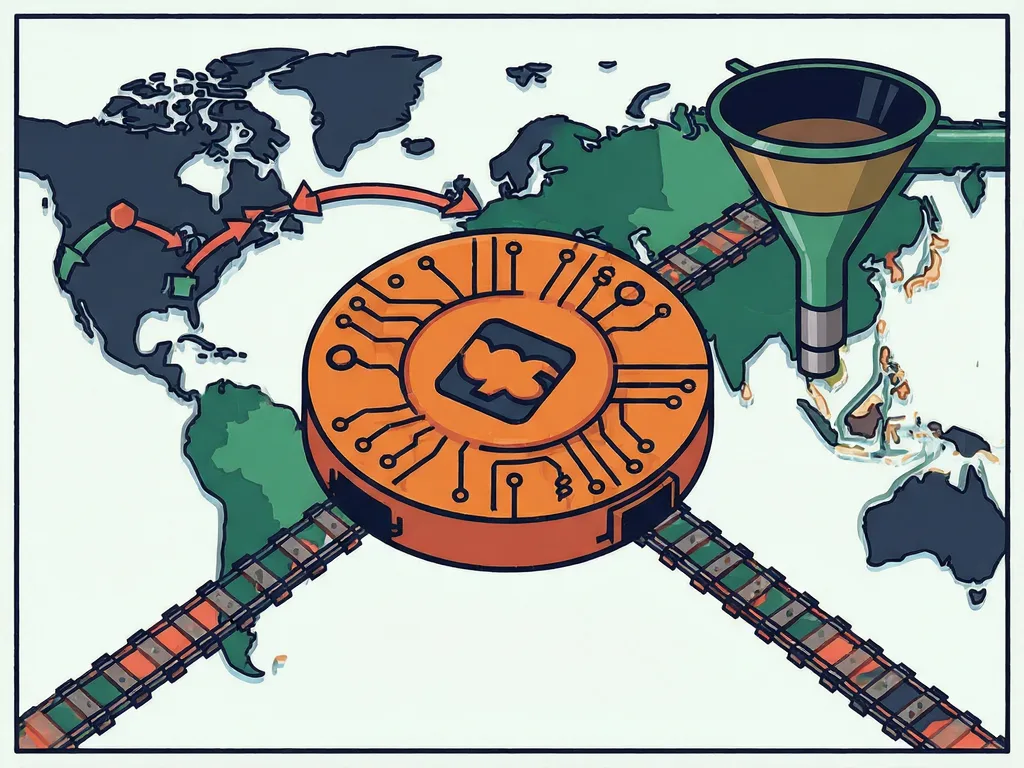
The statement assigns Miles Suter, the company’s head of bitcoin, two big tasks: make bitcoin a routine payment tool and change the global financial system. That is not just a job description. It compresses two very different problems into one mandate.
Making bitcoin a routine payment tool is a product, distribution and convenience problem. Changing the global financial system is an infrastructure, trust and regulation problem. The first succeeds when users and merchants stop noticing the rails. The second succeeds when banks, businesses, regulators and ordinary savers begin treating bitcoin-like settlement as part of normal finance.
The source itself is minimal. It gives no company name, no product specification, no date, no fee figure, no user count and no geographic scope. That lack of detail is important: the mandate is directional, not a finished product announcement. Readers should treat it as a signal about strategy, not proof of immediate usability.
Why “routine payment” is harder than it sounds
A payment tool becomes routine only when it is faster, cheaper or less effortful than the option it replaces. For most users, that means competing with debit cards, credit cards, bank transfers, mobile wallets, local payment apps and stablecoin-style settlement.
Bitcoin has a real advantage: value can move without requiring a traditional bank as the immediate intermediary. But the base bitcoin network is not automatically suited to small, instant purchases. Confirmation times can vary. Network fees can rise when demand is high. Wallets, exchanges, merchant tools and fiat conversion must work smoothly in the background.
For everyday payments, the user does not need to see bitcoin’s architecture. The user needs to pay, receive a receipt, get a refund if needed, and avoid a confusing tax or accounting trail. The merchant needs predictable settlement, low fraud risk and integration with existing point-of-sale or e-commerce systems.
That is why “routine payment” is a product challenge. It is not enough for bitcoin to exist. The company’s head of bitcoin must make it feel ordinary.
Why “change the global financial system” is a different ambition
The second task is much larger. A global financial system includes cross-border transfers, correspondent banking, payment clearing, foreign-exchange markets, securities settlement, treasury operations and access for people excluded from formal banks.
Bitcoin does not replace all of those functions by itself. It can influence them by offering an alternative settlement asset, a store of value and a programmable money layer when combined with exchanges, custodians, payment gateways, Lightning-style networks and regulated financial services.
The phrase “change the global financial system” should be read carefully. It does not mean bitcoin will automatically overthrow banks. It means the strategy is aimed at a deeper layer than consumer wallets. The goal may be settlement infrastructure, cross-border liquidity, merchant acceptance, treasury services or institutional rails that reduce dependence on traditional payment intermediaries.
For readers, the distinction matters: payment adoption is judged by checkout friction. Financial-system change is judged by trust, compliance, scale and resilience under stress.
Fees and regional restrictions are part of the story
Any bitcoin payment path can involve several costs. They may include network fees paid to miners, exchange spreads when converting between bitcoin and local currency, merchant processing fees, custody or withdrawal fees, and card or bank fees on the way in or out. These costs can change depending on network congestion, liquidity, geography and the payment method used.
The source does not provide a fee model. That means readers cannot assume bitcoin payments are cheap, instant or universal. A transaction may appear simple to the user while carrying several hidden costs behind the interface.
Regional restrictions also matter. Bitcoin services may be limited by licensing rules, anti-money-laundering checks, sanctions regimes, tax reporting requirements, consumer-protection laws or outright restrictions in some jurisdictions. A service that is routine in one country may be unavailable or heavily regulated in another.
Independent readers should check whether the service is licensed where they live, whether the company’s terms allow them to use it, and whether tax authorities require records for each payment. Availability and legality are not the same thing.
What the two tasks imply for different users
For consumers
The value proposition is not investment upside. It is convenience. A consumer should ask: Can I pay a merchant without worrying about price movement every minute? Can I understand the total cost? Can I get a refund? Can I use the service legally in my country?
Bitcoin’s price can move independently of whether it becomes useful for payments. Payment adoption does not guarantee asset appreciation. Readers should not treat a payment mandate as a buy signal.
For merchants
Merchants will judge bitcoin payments by business outcomes. The questions are whether acceptance adds sales, whether settlement is predictable, whether accounting remains clean and whether fraud or chargeback risk is manageable.
If bitcoin is used as a payment asset, merchants usually need a path to local currency, clear records and integration with existing systems. A company’s head of bitcoin must make those boring operational requirements feel invisible.
For developers and enterprises
The bigger signal is the attempt to connect bitcoin to mainstream financial rails. That may involve APIs, custody, compliance tooling, treasury services, payroll, invoicing or cross-border settlement products.
The harder part is not writing code. The harder part is legal clarity, operational resilience and institutional confidence. A payment network used by one company is a product. A payment network trusted by banks, regulators and large enterprises begins to resemble financial infrastructure.
Risks and open questions
The mandate faces at least four uncertainties.
First is regulation. Payment rules, tax treatment, consumer-protection standards and sanctions compliance can change the cost and legality of bitcoin payments. A product that works in one jurisdiction may fail in another.
Second is volatility. A payment tool is easier to adopt if users can convert quickly into stable local currency. But conversion introduces counterparty risk, liquidity risk and exchange-spread costs.
Third is competition. Card networks, bank transfers, digital wallets and stablecoin payment rails already solve many everyday payment problems with familiar legal frameworks. Bitcoin must offer a meaningful advantage, not just a different technology.
Fourth is trust. Changing the global financial system requires adoption by institutions that are risk-averse and heavily regulated. That takes time, audits, compliance systems and clear governance.
There is also an information gap. The source identifies Miles Suter as the company’s head of bitcoin and states his two tasks, but it does not specify the company, the product roadmap, the geographic coverage, the fee structure or the compliance status. Readers should treat this as a strategic statement, not a complete service description.
The independent takeaway
Miles Suter’s two big tasks reveal a common crypto-payments dilemma: ordinary users judge bitcoin by checkout speed and total cost, while institutions judge it by settlement certainty, compliance and scale.
A company can make bitcoin a routine payment tool only by hiding complexity from users. It can claim to change the global financial system only if that simplicity survives audits, regulation, fraud checks, liquidity stress and public trust.
This is an independent analysis based on the short source statement, not an official company communication and not investment advice. Bitcoin may be used or not used; fees, service availability and legal restrictions vary by country and provider. Verify current terms, local regulations and total costs before acting.
SubjectsBitcoin PaymentsGlobal FinanceAdoptionRegulationMiles Suter
Read next
Letters 0
- No letters yet. Be the first to write in.