
Convenience Stores Test Vertical SaaS Across Multiple Business Types
Toast Fuel and Walmart's tap to pay plans show convenience stores are widening vertical SaaS across fuel, retail, food, loyalty, and payments.
Toast Fuel and Walmart's Mid-2027 Tap to Pay Plan Show How Convenience Store Software Is Widening Vertical SaaS
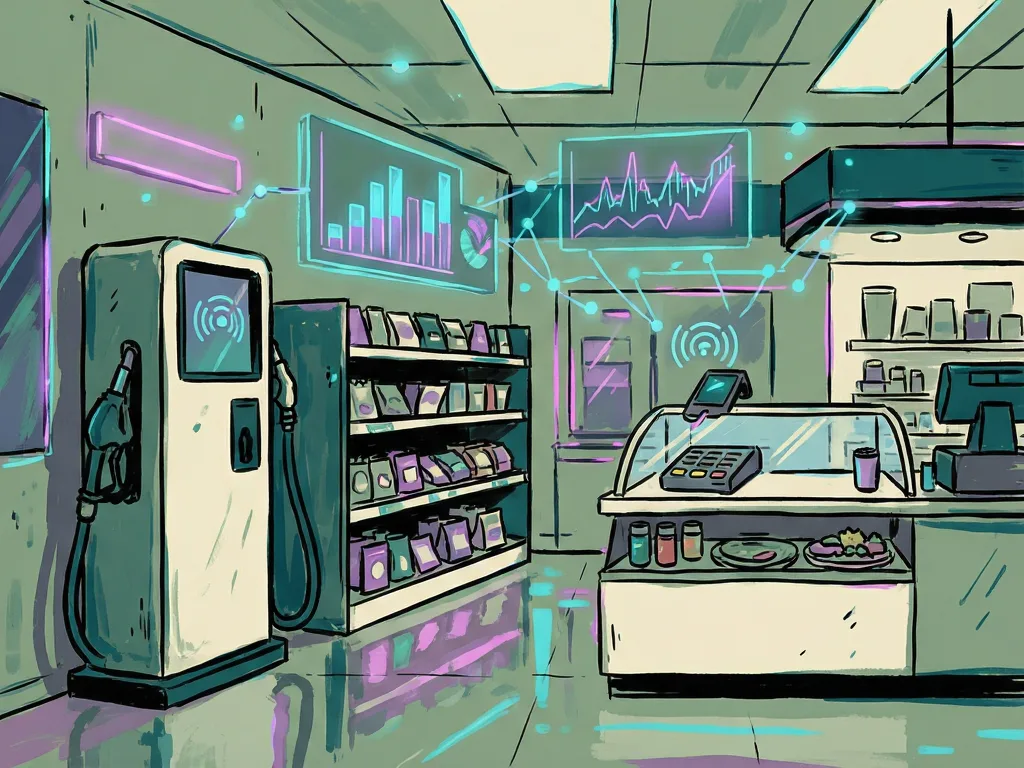
The convenience store is becoming the most demanding test case for vertical software. A single visit can involve fuel authorization at the pump, grocery checkout, prepared food orders, employee scheduling, loyalty rewards, and sometimes financial transactions that are not really shopping. Toast Fuel and Walmart's plan to extend tap to pay to its fuel stations in the United States by mid-2027 show two different paths to the same problem: how to connect separate business systems without erasing the specialized functions that made each vertical useful in the first place.
A Single Visit Creates Many Business Systems
Convenience stores offer both challenge and opportunity for SaaS providers because one location can bring several industries into one point of contact. A customer may authorize a fuel purchase at the pump, walk inside for groceries, and order prepared food during the same visit. The operator must manage fuel, merchandise, food preparation, employees, loyalty, and payments across those activities. Some locations also serve as places where consumers conduct financial transactions that have little to do with buying merchandise.
The difficulty is structural. Restaurant software can be built around menus, kitchens, ordering, and tips. Retail software tracks merchandise, inventory, and checkout. Fuel systems have their own pumps, pricing, authorization, and payment requirements. Software built deeply for one line of business must now reach sideways into several others without losing the industry-specific functions that made vertical software useful.
Why Payments Are the Natural Starting Point
Payments offer a starting point for blending several points of contact because money crosses nearly every part of the operation. A fuel transaction, a grocery sale, a food order, and a wallet funding event all generate data that can be tied to the same visit, the same customer, and the same operator workflow.
This does not mean payments alone solve the problem. Payment acceptance is only one function. Bill payment, wallet funding, and other money movement carry their own data requirements, fraud controls, and compliance obligations. But payments create a common thread across otherwise separate systems.
Toast Fuel Pushes Restaurant and Retail Software Toward the Pump
Toast launched Toast Fuel in September, combining in-store and at-the-pump fuel payments with retail and food service capabilities, PYMNTS reported Sept. 29. The platform also includes pump controls and technology for food operations, digital ordering, and inventory.
That launch is significant because it shows a restaurant and retail software provider trying to extend beyond the point of sale. Fuel is not just another checkout category. It has pump-level authorization, pricing, and hardware controls. By adding fuel payments, pump controls, digital ordering, food operations, and inventory, Toast Fuel is testing whether a restaurant-focused platform can also manage the mixed operations inside a convenience store.
Walmart's Mid-2027 Tap to Pay Plan Signals a Payments-Led Expansion
Walmart is approaching the same physical environment from the payments side. The retailer plans to extend tap to pay to its fuel stations in the United States by mid-2027 after rolling out contactless acceptance across its stores and clubs, PYMNTS reported Aug. 24.
Walmart's plan shows how a large operator can use payment acceptance as a bridge between retail and fuel. Contactless payment in stores and clubs is one thing. Extending the same behavior to fuel stations adds another layer, because fuel transactions involve pumps, authorization, and potentially different risk controls. The mid-2027 timeline also suggests that convenience store software is being shaped not only by what customers want at the counter, but by what they are already comfortable doing at the pump.
Embedded Finance Raises the Data and Risk Bar
The broader vertical SaaS market has already been moving in this direction as software providers incorporate payments and other financial functions into platforms built around specific industries. Embedded finance is moving deeper into industries where money movement forms part of complicated operating processes, PYMNTS reported July 30.
The restaurant sector provides one indication of where the model can lead. Restaurant platforms are putting financing alongside payments, ordering, and business management software, PYMNTS reported July 13. This shows that software is no longer just recording transactions. It is becoming the place where operators manage money flow, credit decisions, and financial operations alongside everyday business functions.
Demand for that shift appears broad. The PYMNTS Intelligence report "The Embedded Finance Scale Factor: How Firm Size Shapes Strategy, Technology and Partnership Decisions" found in April that nearly 80% of middle-market companies expected to upgrade their embedded finance capabilities within 12 months. That figure does not prove every convenience store software upgrade will succeed, but it shows that mid-sized operators are under pressure to combine financial functions with operational systems.
PYMNTS has also tracked how physical retailers are serving as destinations for everyday money movement as consumers load cash into digital wallets, pay utility bills, fund accounts, or move money to other people during store visits. Financial activity changes the economics and responsibilities of the software involved. The more consequential opportunity lies in what operators can do with the information generated across the business.
Data Is Where the Convenience Store Becomes Useful
Fuel demand affects store traffic. Food orders place demands on staffing and inventory. Data tied to loyalty and rewards can illuminate whether the customer who arrives for gas also buys merchandise or prepared food.
This is where vertical SaaS has a real chance to expand its value. If software can connect pump transactions, grocery checkout, food service, loyalty, and financial transactions, it gives operators a broader view of the visit. But that requires more than payment reporting. It requires preserving specialized requirements across fuel, restaurants, retail, and financial services while making their combined data usable.
Electric Vehicle Charging Adds Another Category
Another variable is arriving outside the store. Electric vehicle charging adds a service with different hardware, payment, and operating requirements from gasoline. Convenience store operators, including 7-Eleven, have already built charging networks.
For software providers, supporting both forms of vehicle energy creates another category that the technology stack must accommodate. A fuel pump and an electric vehicle charger are both vehicle energy transactions, but they are not the same system. Charging introduces different equipment behavior, payment patterns, and operational constraints. This makes the convenience store an even more complicated environment for software that wants to cover the whole visit.
The Convenience Store Test May Redefine Vertical Software
Convenience stores provide an unusually demanding test. If vertical SaaS can preserve the specialized requirements of fuel, restaurants, retail, and financial services while making their combined data more useful to operators, the definition of a "vertical" winds up widening.
The risk is clear. Software can become too broad and lose the depth that made it valuable. A platform that handles payments, fuel, food, inventory, loyalty, and financial transactions must still work well at each of those points. If it does not, it may create more complexity for operators rather than less.
What This Means for Operators and Software Vendors
For operators, the implication is that convenience store technology is no longer just about checkout. It is about coordinating multiple business lines in one visit. Fuel authorization, merchandise inventory, prepared food, employee management, loyalty, payments, and financial transactions all generate data that can be more useful when connected.
For software vendors, the implication is that vertical boundaries are becoming functional, not just industry labels. Toast Fuel and Walmart's mid-2027 tap to pay plan show two ways to approach the same environment: one starts with restaurant and retail software and moves into fuel, while the other starts with retail payments and expands to fuel stations. The deeper question is whether combined data can help operators understand customer behavior across the whole visit.
This article is informational and is not investment advice. It relies on examples and facts reported in the source material, including PYMNTS reporting on Toast Fuel, Walmart's United States fuel stations, embedded finance trends, and convenience store data. Fees and regional restrictions may apply to payment acceptance, fuel authorization, financial transactions, software platforms, and electric vehicle charging services.
Subjectsvertical SaaSconvenience storespaymentsToast FuelWalmart
Read next



Letters 0
- No letters yet. Be the first to write in.