
Bakkt Has Chosen Thredd to Launch Its Stablecoin Card Program
Bakkt uses Thredd to link stablecoin settlement rails to bank-issued credit cards, adding processing, tokenization and risk controls as USD use rises.
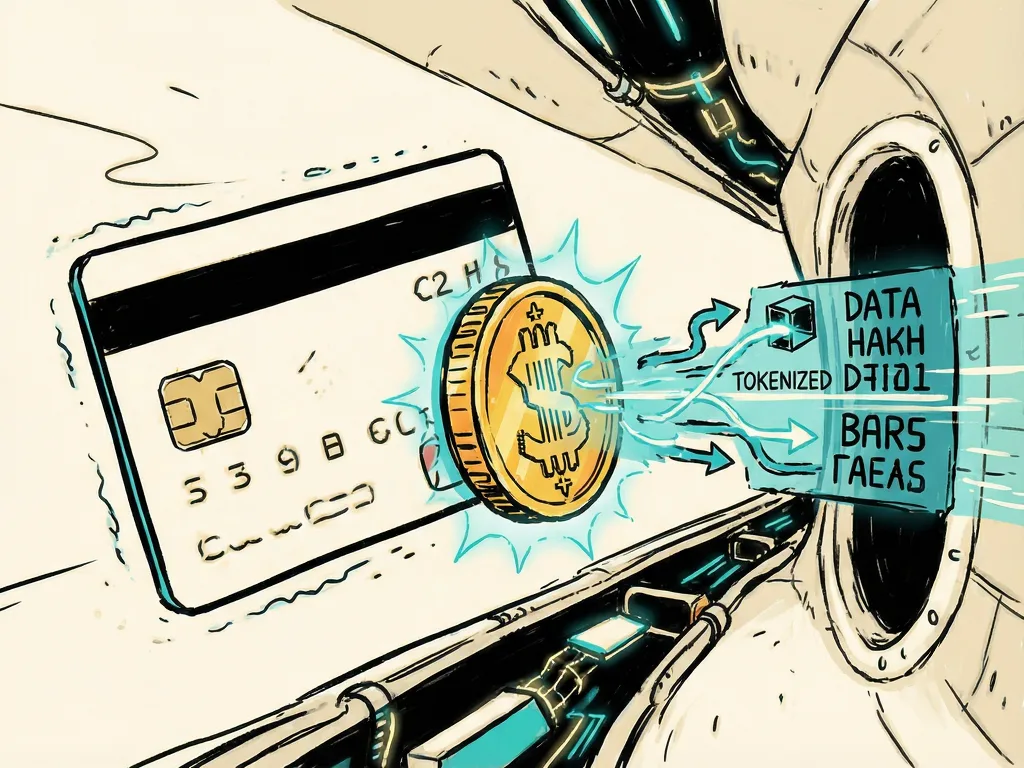
Bakkt and Thredd Plan Stablecoin-Settled Credit Cards, While a Report Found 88% of Companies Convert to United States Dollars
A settlement rail is not the same thing as a consumer payment product.
The partnership between Bakkt and Thredd is best understood as an attempt to solve an infrastructure problem, not simply to announce a faster way to pay. Bakkt says it runs regulated rails that move value for institutions across borders on demand. The new program is designed to bring that settlement infrastructure to everyday spend through credit cards issued by partner banks. The hard part is that everyday spend is not just a payment rail. It requires credit issuance, card processing, tokenization, wallet integration, fraud controls, risk management, loyalty mechanics and bank cooperation all working together.
That is where Thredd enters. The release says the partnership will see Thredd’s card processing and credit infrastructure extend Bakkt’s settlement rails into consumer credit products issued by partner banks through a planned credit card-as-a-service program. Thredd will also offer tokenization, digital wallet integration, fraud and risk management, and loyalty services designed for the program.
The key shift is not that Bakkt is becoming a consumer credit issuer. The release says the cards are issued by partner banks. Bakkt’s role is described as providing settlement infrastructure, while Thredd provides the credit and processing layer that connects that infrastructure to consumer card usage. If the program works, a consumer could use a familiar credit card while the underlying settlement path connects to Bakkt’s rails.
Why Bakkt chose Thredd
Bakkt’s stated reason for selecting Thredd is operational simplicity. According to the release, Bakkt chose Thredd because of its technology stack, which removes the need to establish and maintain complex, separate connections between end-consumer credit and payment components.
This is the core argument. Stablecoin settlement sounds simple from a technical perspective: value moves from one system to another. But a credit card transaction is not a single movement. It involves authorization, settlement, customer identity, fraud review, loyalty or rewards, issuer controls, network requirements and merchant-side handling. If those pieces are not integrated, a stablecoin settlement layer may end up sitting beside the consumer experience rather than powering it.
Thredd CEO Jim McCarthy made the same point in the release, saying that launching a credit card that would settle in stablecoins requires tight integration across processing, lending and digital asset infrastructure. He said that by combining modern card processing with flexible credit capabilities, Thredd’s platform removes operational complexity so Bakkt can offer clients a direct, reliable payment product.
Bakkt Chief Product Officer Ankit Khemka framed the goal differently but pointed to the same issue: the company already moves value for institutions across borders on demand, and the program is designed to bring that settlement infrastructure to everyday spend.
The difference between institutional rails and consumer cards is where the risk lies. Institutional value movement can be regulated, controlled and optimized for specific counterparties. Consumer credit cards are messier. They involve ordinary users, merchants, banks, card networks and fraud systems. Bakkt’s settlement infrastructure has to be made usable inside that consumer environment, not merely placed behind it.
The 88% number shows the real obstacle
The Bakkt-Thredd plan also needs to be read against a broader market signal from the PYMNTS Intelligence report “Waiting for Certainty: Why Most CFOs Are Holding Back on Crypto and Stablecoins.” That report, cited from March, found that stablecoins might have eliminated hours of settlement friction but had not done away with the financial infrastructure waiting on the other end.
The report’s key statistic is more revealing than the speed argument. It showed that 88% of companies receiving stablecoins converted them into United States dollars immediately.
That does not describe the Bakkt-Thredd credit card program directly, but it explains the vulnerability. Stablecoin settlement can remove friction in one step of a transaction, yet recipients may still exit into United States dollars as soon as the value reaches them. If that pattern continues, stablecoin infrastructure may function as a temporary technical bridge rather than a durable payment medium.
For a credit card program, that matters even more. The product is meant to bring institutional settlement rails into everyday spend. If merchants, banks, consumers or surrounding systems still prefer immediate conversion into United States dollars, the stablecoin layer may not change actual money behavior. It may only change the plumbing underneath a familiar dollar-based economy.
This is why the partnership is not just about stablecoins. It is about whether the full stack—processing, credit, tokenization, wallets, fraud, loyalty and settlement—can keep stablecoin value usable inside the transaction, rather than pushing it back into conventional financial infrastructure at the first opportunity.
What still needs to happen
The program is not presented as a finished consumer product. An initial proof of concept is slated for the first half of next year, subject to factors including product readiness, bank and network requirements, and applicable approvals.
Those conditions are important. Product readiness means the integrated architecture must work in practice, not only on paper. Bank requirements matter because partner banks issue the credit products. Network requirements matter because card programs must function within existing payment ecosystems. Applicable approvals mean the program still depends on permissions that the release does not specify.
For readers, the practical question is not whether Bakkt and Thredd have a partnership. It is whether that partnership can make stablecoin settlement feel like normal credit card usage. A successful proof of concept would need to show that a cardholder can spend through a familiar credit product while the settlement layer connects to Bakkt’s infrastructure without requiring separate, complex connections between credit and payment components.
There are three meaningful watch points.
First, whether the proof of concept moves from architecture to a testable settlement path. The release describes design intentions, not a live consumer rollout.
Second, whether partner banks can accept the structure without rebuilding the very complexity Thredd is meant to remove. The value proposition depends on integration, not just stablecoin settlement.
Third, whether the program can avoid the behavior shown in the PYMNTS report. If 88% of companies receiving stablecoins converted them into United States dollars immediately, a credit card program will need to demonstrate that stablecoin settlement is not merely a short-lived technical step.
What is not specified
The release does not specify transaction fees, merchant terms, regional availability or consumer eligibility. Those details could determine whether the product is practical for users or only technically possible for institutions. It also does not identify the partner banks, card networks or approval processes that will shape the program.
This article is informational only and does not offer investment advice.
Subjectsstablecoincredit cardsBakktThreddsettlement
Read next

Letters 0
- No letters yet. Be the first to write in.