
Wells Fargo Improves Its Banking Services by Leveraging AI and Digital Assets
Wells Fargo is integrating AI across banking, risk, and wealth services while launching tokenized deposits and exploring stablecoin capabilities.
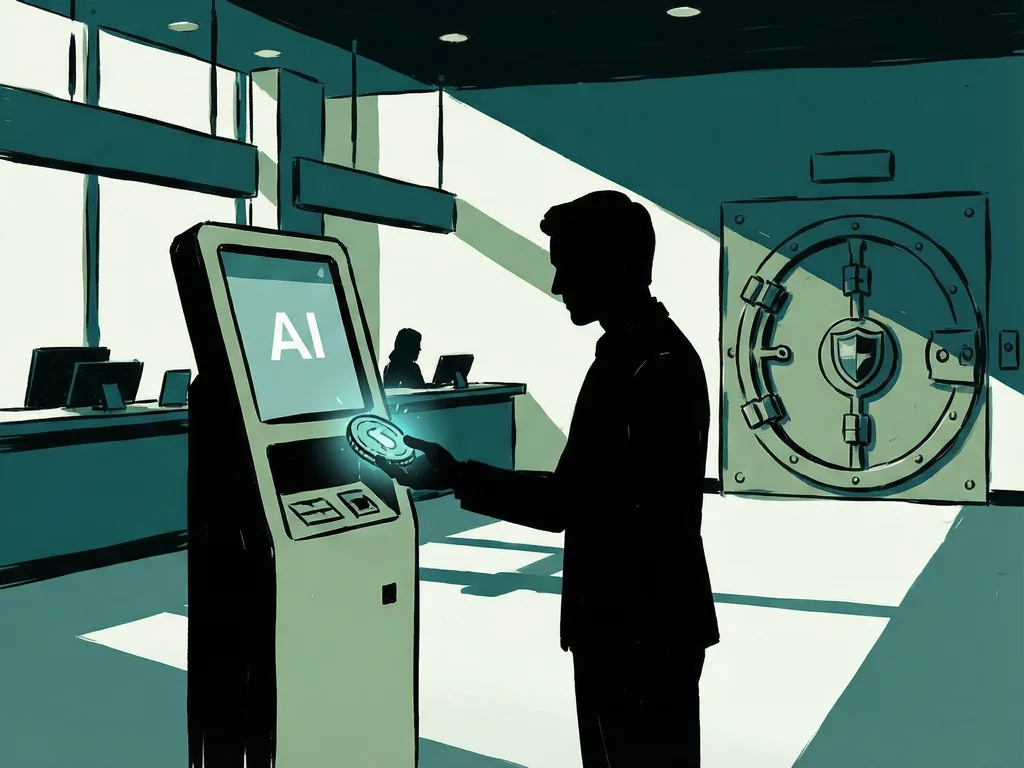
Wells Fargo is no longer treating AI as a side experiment. According to CEO Charlie Scharf, the bank is deploying AI — and in some cases autonomous agents — across a wide range of internal and customer-facing functions: writing code faster, launching marketing campaigns faster, closing previously unknown cyber vulnerabilities, improving and simplifying risk management processes, helping customers complete common banking tasks, and accelerating response times for underwriting decisions and customer complaints.
Scharf framed the push as ambitious but disciplined. “We’re excited by the opportunities AI presents for our clients and our company, and we’re taking a disciplined approach to managing risk,” he said. That tension between speed and risk control is the central theme running through the bank’s current technology strategy.
Wealth and Investment Management as the First Proof Point
Scharf pointed to the bank’s Wealth and Investment Management business as the clearest evidence that years of technology investment are translating into growth. During the third quarter, client assets in that business grew 11% year over year, topping $2.7 trillion, while average loan balances rose 16%, according to a Tuesday press release.
The CEO said the opportunity was identified several years ago, followed by enhancements to products and processes to serve clients better and scale the portfolio. “We have made significant investments in our technology platforms and expanded investment capabilities to provide advisors with a stronger platform to serve clients,” Scharf said.
Those investments include new portfolio analysis and client proposal tools built on Aladdin wealth technology from BlackRock, along with an AI-powered tool that streamlines financial advisors’ routine work and helps them access information to serve clients. Scharf described this as “the first of several capabilities planned as part of our broader AI strategy in Wealth and Investment Management” — language that signals more advisor-facing AI tools are coming rather than this being a one-off launch.
Tokenized Deposits Go Live on a Proprietary Blockchain
Beyond AI, Scharf highlighted newly launched initiatives around tokenized deposits and stablecoins. In August, PYMNTS reported that Wells Fargo was preparing to launch tokenized deposits for corporate and commercial customers, designed to give corporate treasurers the speed and programmability associated with stablecoins without moving their cash outside the banking system.
That product is now live. “Last month, we launched tokenized deposits on our proprietary blockchain platform, providing corporate and commercial clients with a new way to move money more efficiently,” Scharf said Tuesday. “As we expand the platform, clients will be able to move funds 24 hours a day, seven days a week, across accounts and borders, without changing how they bank with us.”
The design choice matters: the bank keeps deposits on its own balance sheet and inside its existing banking relationship, while offering the always-on, programmable movement that stablecoins popularized. For corporate clients, that could mean faster settlement without abandoning familiar banking arrangements.
A Stablecoin Venture With 21 Institutions
Wells Fargo is also moving on the stablecoin front through a consortium. PYMNTS reported Sept. 1 that the bank is among 21 financial institutions planning to establish a new company dedicated to issuing stablecoins.
Scharf said the company’s product will support wholesale, institutional and retail use cases and will improve cross-border payments and digital asset settlements. He was candid about the demand picture in the U.S.: “Use cases in the U.S. for stablecoins remain unclear, but we’re building solutions to be prepared as opportunities potentially unfold.”
That hedging is notable. Rather than asserting a proven market, Scharf describes a bet on optionality — building infrastructure now so the bank is positioned if regulatory and commercial conditions clarify.
What This Means for Readers
Three takeaways stand out. First, AI at Wells Fargo is being applied to operational bottlenecks — code, marketing, cyber vulnerabilities, risk processes, underwriting, complaints — rather than only to flashy customer-facing chatbots, which suggests the bank measures returns in cycle time and defect reduction. Second, the Wealth and Investment Management numbers give a concrete anchor: 11% client asset growth to more than $2.7 trillion and 16% growth in average loan balances in the third quarter. Third, the tokenized deposit and stablecoin work shows a bank experimenting with blockchain rails while deliberately keeping customer cash inside the banking system.
Uncertainty remains on both fronts. AI-driven code generation, autonomous agents, and automated risk processes raise governance and model-risk questions that Scharf acknowledged only in general terms. And the stablecoin use cases in the U.S. are, by the CEO’s own admission, unclear. Readers should treat these as infrastructure bets with real early results in wealth management and unproven demand in digital asset settlement.
This is an independent informational site and is not affiliated with Wells Fargo, BlackRock, or any institution mentioned. Nothing here constitutes investment advice. Fees, product availability, and regional restrictions vary by provider and jurisdiction.
Subjectsstablecoinsdigital assetstokenized depositsWells FargoAI
Read next



Letters 0
- No letters yet. Be the first to write in.