
The US Department of Justice Has Launched an Investigation Into the Payment Company Euro Exchange
UK seized Euro Exchange over AML risk; US Department of Justice probes payments tied to 2.1 billion pounds and 14 high-risk clients.
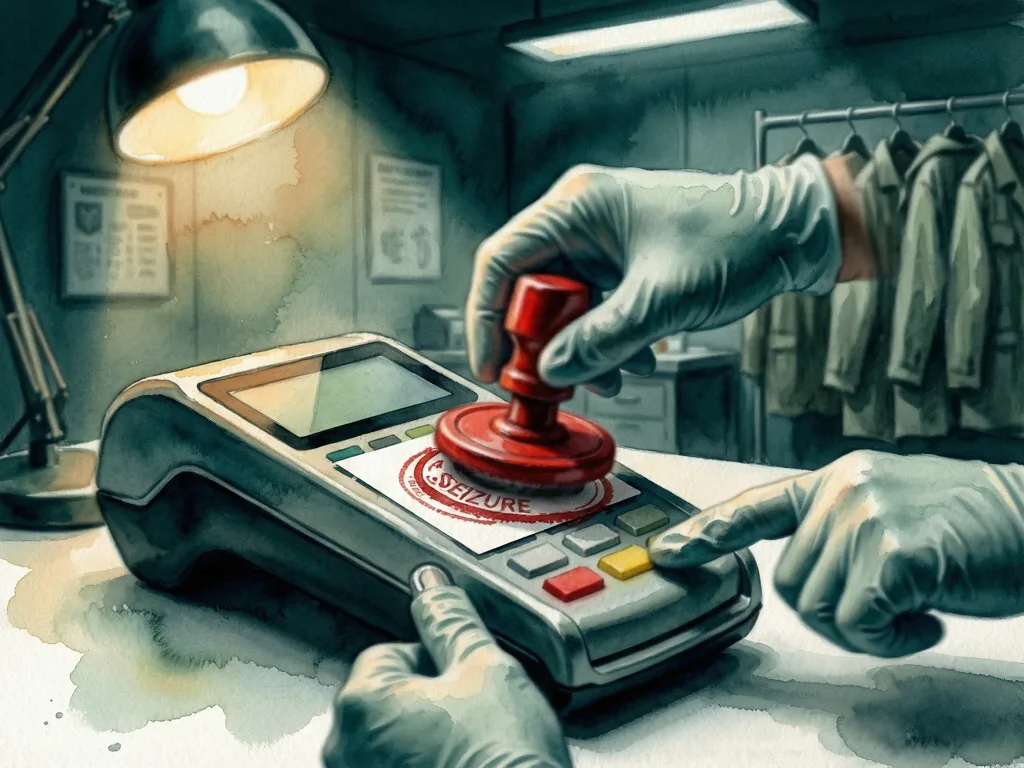
Euro Exchange Seizure Leads to Department of Justice Inquiry After 2.1 Billion Pounds Flowed Through 14 High-Risk Clients
Core Judgment
The reported developments around Euro Exchange point to a concentrated compliance problem, not merely a broad failure at a payments company. Bloomberg News reported on Wednesday, October 14, that British authorities seized Euro Exchange in June for possible anti-money laundering violations. The company had processed 2.1 billion pounds of transactions during a 12-month period before its seizure, and nearly all of those transactions were handled on behalf of just 14 clients that it had determined posed a high risk of money laundering.
That concentration matters. It gives regulators a narrow set of relationships to examine, rather than a diffuse customer base. It also helps explain why the United States Department of Justice is seeking information from the court-appointed administrators handling the wind-down of Euro Exchange and has sent a subpoena to Banex International Bank, a related company in Puerto Rico, according to sources familiar with the matter told Bloomberg.
Cross-Border Regulatory Reach
The reported actions involve at least three jurisdictions. British authorities seized Euro Exchange in June, and the United Kingdom's Financial Conduct Authority, or FCA, launched an investigation into possible offenses at Euro Exchange last month after forcing the company to cease regulated activities in June. The regulator alleged that Euro Exchange presented unacceptable money-laundering risks before moving the firm into insolvency a week later, the report added.
The Puerto Rico connection centers on Banex International Bank. Bloomberg said Euro Exchange and Banex are among a group of companies headed by Miami-based businessman Luis Gasparini. When regulators in Puerto Rico seized Banex in September, they said the company was insolvent and saddled with serious financial, operational, accounting and control deficiencies.
The Department of Justice inquiry adds another layer. The subpoena to Banex and the request for information from Euro Exchange's wind-down administrators suggest that authorities may be tracing how transactions, funds and controls moved across related entities. The report does not describe a final finding of wrongdoing by any person or company, and PYMNTS contacted Euro Exchange for comment but had not yet received a reply.
Industry Context: Electronic Money Institutions Under Closer Watch
Euro Exchange is one of the United Kingdom's electronic-money institutions. Per Bloomberg, these are loosely regulated payments firms that processed about 4.3 billion pounds, or $5.7 billion, of transactions every day last year, according to FCA data. The authority has given several of these companies permission to operate, but it has become worried in recent years about fraud and lax anti-crime controls in the industry.
This background makes the Euro Exchange case more than an isolated corporate failure. Electronic-money institutions can act as gateways for payments, foreign exchange flows and cross-border transfers. When a firm in that category is accused of presenting unacceptable money-laundering risks, regulators are not only looking at one company. They are also assessing whether a licensed or permitted structure allowed weak controls to persist inside a fast-moving payments network.
The 4.3 billion pound daily transaction figure shows the scale of the sector. The 2.1 billion pound Euro Exchange figure shows the scale of activity at the firm before seizure. But the more striking number is 14. The report says nearly all of Euro Exchange's transactions were handled for just 14 clients that it had determined posed a high risk of money laundering. That pattern suggests the firm's risk exposure was not spread evenly across many users; it was heavily tied to a small number of relationships.
Why the Number 14 Is Central
A small client base can make oversight simpler in theory because there are fewer accounts to monitor. In practice, it can also make failure more severe. If a payments firm is processing nearly all of its volume for a small number of high-risk clients, weaknesses in customer due diligence, transaction monitoring, sanctions screening or fund-flow controls can become amplified. The risk is not only that money moves through the firm; it is that a limited group of counterparties may concentrate exposure and create an opaque path for transactions that should have been scrutinized more closely.
The reported facts do not say whether those 14 clients were themselves accused of wrongdoing, nor whether the clients' transactions were unlawful. The report states that Euro Exchange had determined they posed a high risk of money laundering. That distinction is important. A high-risk classification is a regulatory and compliance signal, not proof of criminal conduct. But it gives investigators and administrators a focused starting point for reviewing the firm's transaction history, source-of-funds checks and client relationships.
Uncertainties and Risks
Several important questions remain unresolved. The Department of Justice is described as seeking information and issuing a subpoena; that is an investigative step, not a charge. Bloomberg's account includes details sourced from people familiar with the matter, and the report does not confirm whether Euro Exchange has responded to the specific U.S. inquiry. PYMNTS noted that it had not yet received a reply after contacting Euro Exchange.
There is also uncertainty about how the liquidation process will affect counterparties. Court-appointed administrators handling a wind-down may need to trace funds, assess claims and cooperate with regulators. If clients, banks or payment partners are connected to the Euro Exchange or Banex entities, they may face requests for documents or information. The reported deficiencies at Banex, including serious financial, operational, accounting and control problems, indicate that the related entity structure may have contributed to the regulatory concern, but the source material does not explain how deeply the two companies' operations were intertwined.
Another risk is reputational contagion within the electronic-money sector. Regulators already worry about fraud and lax anti-crime controls among loosely regulated payments firms. A case involving a seizure, insolvency, a subpoena and a small number of high-risk clients may increase scrutiny of other firms with similar business models, especially those serving concentrated or cross-border flows.
What Readers Should Take Away
For readers, the episode shows how payments infrastructure can become a regulatory pressure point when transaction flows are concentrated and controls are questioned. If a person or business uses electronic-money institutions, payment providers or related financial companies, it is important to understand that fees, account restrictions, processing delays and regional limitations may arise when regulators intervene or administrators manage a wind-down.
This is an independent informational article, not an official publication of any company or regulator. It does not constitute investment advice. Readers should review fees and regional restrictions before using payment services and should seek qualified advice when dealing with liquidation, subpoenas or regulatory compliance.
SubjectsRegulationanti-money launderingpaymentsEuro Exchangeinvestigation
Read next



Letters 0
- No letters yet. Be the first to write in.