
Agentic Payments Are About to Redefine What an Authorized Transaction Means
Agentic commerce is forcing payment systems to redefine authorization. The key issue is not whether AI agents can transact, but how institutions verify that a specific agent acted under a customer’s granted permission. Traditional credentials and tokenization help, but they do not fully prove machine authority. Banks, merchants, networks, and AI platforms need richer shared evidence, including audit trails, dynamic controls, and restricted virtual cards. A crawl, walk, run approach keeps humans involved in intent and authorization while making agentic transactions safer and observable.
The decisive obstacle in agentic commerce is not intelligence, but permission. AI agents can already shop, negotiate and transact on behalf of humans. Troy Mann, senior vice president, product management at FIS Global, told PYMNTS that the volume is small, but small volume is still volume. Consumers who have stored payment credentials in wallets or online commerce environments are already entering an ecosystem being rebuilt for agentic transactions. The financial system now has to identify a new object: not only the account, credential or purchase, but the authority of the software acting for a person.
A Valid Credential No Longer Answers the Full Question
Payment infrastructure has long been built around accounts, credentials and transactions. Autonomous commerce adds the software making the decision. A bank may eventually need to know not simply that a transaction came from an AI agent, but which agent it was and what it was entitled to do.
Mann said most agentic commerce still begins with human intent. A buyer specifies what they want, potentially including a price ceiling, shipping requirements or other constraints. An agent can search within those parameters, but the system still needs evidence that the buyer authorized the resulting transaction. “Intent has to be expressed and captured,” Mann said.
For issuers, that means a legitimate credential is not enough. They need to connect the credential to the agent using it, the permission granted by the customer and the original mandate behind the purchase.
Tokenization Is Necessary, but Not Sufficient
Tokenization is a major layer of the security architecture, Mann said. It helps protect stored credentials and reduces the exposure of payment data. Yet it does not by itself prove machine authority.
The harder problem is fragmented evidence. Merchants may know what the customer requested. AI platforms may know the instructions supplied to the agent. Banks know the account, payment credential and transaction history. These signals are not necessarily traveling together. The emerging challenge is that much of the information needed to establish agentic legitimacy sits outside the issuer’s traditional field of vision.
That gap creates questions conventional fraud systems were not designed to answer. Did the agent authenticate correctly? Was it permitted to store the credential? Which AI agent initiated the transaction? Does the purchase conform to the authority the customer originally granted?
Audit Trails Are Becoming Part of the Payment
FIS is working with financial institutions to identify agentic transactions, apply different fraud scoring and reporting, and incorporate signals across the payment life cycle. Mann said the industry ultimately needs richer information flowing between merchants, agents, networks and issuers. “Data is the key to everything,” he said.
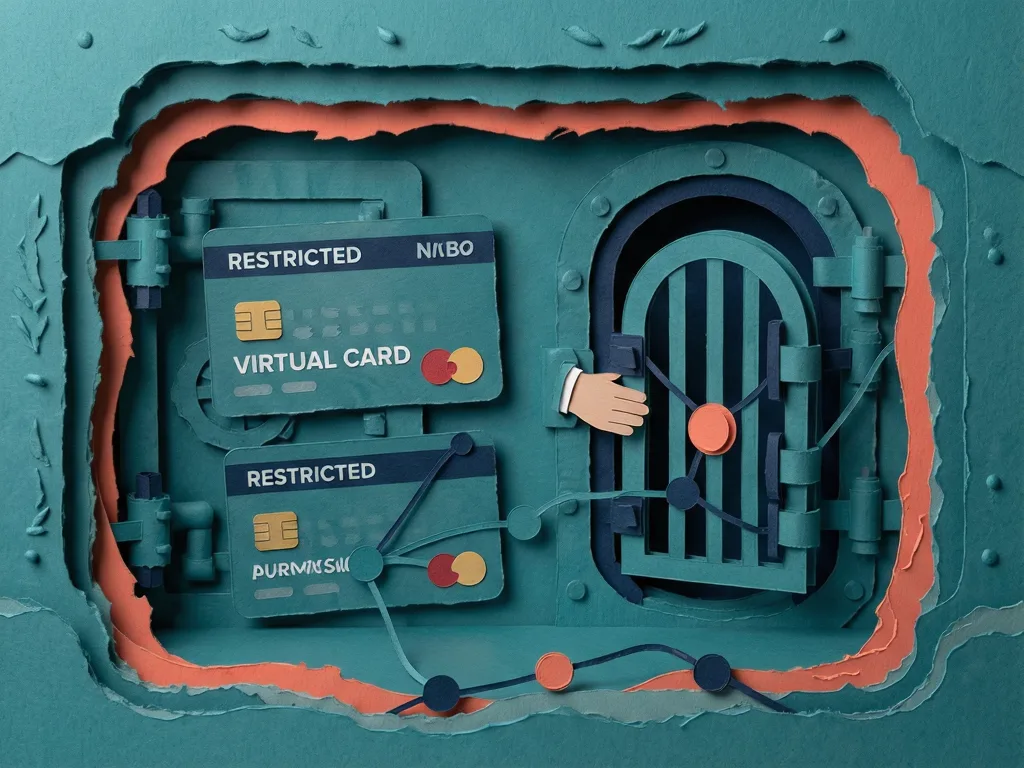
This suggests a counterintuitive near-term shift. For decades, checkout design has mostly tried to remove friction. Agentic commerce may initially need to put some back. Mann said a little bit of friction isn’t a bad thing. One possibility is virtual cards specifically designated for agentic commerce.
A business could restrict them by transaction amount, merchant, time window or other parameters, creating a credential whose permissions mirror the authority granted to the AI. Other approaches could make security credentials dynamic for agent-initiated transactions. The point is not simply to make fraud harder. It is to make machine authority observable.
Crawl, Walk, Run Keeps Humans in the Authorization Loop
For now, Mann recommended a crawl, walk, run approach in which humans remain involved in establishing intent and authorization. That matches the current stage: agents are not independent spenders with unlimited discretion. They are software acting inside a mandate that still needs to be verified.
The broader issue is architectural. Trust is becoming infrastructure. Banks may eventually need to recognize not simply that a transaction came from an AI agent, but which agent it was and what it was entitled to do.
The Three Parties Need Different Guarantees
For businesses, the immediate opportunity is inseparable from the control architecture surrounding it. The pressure comes from three parties with different needs. Merchants want agents that can convert customer intent into purchases. Banks want to remain top of wallet. Buyers want automation without surrendering control of their money.
Making all three possible requires permission, authentication, tokenization, data sharing and auditability to operate as one system. If those elements remain fragmented, agentic commerce can create a new trust gap: faster checkout, but harder accountability. If they are integrated, autonomous buying could become a normal part of digital commerce with clearer limits and better records.
Mann remains optimistic about where that leads. Agentic commerce, he said, is “going to change people’s lives … for the better, if it’s done smartly and if it’s done with transparency and trust.” The race toward autonomous commerce may therefore depend less on how intelligent the agents become than on whether the financial system can prove what they were allowed to do.
What Readers Should Watch
For readers, the practical signal is not only whether an AI agent can complete a purchase. It is whether the payment record can show who authorized the transaction, what limits were set, which agent acted and whether the final payment matched that authority.
The main risks are fragmented data, weak audit trails and fraud systems that cannot distinguish an authorized agent from an unauthorized one. The main opportunity is a more controlled form of automation: virtual cards, spending limits, merchant restrictions, time windows and dynamic credentials could make agent-led purchases more accountable.
This article is informational and not investment advice. Fees, availability and regional restrictions may vary.
SubjectsTokenizationagentic paymentsAI agentspayment authorizationfraud risk
Read next



Letters 0
- No letters yet. Be the first to write in.