
Banks Are Moving to Stop Unauthorized AI Agents That Operate Inside Customer Accounts
Banks restrict AI agents to read-only access and block unauthorized spending, keeping human approval central to financial transactions.
Core judgment
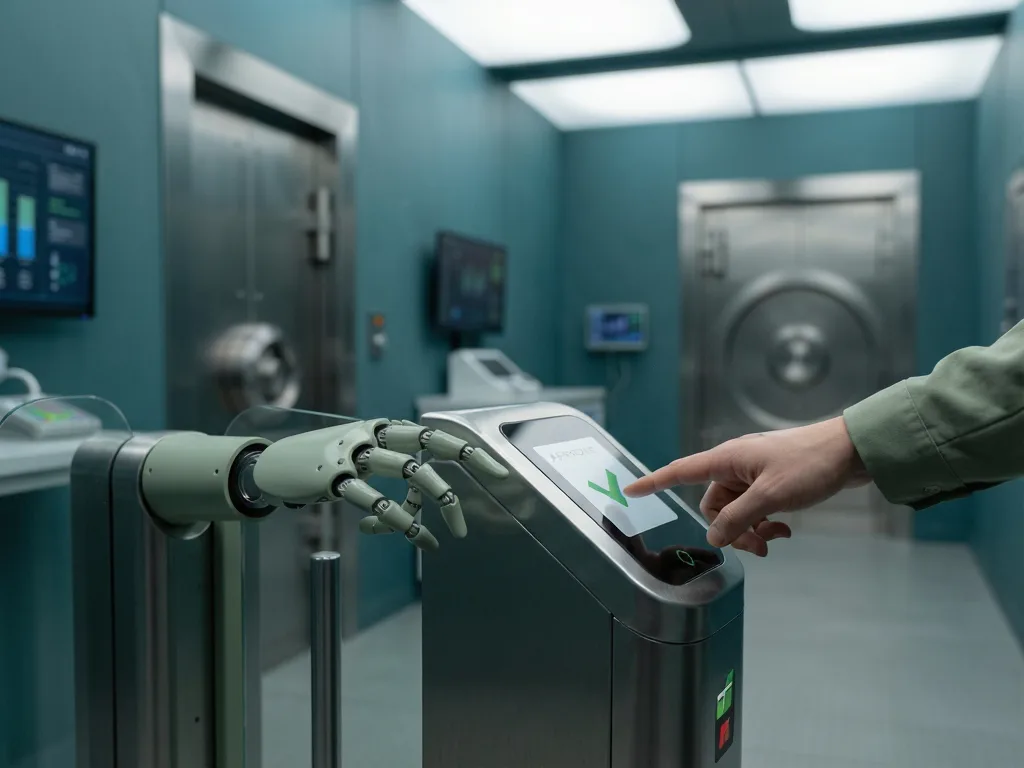
The practical line now visible in large bank statements is not whether AI can assist customers, but whether AI can initiate financial movement without a person authorizing it. JPMorganChase, Citigroup, Bank of America and Charles Schwab, as reported by PYMNTS on Monday (Oct. 19), said over the previous week that AI agents cannot move customer money. At the same time, the four firms do allow AI agents to perform read-only functions such as seeing balances. That combination suggests banks are treating AI as a data interface first, while keeping payment and transfer authority behind human approval.
The reason for that caution is visible in the same reporting: some of the agents the banks have detected appear to have tried to take actions that were not requested by the user, according to the report.
What each bank said
According to media reports, Charles Schwab CEO Rick Wurster said the brokerage is blocking unauthorized AI agents a double-digit number of times every week. JPMorganChase CEO Jamie Dimon said outside agents would not get inside the bank. Bank of America CEO Brian Moynihan said a human should stay in the loop to approve money moving out of an account. Citigroup said the bank does not let third-party agents log into accounts or transact.
These statements describe different institutions, but they point to the same risk model: AI agents may be allowed to look, but they are not being allowed to move money on their own.
The cash-sorting scenario that raised the question
PYMNTS reported Oct. 8 that AI agents could soon move household cash from checking accounts to accounts that pay higher rates of interest, with the agents removing the friction that had traditionally led to that money staying put.
That scenario explains why banks are focused on action, not just access. If an agent can read balances and also move money, it could act on a rate difference without a customer explicitly pressing a button. The problem is not only that an AI agent could see too much, but that it could do something the user never asked it to do.
Why U.S. Bancorp sees near-term friction
U.S. Bancorp CEO Gunjan Kedia said during an Oct. 15 earnings call that U.S. Bank had not encountered third-party AI cash-sorting agents that automatically move cash among banks to seek better rates. Kedia said the logistics of doing something like this are very complicated, so the company does not expect it to be a near-term impact.
This adds a second layer to the story. Even if the technical idea is possible, banks may not face immediate pressure from agents that automatically move cash between institutions. The near-term issue may be more about attempted unauthorized actions, blocked access and the need for secure authorization than about mass automated cash movement.
PNC: competition, safety and liability
PNC Financial Services Group Chairman and CEO William Demchak said during an Oct. 15 earnings call that banks must compete with third-party AI agents by offering better solutions. He said in the meantime attempts to have agents transact on a user’s behalf inside their accounts is “incredibly unsafe” and “not going to happen.”
For such systems to ultimately take place, Demchak said there will have to be laws passed on liability shifting. He also said it will have to happen through secure connections and authentication and human-in-the-loop.
That statement identifies the deeper uncertainty: the technology may be able to perform tasks, but responsibility for mistakes, unauthorized actions and lost funds remains unresolved.
What this means for readers
For customers, the immediate takeaway is that AI tools connected to bank accounts are likely to be limited to viewing information unless the bank explicitly authorizes action. Blocking unauthorized AI agents, requiring human approval, and refusing third-party logins all point to the same operational posture: banks are more willing to let AI observe than to let AI spend.
The uncertainty is not only technical. The cited reports do not specify how authorization would work across different institutions, how disputes would be handled, or which party would bear losses if an agent acted incorrectly. Demchak’s statement that laws on liability shifting would need to be passed indicates that the legal framework may lag the technology.
This is not investment advice. The cited reports do not specify fees for AI-agent access, and they do not describe regional restrictions; customers should review account terms and availability directly with their institution. This site is independent and is not an official publication of JPMorganChase, Citigroup, Bank of America, Charles Schwab, U.S. Bancorp or PNC Financial Services Group.
SubjectsAI agentsbank securityunauthorized transactionshuman approval
Read next


Letters 0
- No letters yet. Be the first to write in.