
Coast raises $35 million to expand its financial platform serving the physical economy
Coast raised $35 million to build AI-powered expense, accounts payable, and bill pay tools for field trade businesses, moving beyond fuel cards.
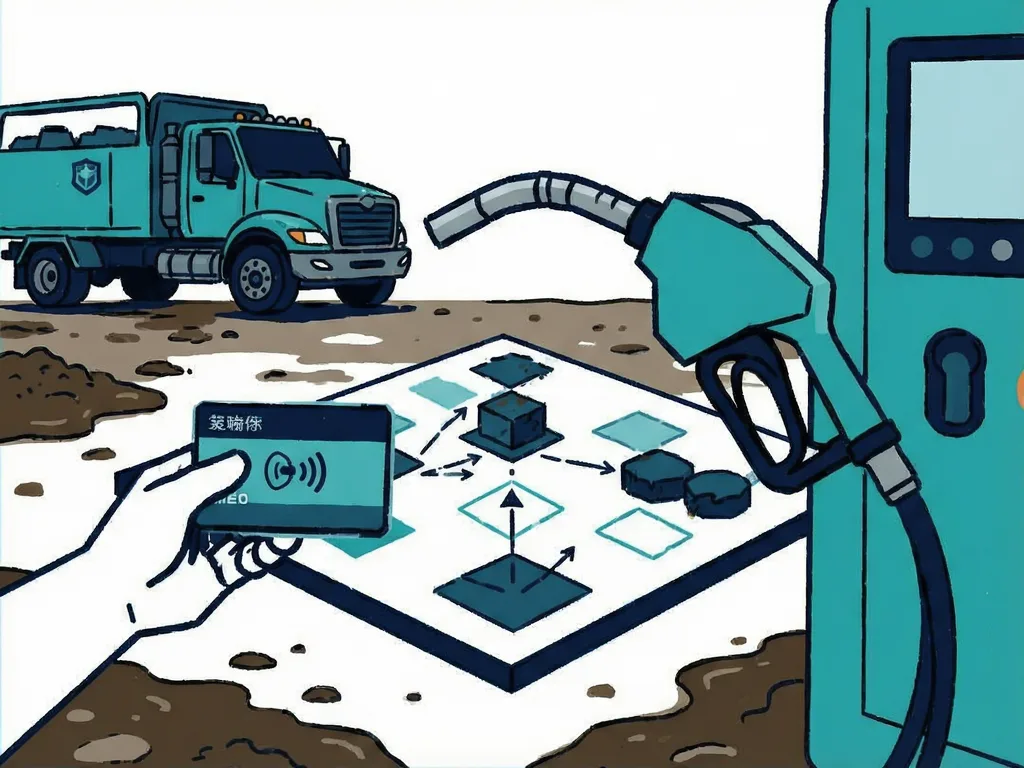
The most useful way to read Coast’s growth round is as a bet that field-based trade businesses need a financial system that speaks the language of jobs, vehicles and crews, not only the language of cards and invoices. The round was led by Thomvest Ventures, while Intuit Ventures, Small World Capital and Alpha Square Group joined as new investors alongside returning backers ICONIQ Growth, Accel and Insight Partners. The company intends to deploy new capital in two directions: reaching more customers and building artificial intelligence-enabled expense automation, accounts payable products and bill payment tools.
Coast Is Moving From Fuel Cards Toward a Financial Operating System
Coast began with a commercial fuel card and later expanded into corporate cards, expense tracking, accounts payable and bill pay. That origin matters because it suggests the company is not starting from a generic payments concept. It is extending a product that already sits in the daily cash flow of trades that operate across job sites, service routes and mobile crews. The platform is tailored for field-based trade sectors including construction, heating, ventilation and air conditioning, electrical and plumbing, landscaping, transportation and public utilities.
The product logic is to connect payment controls with operational reality. Coast’s platform brings together vehicle location data, telematics and driver identification so finance teams can use line-item controls, automated purchase reconciliation and detailed job costing features. In other words, a transaction is not only an amount charged to a card; it is tied to a driver, a vehicle, a location and a job. For finance teams, that could reduce the manual work of matching receipts, allocations and cost categories after the fact.
Coast has also built embedded software partnerships with fleet management providers Samsara and Fleetio, allowing operators to monitor driver activity and card usage within a single interface. This is a central part of the story: the company is trying to live inside workflows that fleet operators already use, rather than asking them to adopt a standalone finance tool.
The Investor Mix Points to Distribution, Not Only Capital
The composition of the round gives a clearer picture of what Coast may be prioritizing. Thomvest Ventures is not a first-time backer; Daniel Simon, founder and CEO of Coast, said in the announcement that Thomvest first backed the company in 2024. The returning investors ICONIQ Growth, Accel and Insight Partners suggest continued support from venture and growth-stage backers. The new name Intuit Ventures is especially notable because Simon described it as “a deep integration partner that’s a critical part of so many of our customers’ businesses as they grow.”
That quote from Simon also frames the market opportunity in his own words: “The millions of field businesses that keep the physical economy running still lack a financial platform built around the way they work. Coast is that platform.” The phrase “millions” is the number most relevant to the round, because it points to the breadth of the target base rather than a disclosed funding figure. The source material does not specify the size of the growth round, valuation, customer count or revenue.
Commercial Payments Are Merging With Operational Data
The round sits inside a wider commercial payments trend: financial technology providers are competing to update expense management for mobile, field-based work. Reporting from PYMNTS has pointed to a move away from older fuel-card tools and generic corporate cards, favoring platforms that combine payments with operational controls.
Two examples from that reporting show how different parts of the market are responding. Cardlay entered the Visa Ready program with tools for commercial fleet cards that embed spend management, capture data automatically and enforce policy. A separate report on Car IQ described real-time controls that use vehicle telematics, location tracking and fuel pricing data to stop transactions at high-cost stations before they happen.
The pattern shows card issuers, financial technology firms and fleet management providers blending payment processing with operational data to create more centralized financial operating systems. The competitive question is no longer only who can issue a card. It is who can turn the card into a control point for cost, compliance and job-level visibility.
What Coast’s AI Push Could Change
Coast plans to develop artificial intelligence-enabled expense automation, accounts payable products and bill payment tools. The source material does not describe the exact features, training data, accuracy metrics or customer rollout timeline, so the practical impact remains uncertain. The strategic direction is clearer: if Coast can use artificial intelligence to classify expenses, reconcile purchases, flag policy exceptions and route bill payments inside job-costing workflows, it may reduce the manual burden on finance teams that are already stretched across multiple trades.
The integration with fleet management providers is likely where the near-term product advantage could be tested. If operators can see driver activity, card usage, vehicle location, telematics and purchase reconciliation in one interface, Coast becomes harder to replace because it is not merely a payment layer. It becomes part of the daily control loop for field operations.
Risks and Unknowns the Source Does Not Resolve
Several important details are absent from the announcement. There is no disclosed round size, valuation, deployment timeline, customer adoption numbers, fee structure or regional restriction. That means readers should treat the funding as a signal of intent rather than proof of execution.
Execution risk is also visible in the product description itself. Line-item controls, automated purchase reconciliation and job costing require clean data from vehicles, drivers, merchants and internal accounting systems. Embedded partnerships with Samsara and Fleetio may accelerate distribution, but they also create dependencies on partner interfaces, data availability and customer permissioning. Artificial intelligence-enabled expense automation adds another layer of complexity: classification, policy enforcement and reconciliation tools must be accurate enough that finance teams trust them with real spending decisions.
Competition is the other unresolved question. The same trend that Coast is riding is already being explored by Cardlay through Visa Ready and by Car IQ through real-time controls based on telematics, location and fuel pricing. The commercial payments sector appears to be converging on a similar idea: payment processing plus operational data plus policy enforcement. Coast will need to show that its focus on field-based trades, job costing and embedded fleet software can create durable differentiation.
The Takeaway for Readers
Coast’s growth round is best understood as a funding event for a category shift. The company is trying to move from a commercial fuel card provider to a financial platform for field businesses, using telematics, driver identification, fleet software partnerships, accounts payable workflows and artificial intelligence to make spending controls more automatic and more job-specific. The source material supports the direction, the investor lineup and the broader industry trend, but it does not provide the financial details or product proof needed to measure how quickly that shift will happen.
This article is informational and not investment advice. Fees, regional restrictions, round size, valuation and deployment timelines were not specified in the source material.
Subjectsaccounts payablecommercial paymentsCoastfield-based financeexpense automation
Read next



Letters 0
- No letters yet. Be the first to write in.