
Google Wallet is testing a feature that lets users verify their identity before every contactless payment.
Google Wallet reportedly tests an option requiring identity verification for each contactless payment, weighing security against tap-to-pay convenience.
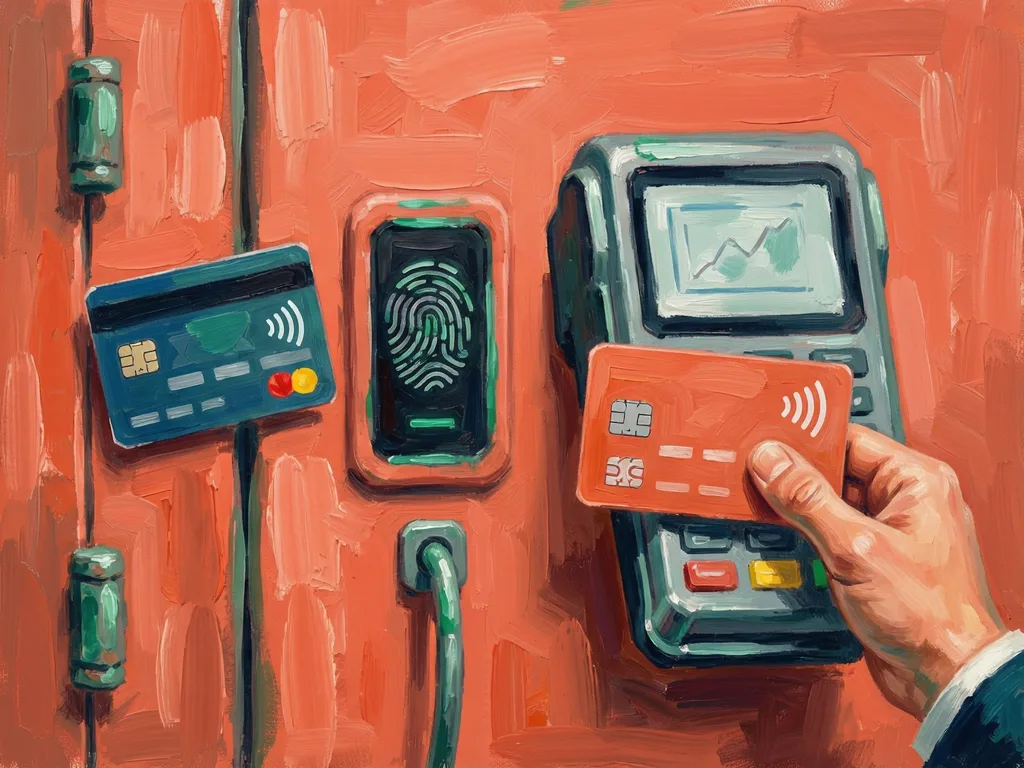
The reported Google Wallet version 26.43.1009867093 appears to show Google testing a way to give users more control over identity verification for contactless payments. The core judgment: this is not a finished policy change, but a signal that Google may be preparing an optional “verify each time” mode at a moment when tap-to-pay convenience has helped in-store digital wallet usage grow from 11% of transactions in 2022 to 21% in 2025.
The reported control would trade convenience for certainty
The new setting, as described in the report, appears to offer users more control over a feature that currently allows people who have verified themselves within the last few minutes to make multiple contactless payments without verifying their identity each time. The reported option would let users choose to verify each time they pay, immediately before they pay.
That matters because current contactless payment design favors speed. A user who recently unlocked or authenticated a device may not need to repeat verification for every tap. The reported setting would make that repeated verification available as a user choice. If Google releases it, the practical question is whether users will prioritize convenience or security more often, especially for higher-value purchases, shared devices, or frequent use.
The report’s caution is important. Android Authority said the finding is based on work-in-progress code that may help predict future features, or that may not make it to a public release. Android Authority also said, “we’ll have to wait for Google to roll out the feature to see exactly how it changes the payment verification experience.” Google did not immediately reply to PYMNTS’ request for comment.
The data behind the rollout stakes
The timing gives the reported setting more significance than a minor interface change would usually carry. The 2025 edition of the PYMNTS Intelligence report “How the World Does Digital” found that the convenience of tap to pay helped drive the growth of in-store use of digital wallets from 11% of transactions in 2022 to 21% in 2025.
The report said, “What has evolved is the way consumers interact with those [funding] sources, by tapping phones, scanning QR codes or authenticating payments through tokenized credentials instead of by swiping plastic.”
That sentence captures the central tension. Digital wallets have grown partly because they reduce friction at the point of sale. A verification setting that adds a step immediately before payment could increase security or user confidence, but it could also make tap-to-pay feel less effortless. Whether that trade-off is accepted by users may depend on how Google frames the choice, where it appears, and whether it is enabled by default.
Walmart and Sam’s Club make the verification question more concrete
The reported Google Wallet change intersects with a broader expansion of Google Pay tap-to-pay at major retailers. Google announced in August that Walmart and Sam’s Club shoppers would be able to tap to pay using Google Pay as the retailers roll out that payment method, PYMNTS reported Aug. 21.
Walmart announced the same day that it would begin enabling tap to pay as a payment option at select Walmart and Sam’s Club locations in August and that it planned to roll it out to all U.S. locations by the end of 2026 and to fuel stations by mid-2027.
Stavan Parikh, vice president and general manager, payments at Google, said at the time in a blog post: “Tap to pay using Google Pay is a proven time-saver for in-store shoppers, and now, we’re excited to bring that convenience to Walmart customers.”
The source does not say the new Google Wallet setting is tied specifically to Walmart or Sam’s Club. But the retail rollout shows why the verification design is worth watching. If Google Pay tap-to-pay becomes more common in large, high-frequency retail environments, small changes in authentication behavior can have a noticeable effect on user experience. A verification option could make payments feel safer to some shoppers, while adding friction for others.
What remains uncertain and what readers should watch
The key uncertainty is whether the reported setting will become public, how it will be presented, and whether users will choose to verify every payment. The code may not ship. Google has not commented, so the feature’s final behavior is unknown. The report also does not specify whether the setting would apply to all Google Wallet payment methods, only to certain contactless transactions, or whether it would interact with QR-code or tokenized credential flows mentioned in the PYMNTS Intelligence report.
For readers, the incremental value is not that Google Wallet has definitely changed payment verification, but that a version containing a possible “verify each time” option appears as digital wallet usage rises from 11% to 21% and as Google Pay expands into more retail settings. The next signal to watch is whether Google rolls the setting out publicly and whether it is positioned as a privacy control, a security control, or an accessibility choice for users who want stricter confirmation before each payment.
This independent informational analysis is not official Google, Walmart, or Sam’s Club guidance, and it is not investment advice. The cited material does not specify transaction fees; availability is limited to the described U.S. rollout timeline.
Subjectscontactless paymentsdigital walletsidentity verificationGoogle WalletAndroid
Read next

Letters 0
- No letters yet. Be the first to write in.