
HSBC UK has launched Stripe-powered Tap to Pay for small businesses.
HSBC UK puts Stripe Tap to Pay in its business app, making phones payment terminals for small firms, with fees, UK-only use and payout delays.
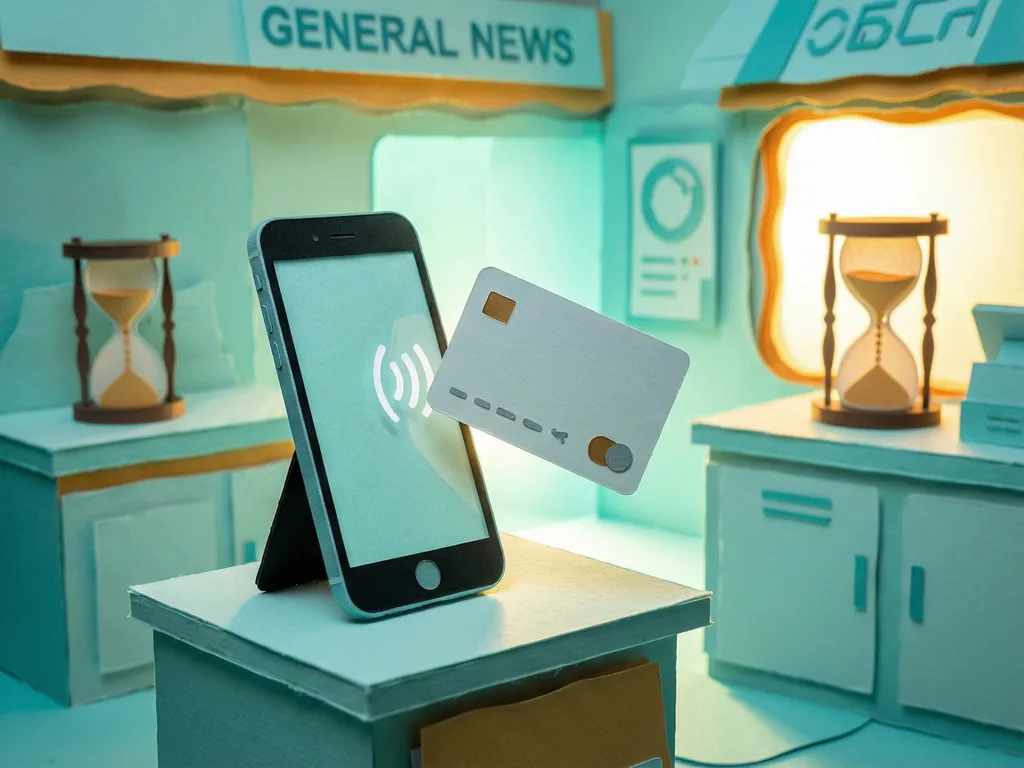
Core judgment: the bank app becomes the payment terminal
HSBC UK has launched a Tap to Pay service for small business customers, powered by Stripe, which lets sole traders and small firms accept contactless payments on a compatible smartphone without buying a separate card reader. The key point is not simply that a phone can now take contactless payments. The key point is that HSBC UK is placing Stripe inside its business banking app, turning the bank’s own interface into the starting point for payment acceptance.
The bank charges 1.4% plus 5 pence per contactless payment and follows Lloyds in offering Stripe-powered acceptance through a business banking app. For readers, the launch is a signal that phone-based card acceptance is moving from a niche tool into mainstream banking distribution, while the economics remain visible: fees, payout timing, security checks and the UK-only restriction are all part of the product.
How the HSBC UK service works
Customers set up the service through the HSBC Business Banking app, where they apply for a Stripe account, and can then take contactless debit and credit cards as well as digital wallets such as Apple Pay and Google Pay. The design is intentionally simple: the merchant does not need to buy a separate card reader, as long as the smartphone is compatible and the payment is accepted through the app.
The fee structure is explicit. HSBC UK charges 1.4% plus 5 pence per transaction, according to its product page. Payments reach the merchant’s HSBC account three working days later. The first payout can take seven to 14 days because of security checks, and the service only works for payments taken in the UK.
Those details matter for cash-flow planning. A merchant may be able to accept a payment quickly, but the money may not be available at the same speed. The three-working-day arrival is the normal route, while the first payout can take seven to 14 days because of security checks. That is not a hidden technicality; it is part of the product’s operating model.
Why HSBC tied the launch to lost-sale data
HSBC UK tied the launch to research, conducted by Censuswide among 594 small business owners with turnover below £2 million, which found 33% had lost a sale because they could not accept a customer’s preferred payment method.
That framing matters. The service is not presented only as a convenience for merchants. It is presented as a way to reduce a specific commercial loss: a customer wants to pay, but the merchant cannot accept the chosen method, and the sale disappears.
Gavin Maclean, Head of Global Payment Solutions UK at HSBC, said: “Nobody wants to lose a sale because a customer cannot make a payment. For a small business, every purchase matters, and an awkward few minutes at the till can be the difference between making a sale and watching somebody walk away. Tap to Pay gives sole traders and businesses an additional, simple way to take payments using their phone.”
Marc Fryer, Head of Revenue and Growth UK & Ireland at Stripe, added: “Small businesses drive the UK economy, but payment admin slows them down. We can take that hassle away and give them better ways to get paid so they can focus on growing.”
The two statements reveal the commercial logic. HSBC is selling payment acceptance as a way to protect sales. Stripe is selling payment infrastructure as a way to reduce administrative friction. The merchant sits between them, with the smartphone as the new front-of-house device.
Lloyds and HSBC bring Stripe into business banking
HSBC UK follows Lloyds, which in June became the first traditional UK bank to partner with Stripe, according to Stripe, when it launched Lloyds Accept. Lloyds Accept offers Tap to Pay alongside payment links and card terminals to the bank’s more than one million business customers.
This is the structural change. Stripe is not only a payment processor used by independent websites. It is being distributed through traditional bank relationships. Lloyds used Stripe to reach its more than one million business customers. HSBC UK is now using Stripe inside the HSBC Business Banking app.
Other banks are already doing similar things through different routes. Digital bank Monzo also gives its business customers Tap to Pay on iPhone through Stripe, while NatWest built phone-based acceptance for its Tyl merchant service with Ingenico’s Phos.
The pattern is broad: banks are competing on the merchant’s front desk. The question is no longer only whether a small business can accept cards. The question is which bank or app makes that acceptance easiest, cheapest to start, and least disruptive to the merchant’s workflow.
Adoption data: phone acceptance is pulling in merchants that were not card sellers
Merchant take-up of phone-based acceptance has grown quickly. Visa reported in March 2025 adoption of its Tap to Phone service rose 200% year on year, with the US, UK and Brazil growing by a combined 234%.
Part of that growth comes from businesses that did not take cards before. New small businesses made up nearly 30% of Visa’s Tap to Phone sellers, and Visa said merchants moving from cash-only to digital payments drove adoption, particularly in cash-dominant markets.
Stripe has reported a similar pattern, saying more than half of early adopters of its Tap to Pay product had not previously used a Stripe card reader.
This changes how the news should be read. Phone-based acceptance is not only replacing existing card readers. It is also creating new card-accepting merchants. If a business previously did not take cards at all, then the smartphone is not simply a cheaper alternative to a terminal. It is the first card acceptance tool.
For small merchants, that is important. A low-cost or no-hardware entry point can remove the first barrier to digital payments. But it also means the merchant is entering a card network system where fees, settlement timing, fraud checks and network rules are built into the process.
Card networks gain volume even when the terminal is a phone
Each of those merchants adds volume for the card networks, because every payment taken on a Tap to Pay phone is a card transaction. Stripe’s Tap to Pay accepts Visa, Mastercard and American Express cards and the digital wallets that carry them.
This is the economic engine behind the product. The merchant sees a phone instead of a card reader. The card network sees a card payment. The payment processor sees a transaction to route, approve and settle. The bank sees a customer relationship and payment flow.
The same payment can therefore be simple for the merchant while being structurally complex behind the scene. The phone may be the interface, but the underlying rails remain card-network rails.
That is why the service is not only a merchant convenience story. It is also a network-volume story. More merchants accepting cards on phones means more card transactions, more digital wallet transactions and more data moving through the payment ecosystem.
UK contactless volume makes the point of sale strategically important
UK contactless card payments totalled 19.2 billion in 2025, out of 49.7 billion UK payments, according to UK Finance’s UK Payment Markets 2026 report, which forecasts 26 billion contactless payments, or 41% of the total, by 2035.
Those figures explain why banks, processors and card networks care about small merchants. Contactless is not a marginal behaviour in the UK. It is already one of the dominant payment methods, and the forecast points to continued growth.
For a sole trader, a market stall holder, a mobile service provider or a small shop owner, accepting contactless payments is no longer a special feature. It is becoming a basic expectation. The HSBC UK launch therefore fits into a larger environment where the absence of contactless acceptance can itself become a sales problem.
The Censuswide finding that 33% of surveyed small business owners had lost a sale because they could not accept a customer’s preferred payment method gives a concrete reason for that concern. The point of sale is where payment choice becomes revenue loss or revenue capture.
Fee pressure and the coming regulatory tests
The cost of accepting those payments includes scheme and processing fees. In March 2025, the Payment Systems Regulator found that Visa and Mastercard had raised those fees by at least 25% since 2017, costing businesses at least £170 million a year.
Payment Systems Regulator directions on fee transparency and pricing governance came into force in July, and the pricing governance requirements take effect on 30 November.
This adds a layer of uncertainty for merchants. HSBC UK’s own product fee is clear: 1.4% plus 5 pence per transaction. But the broader cost of accepting card payments also involves scheme and processing fees, and the source text states that the Payment Systems Regulator found Visa and Mastercard had raised those fees by at least 25% since 2017, costing businesses at least £170 million a year.
For readers, the implication is that the advertised merchant fee is not the only cost signal in the market. The regulatory environment is also changing how fee transparency and pricing governance are handled, with directions coming into force in July and pricing governance requirements taking effect on 30 November.
The Bank of England’s alternative at the same point of sale
The Bank of England is working on an alternative at the same point of sale. Its Retail Payments Infrastructure Board consulted until 11 September on the design of the UK’s next-generation payments infrastructure, including account-to-account payments in shops as an option alongside cards.
This is the strategic wildcard. HSBC UK’s Tap to Pay service is built on card acceptance through Stripe. But the Bank of England is consulting on future retail payment infrastructure, including account-to-account payments in shops as an option alongside cards.
That does not mean card-based phone acceptance will disappear. It does mean the point of sale is becoming a contested design space. A merchant may one day have multiple ways to take payment: cards, digital wallets, account-to-account options, or a mix. The smartphone may remain the interface, but the underlying rails could change.
Risks and uncertainties for small merchants
The service has several practical risks that are visible from the facts.
First, the UK-only restriction limits the product. HSBC UK’s service only works for payments taken in the UK. A merchant whose sales are not UK-based cannot treat this as a universal acceptance tool.
Second, payout timing can affect working capital. Payments reach the merchant’s HSBC account three working days later, but the first payout can take seven to 14 days because of security checks. A merchant with very tight cash flow needs to account for that.
Third, the fee is explicit, but the broader payment cost environment is not static. The HSBC UK product page states 1.4% plus 5 pence per transaction. The source text separately notes that scheme and processing fees have been under scrutiny, with the Payment Systems Regulator finding in March 2025 that Visa and Mastercard had raised those fees by at least 25% since 2017, costing businesses at least £170 million a year.
Fourth, dependence on a bank app and a payment provider is part of the model. Customers set up the service through the HSBC Business Banking app, where they apply for a Stripe account. That is convenient, but it also means the merchant’s acceptance experience is shaped by both the bank’s app and Stripe’s processing layer.
Fifth, the competitive field is broad. Lloyds launched Lloyds Accept with Stripe, Monzo offers Tap to Pay on iPhone through Stripe for business customers, and NatWest built phone-based acceptance for its Tyl merchant service with Ingenico’s Phos. Small merchants may have more than one route to phone-based acceptance, each with different setup paths and commercial terms.
What readers should take away
For small business customers, the practical value is immediate: HSBC UK Tap to Pay, powered by Stripe, can turn a compatible smartphone into a contactless payment acceptance tool, without buying a separate card reader. The fee is 1.4% plus 5 pence per transaction, and the service only works for payments taken in the UK.
For readers tracking payment trends, the bigger story is distribution. Banks are becoming storefronts for payment technology. Stripe is no longer only a platform that merchants find on their own. It is being placed inside HSBC UK’s business banking app and, through Lloyds Accept, inside Lloyds’ business customer base.
For the card networks, the news is volume-positive. Every payment taken on a Tap to Pay phone is a card transaction. Visa, Mastercard and American Express are all accepted through Stripe’s Tap to Pay, along with the digital wallets that carry them.
For regulators and infrastructure designers, the point of sale remains a pressure point. The Payment Systems Regulator has already found that scheme and processing fees rose by at least 25% since 2017, costing businesses at least £170 million a year. Its fee transparency and pricing governance directions came into force in July, with pricing governance requirements taking effect on 30 November. The Bank of England’s Retail Payments Infrastructure Board consulted until 11 September on next-generation payments infrastructure, including account-to-account payments in shops as an option alongside cards.
The HSBC UK launch is therefore both simple and significant. A merchant can accept contactless debit and credit cards and digital wallets such as Apple Pay and Google Pay on a compatible smartphone. But the product is embedded in a larger system of bank apps, payment processors, card networks, regulator scrutiny and future retail payment infrastructure.
This is independent informational content, not an official statement from HSBC UK, Stripe, Lloyds, Monzo, NatWest, Visa, Mastercard, American Express, UK Finance, the Payment Systems Regulator or the Bank of England. It is not investment advice. Fees and regional restrictions matter: the HSBC UK service charges 1.4% plus 5 pence per transaction and only works for payments taken in the UK.
Image credit: Sundry Photography / Shutterstock.com
SubjectsStripeUK BankingHSBC UKTap to PaySmall Business Payments
Read next


Letters 0
- No letters yet. Be the first to write in.