
A software bug at Chase delays transactions across major US banks
Chase's software bug delayed its own and counterparty bank transactions, including Zelle payments, without a systemic network failure or cyberattack.
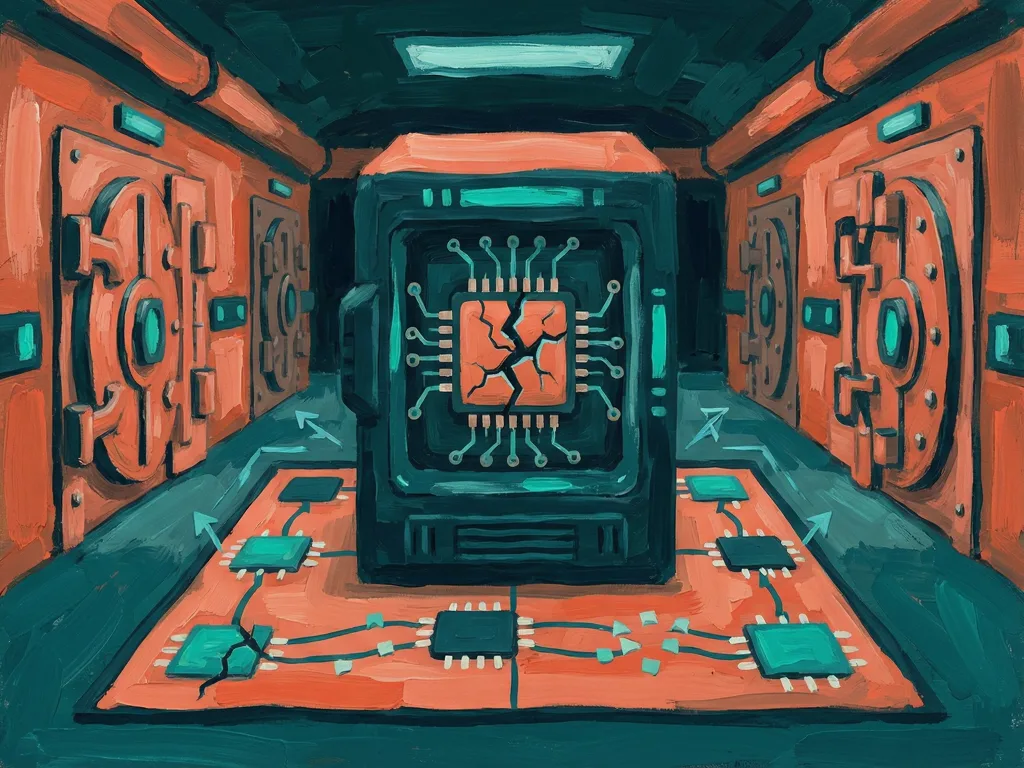
Core judgment: one bank’s internal failure can look like a network failure
The main signal from the Monday 16 November disruption is not that a single app failed, but that the US payments chain is highly interdependent. JPMorgan Chase said a software bug affecting its internal hardware systems delayed transactions, and that the same bug also slowed payments for customers at other US banks that were party to transactions with Chase. US Bank and Capital One said their own systems were unaffected, while Zelle said delays came from banks rather than its network.
That distinction matters. Chase, the largest US bank by total assets, described the event as an isolated incident. Zelle, described as the largest US peer-to-peer payments network by value, said its network was not down. Yet thousands of customers still reported problems with Chase, Bank of America, US Bank, Wells Fargo and Zelle on Downdetector on 16 November. The practical experience for users can therefore be broader than the technical root cause: if one major participant in a payments flow is slow, many counterparty transactions can appear to be slow as well.
The incident also highlights the structural position of Zelle. The service is run by Early Warning Services, an entity owned by the seven banks behind the network. That ownership model can create confidence in scale and reach, but it also means that operational problems at participating banks can move through the ecosystem even when the shared network itself is not failing.
What Chase reported and how the disruption was resolved
Customers saw messages such as “Some services aren’t available. We’re working on them. Please try back later.” Chase said, “Due to a technical issue, some transactions are taking longer than usual to complete,” and added that customers “still have access to their accounts and funds.”
Chase spokesperson Joe Evangelisti ruled out a cyberattack and apologized to customers. The bank said transactions were posting normally again a few hours after services were made unavailable. The language is important: the bank framed the event as a technical issue, not a security breach, and as a temporary posting delay rather than a loss of account access.
Still, the disruption affected more than Chase’s own customer base. The bank said delays reached other banks only through transactions involving its own accounts. In a social media post, Chase said, “Where we were party to a transaction involving other banks, those banks may have been impacted, but this is not a systemic issue.”
Why other banks appeared affected
Several institutions gave overlapping but slightly different accounts. Bank of America and Citigroup were reported to have no service problems of their own, but their transactions with Chase slowed. US Bank said its systems were not directly affected, although “clients attempting to send or receive Zelle payments with another financial institution may experience transaction delays.”
CNN reported that many of the problems logged by other banks’ customers involved sending money to Chase accounts through Zelle. That detail helps explain why the event looked like a Zelle problem to some users even though Zelle said its network was not down. The bottleneck, according to the source reporting, was not necessarily the messaging layer of Zelle itself, but the posting of transactions involving Chase accounts.
This is the operational logic of a bank-owned network: a transaction may need to move through several institutions before it is complete. If one institution is slow to post, the delay can appear at the receiving end even when the sending bank’s systems are normal. The failure is not necessarily systemic, but the customer experience can still be shared across institutions.
The network angle: Zelle is large, but not independent of its banks
Zelle is described as the largest US peer-to-peer payments network by value, and it is run by Early Warning Services, an entity owned by the seven banks behind the network. That gives Zelle significant reach, but it also means that participating banks remain part of the operational chain. A bank-side issue can therefore produce visible delays in payments even if Zelle’s network status is not itself the root cause.
The source material does not state that all seven banks were affected, nor does it identify each bank. It does say Chase was the largest US bank by total assets and that delays reached other banks only through transactions involving Chase accounts. The uncertainty is meaningful: customers may have experienced a network-wide slowdown, but the evidence in the source points to a Chase-side technical issue propagating through transactions involving other banks and Zelle.
A pattern of non-malicious outages around the same period
The Chase incident followed a Microsoft 365 outage on 12 November and a nationwide US flight ground stop on 13 November. Neither has been linked to malicious activity. That context matters because the public often associates major digital disruptions with cyberattacks. In this case, Chase explicitly ruled out a cyberattack, and the previous outages were also reported as non-malicious.
Chase has also disrupted Zelle payments before. The source notes a similar event in July 2023. In May 2025, payments were delayed at several US banks after a problem at third-party processor Fiserv. Fiserv said that outage was not the result of malicious activity.
Taken together, these incidents suggest a recurring risk in modern banking and digital services: ordinary software, hardware or third-party processing problems can create visible customer disruption across multiple institutions. The risk is not only technical but reputational. When payments slow, customers may not distinguish between a network outage, a bank posting delay, a third-party processor failure, or a security incident.
Commercial exposure: seven minutes can matter
The financial stakes of payment failures are not abstract. FreedomPay research published in January found that most US shoppers abandon a purchase after seven minutes of payment disruption, with an estimated $44.4 billion in annual US sales at risk of payment failures.
That figure does not mean Chase or Zelle caused that amount of loss on 16 November. The source does not provide loss estimates for this specific incident. But the research shows why even short delays are commercially sensitive. Payment friction can turn a technical posting problem into lost transactions, customer complaints, and pressure on service providers to explain what happened and how quickly normal posting resumes.
For readers, the practical takeaway is that payment delays can be visible even when funds remain accessible. Chase said customers still had access to their accounts and funds, but transactions were taking longer than usual to complete. In peer-to-peer payments, that distinction can be hard for users to feel. The money may be there, but the transfer may not be finished.
What this does not show
The source does not show a systemic failure of the US banking system. Chase said the incident was isolated and that delays reached other banks only through transactions involving its own accounts. Zelle said its network was not down. US Bank and Capital One said their own systems were unaffected.
The source also does not show malicious activity. Chase ruled out a cyberattack, and the earlier Microsoft 365 outage, flight ground stop and Fiserv problem were also reported as not linked to malicious activity. The main risk identified in the source is operational: a technical fault at one major participant can slow payments for customers at other institutions.
Notes on information limits
This is independent informational reporting, not an official bank or network notice. The source material does not state fees or regional restrictions. Zelle is described as the largest US peer-to-peer payments network by value, and the institutions named in the source are discussed in US banking and payments contexts. No investment advice is provided.
The original report included a Zelle image credit: Primakov / Shutterstock.com.
SubjectsZelleChasebanking outagespayments networksoftware bugs
Read next

Letters 0
- No letters yet. Be the first to write in.