
Merchant acceptance will shape the future of payment sovereignty.
Domestic account-based wallets are moving into in-store checkout, shifting focus from user adoption to merchant acceptance and payment sovereignty.
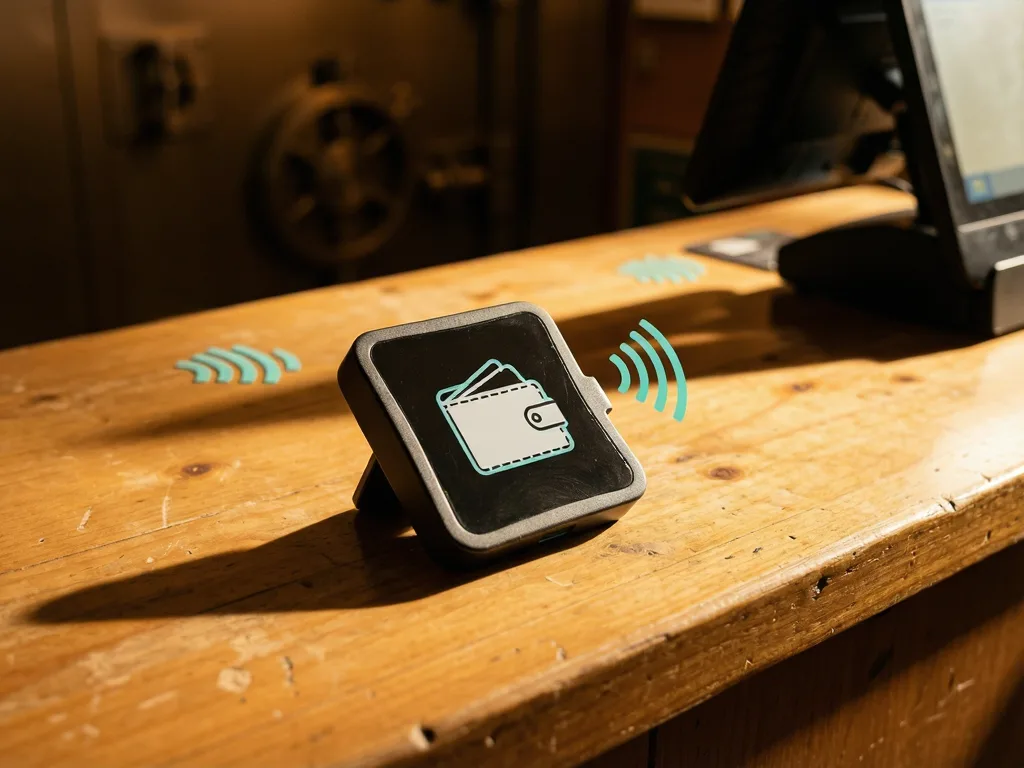
At the start of 2026, the expected path for domestic account-based wallets was incremental: peer-to-peer payments would remain the core use case, with eCommerce as the next area of expansion. The surprise was how quickly these wallets moved into everyday in-store commerce. The central change is not that consumers suddenly discovered domestic wallets. They had already been using them for transfers. The change is that merchants, terminals and checkout journeys are now being brought into the picture.
The assumption that did not hold
The prior view was that international card networks would continue to dominate the checkout experience, while alternative domestic rails would remain concentrated around peer-to-peer, account-to-account and online payments. In-store commerce seemed the hardest segment to disrupt because card networks had already built consumer expectation and merchant acceptance.
Two developments quickly challenged that assumption and highlighted the ability of domestic instant schemes to move beyond their traditional use cases and into everyday in-store commerce.
First, consumer adoption. Millions of users were already making peer-to-peer payments every day directly from their bank accounts. A method that initially emerged as a simple and convenient way to transfer money between individuals gradually became accepted for a wider range of transactions, including payments to small businesses and merchants operating without traditional payment acceptance infrastructure.
Second, technology. Contactless mobile payments using Near Field Communication had become the standard consumer experience in physical stores. As a result, domestic payment initiatives increasingly saw in-store contactless acceptance as the natural next step in their evolution, enabling consumers to use their rails through the same seamless tap they experience today.
Bizum shows the acceptance problem can be solved at scale
The clearest example was Bizum. By September, Bizum payments were accepted at more than 1.6 million Spanish merchants, covering approximately 75% of payment terminals and serving over 20 million users.
That data point changes the conversation. The question is no longer whether a domestic account-based wallet can attract users. It can. The harder question is whether merchants will accept it at the point of sale, and whether the payment experience can coexist with the card networks consumers already trust.
The lesson from Bizum is not only the scale of adoption. It is the ambition behind it. The conversations were not about replacing international payment networks. They were about complementing them. Customers wanted to preserve global acceptance and familiarity while introducing a new domestic alternative that provides additional resilience, competition and local control.
Why in-store checkout is the new frontier
The turning point in 2026 was recognizing that alternative domestic payment schemes no longer have an adoption challenge. They have an acceptance challenge. Users may already have a wallet, a bank account link and a daily transfer habit. But a wallet only becomes a payment system when it can be used where the transaction happens.
This is why the fourth-quarter focus is evolving. The priority is technologies that help account-to-account payment methods reach the point of sale. This includes wallet enablement, digital credentials and acceptance models that allow domestic payment rails and international networks to coexist within the same consumer experience.
A European wallet provider illustrates the approach. It extended its successful account-to-account payment ecosystem to in-store contactless payments. The objective was not to create a different payment journey. It was to allow consumers to use a domestic payment method through the same experience they already use every day.
What the shift means for readers
For consumers, the practical meaning is that domestic wallets may become less niche. If acceptance expands, the same account-based payment method used for transfers could become usable in more everyday checkout situations, while international card networks remain available.
For merchants, the meaning is more complex. Accepting a domestic wallet can add another payment option, but it also requires integration, terminal readiness and a clear consumer incentive. If a wallet provides resilience, competition or local control, merchants may see value in supporting it. If it only duplicates what cards already offer, acceptance may stall.
For the payments industry, the lesson from 2026 is simple: payment sovereignty is no longer defined by the existence of domestic payment rails, but by the ability to use them at checkout. A rail that cannot be accepted at the point of sale remains an infrastructure project, not a completed consumer payment experience.
The 2027 test is different
In 2027, adoption becomes the next test. With the technology in place and merchant acceptance expanding, sovereign wallets must give consumers a compelling reason to change established habits. The defining question is no longer whether these wallets can reach the checkout, but what distinctive value they can offer to earn a place alongside, or instead of, the original equipment manufacturer wallets consumers already use.
That question matters because checkout is habitual. If a consumer can already tap a phone or use a familiar card network, a domestic wallet must prove that it is faster, more convenient, more trusted, more available, or more useful in a way that changes daily behavior. This analysis does not claim that the outcome is guaranteed. It identifies the condition: acceptance and technology must be followed by a clear consumer reason.
Uncertainties and risks
Several risks remain. Merchant acceptance coverage may not translate into consistent checkout availability across all terminals, stores or transaction types. Coexistence with international networks could create complexity for merchants and wallets if credentials or acceptance models are not well integrated. Consumer habit is hard to move: even when a domestic rail is available at the point of sale, it may not be selected if it does not offer a visible advantage.
There is also a strategic uncertainty. If domestic wallets focus too much on complementing existing networks, they may become an added option rather than a distinct experience. If they try too aggressively to replace global acceptance, they may weaken the familiarity that makes checkout reliable. The balance—resilience, competition and local control without sacrificing global acceptance—is difficult to maintain.
Disclosure
This is an independent informational analysis, not an official statement from Bizum, merchants, payment networks, wallet providers or original equipment manufacturer wallet providers. It is not investment advice. Fees and regional restrictions may vary by provider, wallet, merchant and market; readers should consult the relevant provider terms for availability and costs.
Subjectsin-store paymentspayment sovereigntymerchant acceptancedomestic walletsaccount-to-account payments
Read next

Letters 0
- No letters yet. Be the first to write in.