
After 12 years, Apple Pay still has not broken the in-store habit of using physical cards.
PYMNTS survey: mobile wallets hit 8.2% of US in-store purchases, but card taps lead; rewards and saved setups shape growth.
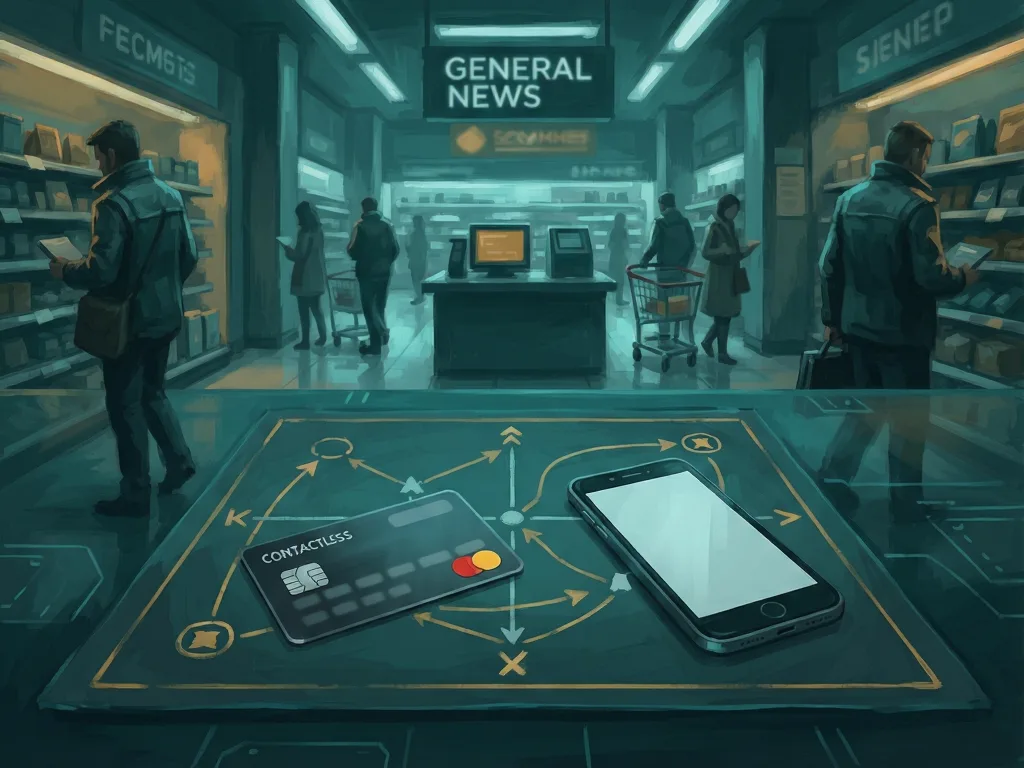
Apple Pay @12: Mobile Wallets Reach 8.2% of In-Store Purchases, but Card Taps Still Lead
Mobile wallets are moving from occasional use into more regular U.S. shopping routines, but they have not yet displaced the card tap. The central signal in the PYMNTS Intelligence report “Apple Pay @12: Mobile Wallets Gain Ground, but Most Shoppers Still Tap a Card” is that wallets are gaining share from a still-small base. The survey of 2,458 U.S. consumers, conducted from Aug. 20 to Sept. 9, 2026, found that 8.2% of in-store shoppers used a mobile wallet for their most recent purchase, up from 4.3% in 2023. That is a meaningful jump, but it also leaves most shoppers still tapping a card.
Adoption Is Rising, but Card Taps Remain the Default
The shift from 4.3% to 8.2% shows that mobile wallets are becoming more visible in daily commerce, yet the market is not at a tipping point. For banks, merchants and wallet providers, the more important question is not only whether adoption is growing, but where the next layer of growth may come from. The report points to two groups: consumers who already prefer a wallet over a tap-to-pay card, and consumers who have compatible phones and stores ready to accept payments but have not yet switched.
That distinction matters because the easy growth phase may not be about convincing all shoppers to abandon cards. It may be about converting shoppers who already have the tools and the environment for wallet payments. In other words, availability is no longer the only barrier. Habit, reward expectations and saved payment setups appear to shape the choice.
When Both Options Are Available, Wallets Can Take the Lead
The report contains a more revealing behavioral signal: among shoppers who used both a mobile wallet and a tap-to-pay card in the same week, about half used the wallet more often, while just 16% favored the card. This suggests that wallet preference may not be decided before first use. Once shoppers have both options in front of them, the wallet can become the more frequent choice.
That finding is important because it reframes adoption. The question is not simply whether a consumer owns a compatible phone or whether a store accepts mobile payments. It is whether the consumer actually reaches for the wallet when a card tap is also available. The data imply that exposure to both options can change behavior. Wallets are not only gaining among early adopters; they are also winning in head-to-head situations among shoppers who already use both.
Rewards Point to a Gap Between Intent and Setup
Another tension appears in rewards. Seventy percent of wallet users say they are likely to use the card that earns the most rewards. Yet most keep only one payment method saved in their preferred wallet. This creates a practical gap: shoppers say rewards influence their choice, but their wallet setup may limit how easily they can act on that preference.
For payment executives, this is where the decisions behind each tap become more complex. The report connects growing wallet use with household budgets and card preferences. Rewards may shape what shoppers say they want, but saved payment methods, convenience and habit shape what they actually use. The opportunity for banks and wallet providers is not only to offer a better payment surface, but to help shoppers align the cards they store with the rewards they care about.
Apple Pay @12 Suggests a Larger In-Store Spending Question
The report is framed around Apple Pay @12 and also estimates how much in-store spending Apple Pay could reach. The summary provided does not include the spending figure itself, so the main conclusion from the available facts is directional rather than exact. The report positions mobile wallets as an expanding part of in-store payment behavior, while still acknowledging that most shoppers continue to tap a card.
For merchants, the implication is that mobile wallet acceptance may become a routine expectation rather than a special feature. For banks, the issue is which cards become embedded in wallets and which remain less used. For wallet providers, the challenge is turning occasional use into default use without relying only on novelty.
The Real Opportunity Is Conversion, Not Just Awareness
The findings reveal an opening, but not necessarily a simple one. More consumers are paying by phone, and some already favor a wallet over a tap-to-pay card. Others have compatible phones and stores that can accept their payments, but they still have not made the switch. Understanding those differences can help businesses identify where to focus their efforts.
This suggests that the next stage of mobile wallet growth may depend less on broad awareness and more on targeted conversion. Consumers who already have the device, the card and the merchant acceptance are the most relevant group. Among them, the deciding factors may be speed, habit, rewards and how many payment methods they keep saved.
What Remains Uncertain
The report explores how adoption differs across generations and financial situations, but the available summary does not publish those detailed figures. That limits how far one can say which group is moving fastest. The same caution applies to the broader market: the survey covers U.S. consumers, so the findings should not be read as a global statement about mobile wallet behavior.
There is also no fee information in the source text, so the report cannot be used to compare the cost of wallet payments with card payments. Regional differences in device compatibility, merchant acceptance and consumer habits may also shape outcomes outside the surveyed market.
Independent informational summary. The findings come from the PYMNTS Intelligence report “Apple Pay @12: Mobile Wallets Gain Ground, but Most Shoppers Still Tap a Card,” based on a survey of 2,458 U.S. consumers conducted from Aug. 20 to Sept. 9, 2026. This is not an official Apple Pay communication and does not provide investment advice.
Subjectsmobile walletsApple Payin-store paymentsCard TapsPayment Rewards
Read next

Letters 0
- No letters yet. Be the first to write in.