
The five largest banks are deploying AI agents behind the scenes, mostly hidden from customers.
U.S. banks use AI agents in supervised back-office workflows, not autonomous customer accounts, focusing on efficiency, governance, and human review.
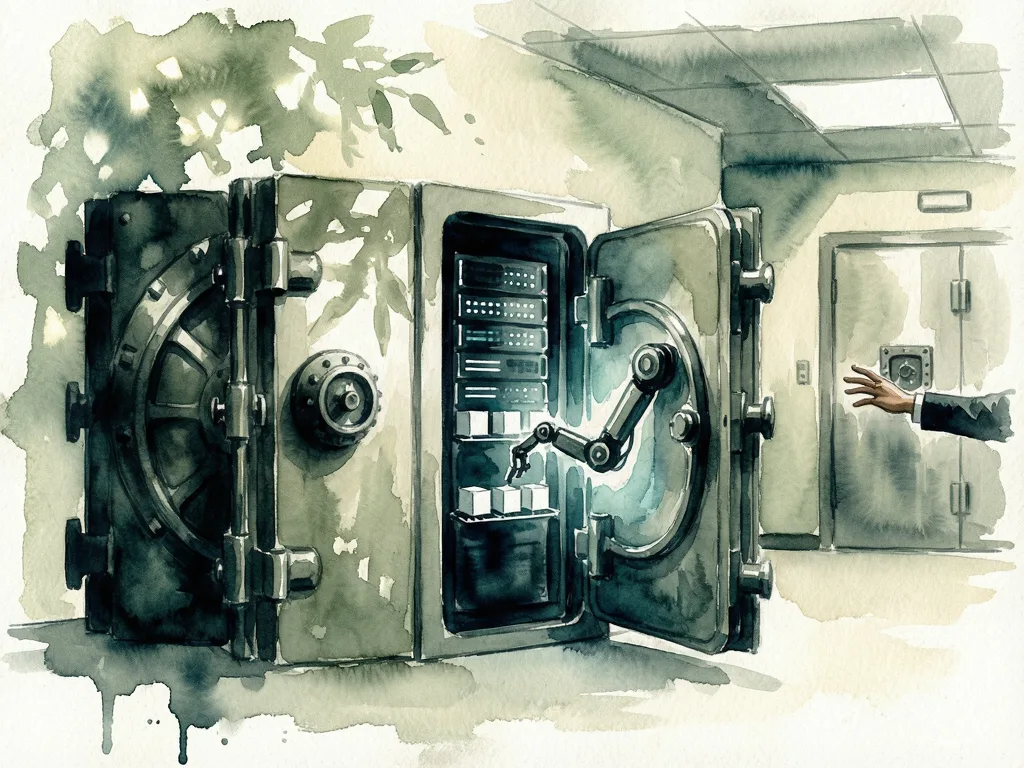
The shift is from answering questions to doing multi-step work
For two years, banks discussed AI assistants that answer questions. In 2026, the term shifted to agents: software carrying out multi-step work with some independence. This changes risk: assistants can be checked after the fact; agents may create operational and legal issues before human review.
At the five largest U.S. banks by assets, agents go to employees and back-office teams first, humans review output, and autonomous account software remains the exception—adoption is supervised.
JPMorgan Chase is pushing long-running agents, but keeping the customer account door locked
JPMorgan Chase told CNBC in June it plans agents later this year that can work autonomously for hours, not minutes. Chief Analytics Officer Derek Waldron said the industry entered an era of long-running autonomous agents, expecting days- and weeks-long coherence, acting like delegating team managers rather than individual workers.
Long-running agents become process components, not request-response tools. Unlike a manager, an agent lacks accountability; the bank must assign decision ownership, checks and consequences.
JPMorgan ties AI tools to a 20% lift in private banking gross sales, showing commercial value and why investment continues. Agents improving supervised sales productivity may be adopted faster than customer-facing agents.
In July, researchers reported eight agents using OpenAI and Anthropic models that moved between asset classes by market regime. All eight beat a 60/40 portfolio risk-adjusted in backtests, but authors stressed simulations and caution on allocation decisions; backtests show historical, known-rule behavior but not outside-tested conditions, so broad customer-facing use is not ready.
Third-party agents face a firmer boundary. CEO Jamie Dimon said in October JPMorgan won’t let third-party agents operate customer accounts, warning of a “liability transfer” for customers who authorize them; it is piloting its own Smart Cash instead.
JPMorgan lets its own agents support employees and back-office under governance, but not external agents operating accounts. Third-party access may blur customer authorization and bank responsibility; customers may not understand what they permit, and banks may stand behind actions they did not design, supervise or control.
Bank of America's Erica suggests the near-term model is scaled assistance with human review
Bank of America’s Erica scales with people in the loop, not as an autonomous customer-account agent. It helps customers and staff while leaving review, approval and responsibility with people. Large banks are not handing accounts to AI; they use AI where output can be supervised. Back-office work, employee tools and supervised workflows fit better than autonomous account operation.
Why banks are choosing this sequence
Internal deployment reduces customer risk because agents can be corrected before output reaches clients and fits existing controls. Third-party access creates a governance gap: banks can govern their own tools but not external agents without strict boundaries, as JPMorgan’s Smart Cash pilot shows. Liability is asymmetric: customers may authorize agents, but banks may still stand behind account outcomes.
What readers should take away
For customers, agents will likely be behind-the-scenes productivity tools, not autonomous account managers; final customer-facing actions often still involve human review. For employees, agents mean supervised delegation, not replacement. For the market, the question is not whether banks adopt agents but whether they can maintain human accountability as agents become longer-running and more independent.
Three uncertainties remain: technical speed, as JPMorgan expects days- and weeks-long coherence that could blur supervised internal versus autonomous account-agent boundaries; commercial pressure, since the 20% sales lift encourages AI expansion but not safer autonomy; and the third-party ecosystem, where Dimon’s “liability transfer” warning marks account actions as risk.
Fees, availability and non-advice note
The source material does not specify fees or regional restrictions for these tools. This is independent informational analysis based on the original report, first on Tearsheet, not official bank communication or investment advice.
Subjectsfinancial riskAI agentsAI governanceU.S. banksbanking automation
Read next


Letters 0
- No letters yet. Be the first to write in.