
Mastercard enables smartphones to serve as payment terminals for global payment acceptance
Mastercard Accept turns phones into payment tools via banking apps, letting cardholders receive global payments with NFC or QR.
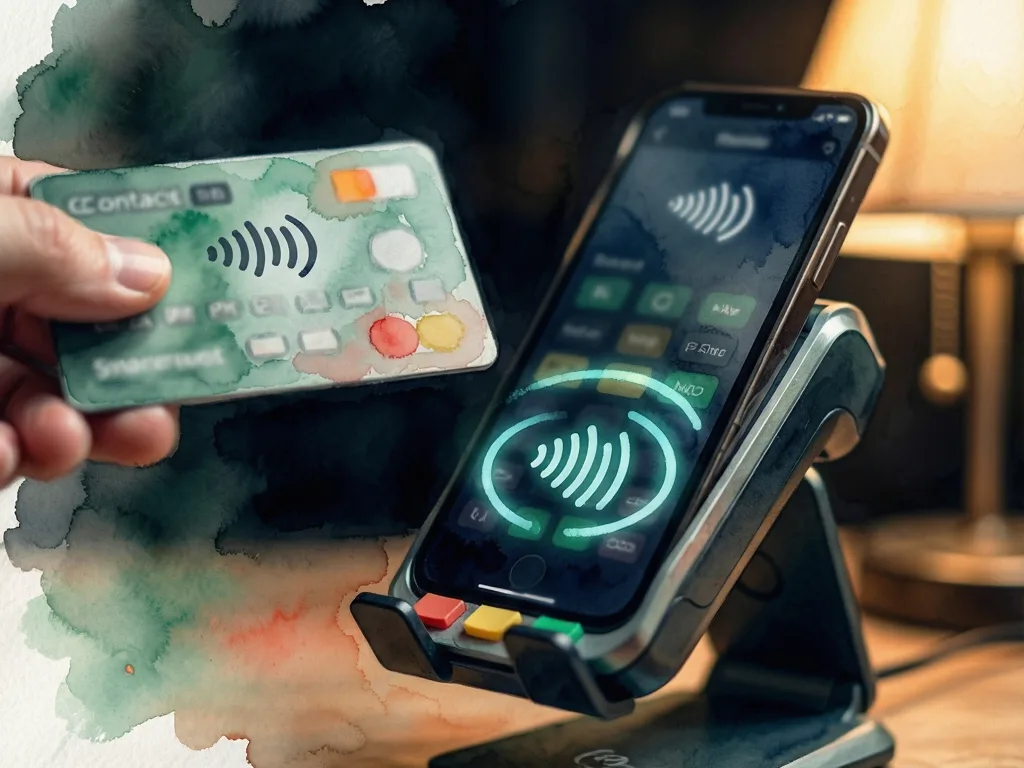
Mastercard’s latest solution focuses on using the mobile phone to cut through global payment friction. Mastercard will rollout Mastercard Accept to turn mobile phones into payment acceptance platforms that can connect to other devices across the world. Eligible debit and prepaid cardholders will be able to receive payments from within their bank accounts for everyday purchases and payments.
Core judgment: acceptance moves inside the banking app
The practical change is not a new card network, but a simpler acceptance interface. Mastercard Accept is positioned as a way to let people receive money through the tools they already use: a debit or prepaid card and a banking app.
In the described flow, cardholders can log into their banking app, select the option to accept a payment, enter the required amount, and then present their smartphone to the payer to tap for contactless payment or via a QR code to make payment.
This matters because payment acceptance has traditionally depended on separate merchant tools, terminals, or provider-specific apps. Mastercard’s framing is that the consumer side has become smoother, while the receiving side still creates friction.
Jorn Lambert, Chief Product Officer at Mastercard, said: “Today people move seamlessly between buying, selling and earning, but the way they get paid has not kept pace.”
He added that users need payment solutions that support these activities without pushing them to unfamiliar providers and platforms. Mastercard Accept is designed for that reality, making it possible for debit and prepaid cardholders to get paid as easily as they pay.
The friction Mastercard says it is targeting
Despite advancements in technology and digital services, there continue to be friction points with achieving faster payment acceptance rates from country to country. The source identifies several persistent obstacles:
- High payment costs
- Regulatory fragmentation
- High decline rates
- Slow cross-border payment rails
These issues can prevent businesses and consumers from receiving a payment instantly. Mastercard Accept is positioned as a response to that gap.
Mastercard stated that the solution will seek to rectify these problems by expanding the value of its debit and prepaid cards. The mechanism is embedding those cards into everyday banking infrastructure to enable acceptance from international locations.
The strategic implication is that Mastercard is not only promoting card usage, but also trying to make card accounts more functional on the receiving side. If a debit or prepaid card can be used to accept payments without a separate merchant onboarding process, the barrier to participation falls.
Early partners and initial markets
Some of the first Mastercard Accept partners include issuing and acquiring partners such as BAC, Banco Nacional De Costa Rica, Equity Bank, Getnet, and KCB Bank Kenya.
The rollout will be in collaboration with these global issuing and acquiring partners. The initial focus is on key markets in Asia Pacific, Latin America, the Middle East and Africa, with global rollout to follow in the future.
That market sequencing is important for readers. Mastercard Accept is not described as immediately available everywhere. Availability will depend on the partner network, the bank integration, the type of card, and the local payment environment.
Luis Diego Zamora, Chief Commercial Officer of Banco de Costa Rica (BCR), said: “Through technological innovation and service excellence, we transform everyday banking into advanced digital solutions.”
With Mastercard Accept, Zamora said BCR aims to enrich its value proposition through a model that simplifies the acceptance of payments from the first sale. He described the launch as a significant step in BCR’s digital evolution, differentiating the bank through simple, secure and growth-oriented technologies for its customers.
Why the partner list matters
The partner names show that Mastercard Accept is a joint product concept rather than a standalone consumer app. Mastercard provides the payment infrastructure and product direction, but the customer experience will be delivered through issuing banks and acquiring partners.
For cardholders, that means the feature may appear differently across banks. One partner may emphasize QR codes, another may emphasize tap-to-pay, and another may limit the function to certain card products. The source does not specify whether all debit and prepaid cards from all partners will have access.
For merchants, freelancers, or users who sell services, the partner model could reduce the need to open a separate merchant account. If acceptance can happen inside the banking app, the transition from consumer cardholder to payment recipient becomes shorter.
However, the source does not say that Mastercard Accept removes the need for merchant classification, risk screening, dispute handling, or local compliance. Those requirements may still vary by bank and market.
Fees and regional restrictions: what readers should check
The source does not disclose a fee schedule for Mastercard Accept. That is a key practical gap. Users should not assume that the service is free, because payment acceptance can involve issuer charges, acquiring charges, network fees, currency conversion costs, or bank-specific service fees.
Readers should check with their issuing or acquiring partner before relying on the service. They should confirm whether Mastercard Accept is available for their specific debit or prepaid card, whether there are limits on transaction size or frequency, and what fees apply to accepted payments.
Regional restrictions are also important. The initial focus on Asia Pacific, Latin America, the Middle East and Africa means that availability at launch is uneven. Mastercard says a global rollout will follow in the future, but the source does not give a date or a complete list of countries.
The service may also be affected by the same friction points it is trying to reduce: regulatory fragmentation, local payment rules, and differences in how banks support international acceptance.
Uncertainty: convenience does not guarantee lower decline rates
Mastercard Accept could make payment acceptance more convenient, but convenience alone does not solve every payment failure. The source identifies high decline rates as an existing problem. A smoother phone-based interface may reduce some barriers, but declines can still happen because of insufficient funds, card restrictions, security rules, cross-border limitations, issuer policies, or technical failures.
The QR code and contactless flow also depends on device readiness, app permissions, network connectivity, and the payer’s ability to complete the transaction. If the payer’s card, bank, or device does not support the required payment method, the acceptance attempt may still fail.
There is also an experience risk. If users are accustomed to paying with a phone, they may expect receiving payments to feel equally simple. But if the banking app flow differs across partners, or if fees and limits are unclear, the product could feel fragmented rather than seamless.
What Mastercard Accept means for ordinary cardholders
For eligible debit and prepaid cardholders, the most meaningful change is optionality. The card account may become a more complete payment tool: used to pay, used to receive, and potentially used to accept payments from international locations through the same mobile banking environment.
The product’s value depends on whether it can operate without forcing users into unfamiliar platforms. Mastercard’s own positioning emphasizes this point. If Mastercard Accept can deliver acceptance inside a trusted banking app, it may reduce friction for users who currently cannot or do not want to set up separate merchant services.
But readers should treat the launch as conditional. The source does not specify all eligible cards, all participating banks, all supported transaction types, or the exact fee structure. Until those details are available from each partner, Mastercard Accept should be understood as a promising acceptance layer, not a guaranteed solution to global payment friction.
Bottom line
Mastercard Accept is best read as an attempt to shorten the distance between paying and getting paid. By turning mobile phones into payment acceptance platforms inside banking apps, Mastercard is trying to extend the usefulness of debit and prepaid cards beyond ordinary spending.
The approach could help reduce some practical barriers to receiving payments, especially in markets where card infrastructure already exists but merchant acceptance tools remain awkward. The early partner names and initial regional focus show that the rollout is being built through banks and acquiring partners rather than as a single universal product.
The open questions are fees, eligibility, local availability, decline behavior, and how consistently the experience will appear across different banking apps. Those factors will determine whether Mastercard Accept becomes a routine payment tool or remains a limited pilot feature.
This analysis is informational and does not provide investment advice; it is not an official Mastercard notice.
Image credit: SWKStock/Shutterstock.com
SubjectsMobile PaymentsBanking AppsPayment AcceptanceMastercard AcceptContactless
Read next

Letters 0
- No letters yet. Be the first to write in.