
European Central Bank Reports That One-Fifth of Bank Cyber Incidents Originate From Third-Party Providers
EU central bank says 20% of euro-area bank cyber incidents stem from third-party provider outages, non-EU vendors, and AI access gaps.

The European Central Bank’s November 2026 Financial Stability Review, published on 18 November, gives a core judgement that is more operational than dramatic: euro area banks are increasingly exposed to cyber risk through concentrated third-party providers and through the uneven availability of advanced artificial intelligence models. Around one-fifth of cyber incidents affecting euro area banks originate from third-party providers, the European Central Bank says. That figure reframes the threat. For now, the biggest disruptions have often come from provider failures rather than malicious attacks, but the central bank expects the risk to grow because improved model capabilities have increased cyber risks and operational vulnerabilities more generally.
Concentration risk is the first fact to understand
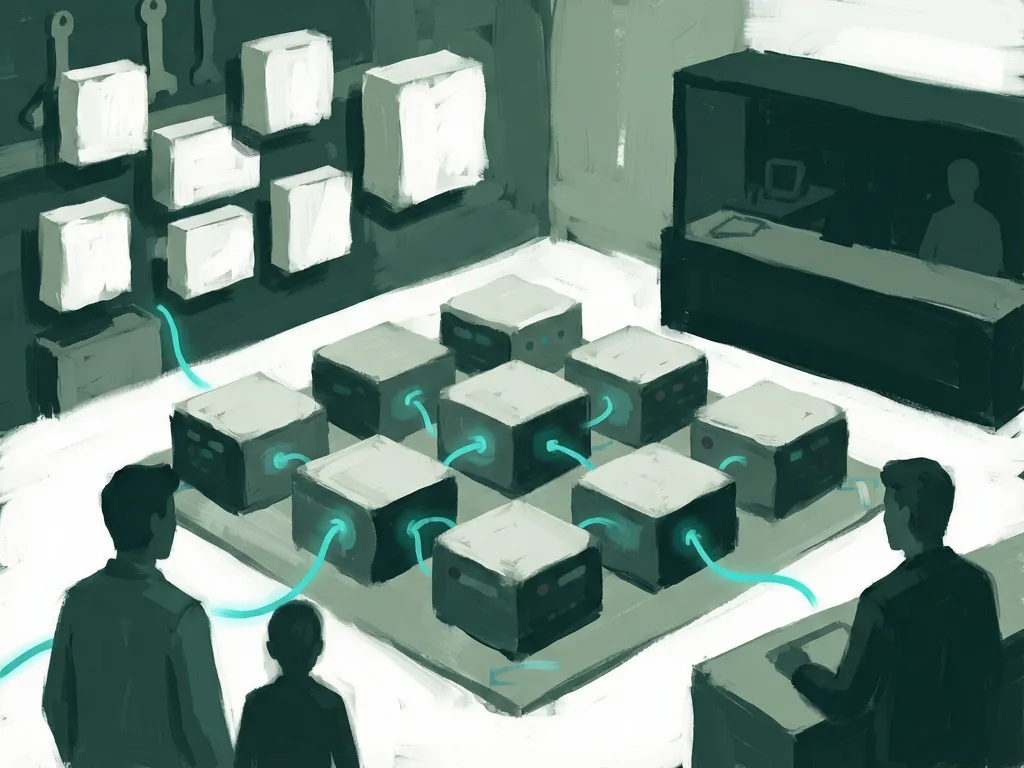
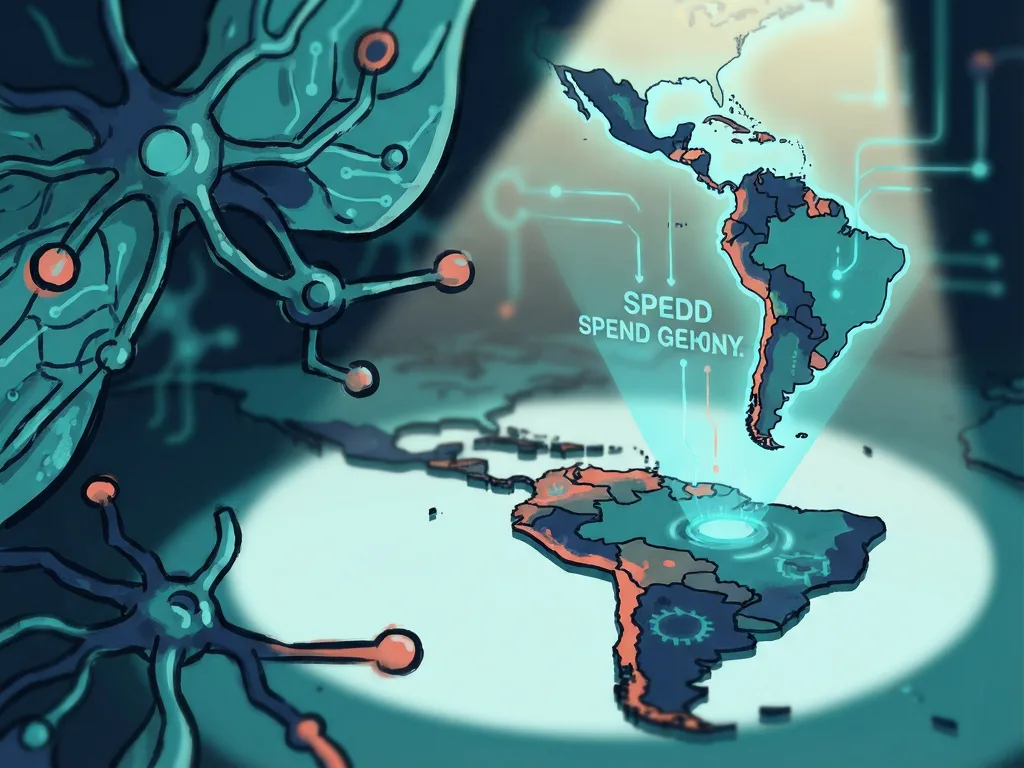
The review’s most concrete warning is about dependency. The European Central Bank says those dependencies are “highly concentrated among a small number of large providers from outside the EU.” In practice, that creates two problems at once. If one provider fails, banks may have few alternatives, turning a single provider outage into a financial-sector disruption. Because the providers are based outside the EU, banks are also exposed to geoeconomic fragmentation, and the report notes that certain frontier AI models have already been placed under export controls.
The data also shows that the immediate cause of much disruption has not been a successful criminal campaign. The European Central Bank says provider failures, rather than attacks, account for much of the disruption so far. Malicious actions caused a relatively small share of major cyber incidents at euro area banks, most of which had limited impact, and the euro area banking system has not experienced a systemic cyber event to date.
Still, the central bank expects risk to rise. It states that “improved model capabilities have increased cyber risks and operational vulnerabilities more generally.” This is supported by European Banking Authority survey data cited in the report, which shows banks ranking cyber risk as the largest driver of operational risk by a large margin.
The European Central Bank’s own framing: elevated risk, not imminent collapse
European Central Bank Vice-President Boris Vujčić said, “Risks to euro area financial stability remain elevated, given persistent geoeconomic uncertainty and growing exposure to AI.” He added, “Banks are well placed to withstand shocks, while vulnerabilities are more pronounced in certain non-banks where risks are growing and macroprudential safeguards are less developed.”
That nuance matters. The report is not saying that the euro area banking system is on the edge of a cyber crisis. It is saying that resilience is being tested by dependencies and technologies that move faster than governance. The central bank’s concern is therefore less about one dramatic attack and more about a chain of smaller failures becoming harder to contain.
The report also echoes a wider official warning. The International Monetary Fund warned in May that reliance on a small number of software, cloud and AI models could let AI-enabled cyberattacks spread across financial institutions. The European Central Bank does not need a single dramatic breach to make the point: if the same models, providers and supply chains are used broadly, a technical or access-related failure can propagate through the system.
Why defenders may be structurally behind in the near term
The review describes a cost and access asymmetry. Low-cost AI agents have lowered the barrier for fraudsters to acquire the tools needed for attacks. Defenders, by contrast, are held back by the cost of deploying frontier models, governance challenges and slower, regulation-bound decision-making, leaving them structurally disadvantaged, at least in the near term.
Euro area banks face an added drawback. The European Central Bank says EU banks have often been unable to get the most capable AI models for defence. The report cites initial access restrictions placed on Mythos, which left European banks locked out of Anthropic’s Claude Mythos after its limited release.
Attackers have not faced the same delay. The report says Chinese models matched Mythos-level cyber performance four months after its release, and lower-cost models are becoming available “after just a short time lag.”
This asymmetry is important, but it should not be read as certainty. The European Central Bank is describing a near-term risk pattern: defenders may wait for access, governance and cost conditions to change, while attackers can use cheaper models that arrive quickly and target a growing pool of weaknesses. The review notes that close to half of the vulnerabilities disclosed in 2026 were classified as critical or highly severe.
Banks are not being hit equally
The cyber-risk picture is uneven. European Banking Authority data cited by the European Central Bank shows that the share of banks that faced no attack resulting, or capable of resulting, in a major information and communication technology incident rose to 56% in the first half of 2026 from 49% in the previous half. Over the same period, the share facing 11 or more such attacks rose to 11% from 7%.
The European Central Bank described that split as a possible early sign of a divide opening between different sets of banks. This is one of the report’s most useful incremental insights. It suggests that the main question may not be whether banks face cyber risk, but which banks are being pulled into a higher-frequency threat environment and which remain comparatively insulated.
That divide can have practical consequences. Banks under more frequent attack may need more monitoring, more incident-response capacity, more third-party mapping and more spending on resilience. Banks facing fewer attacks may appear safer in the short term, but they may still depend on the same concentrated providers, which can create common exposure without producing obvious symptoms.
The regulator’s response: reporting, action plans and third-party obligations
The European Central Bank considers the cyber risk from frontier AI models “to be substantial.” The Digital Operational Resilience Act has strengthened incident reporting and made it easier for supervisors to monitor third-party risk. The same act already brings third-party providers into payments firms’ resilience obligations.
Frontier models, however, are making attacks quicker, cheaper and more sophisticated. The regulatory response has begun. In July 2026, the Chair of the European Central Bank’s Supervisory Board asked significant institutions to review their cybersecurity postures, information technology budgets and staffing, and to submit an action plan for mitigating AI-related risk by 31 October 2026.
That action-plan requirement tells readers something important: supervision is not only asking for better technology. It is asking banks to show how they govern, staff and fund their exposure to AI-related operational risk. The question is whether reporting, testing and contingency planning can move as fast as model capability and provider concentration.
Agentic AI can change deposit behaviour, not just cyberattacks
The review also widens the risk map beyond cyberattacks. It flags agents failing to act as their human operators intend as a new vulnerability. The United Kingdom’s Financial Stability Board addressed that issue in October, when it set out 12 governance practices for agentic AI in financial services.
The deposit-risk point is more indirect but potentially significant. AI agents could make it quicker and easier for customers to compare deposit rates online and shift funds automatically. Euro area deposits tend to be quite sticky, but the European Central Bank says that in the medium to longer term, agentic AI tools may challenge banks’ funding structure by reducing this stickiness.
This is not a claim that deposits will vanish tomorrow. It is a warning about incentives. If customers can use agents to monitor rates and move money with less friction, the report’s warning is that the traditional stability of euro area deposits may become harder to assume. The report notes that several large UK banks have blocked third-party AI agents from customer accounts. That shows that banks are already reacting to the possible operational and funding consequences, not only to cyber threats.
What remains uncertain, and what readers should watch
Several uncertainties remain unresolved. The European Central Bank has not shown that frontier AI has caused a systemic cyber event in the euro area banking system. It has shown that the system has not yet experienced one. The next question is whether provider concentration, export controls, access restrictions and rapidly spreading model capabilities will turn isolated failures into broader stress.
Another uncertainty is the uneven distribution of attacks. The rise in the share of banks facing 11 or more attacks from 7% to 11% may indicate a divide, but the report frames it as an early sign, not a settled conclusion. The same is true for agentic AI’s impact on deposit stickiness. The report identifies a plausible mechanism—faster comparison and automatic fund movement—but the scale and timing are not fixed.
For readers, the practical takeaway is that AI risk in banking is now a supply-chain and governance issue, not only a hacking issue. If a bank depends on a small number of large non-EU providers, its resilience depends on those providers’ stability, the concentration of alternatives and the speed at which frontier AI capabilities spread. If banks cannot access the most capable defensive models while attackers can use cheaper models, the near-term balance may favour attackers, as the European Central Bank’s framing suggests.
The reviewed report does not provide fee figures or pricing terms for AI models. It does point to access constraints: frontier models may be subject to export controls, limited releases, and availability shaped by providers based outside the EU. Readers should therefore treat statements about model access as conditional on regional restrictions and provider decisions.
The European Central Bank’s containment recommendation is broad: coordination among banks, AI developers, information and communication technology providers, cybersecurity firms, open-source maintainers and national and international authorities is critical. It also recommends collective contingency planning with frequent testing and mapping of the common exposures and single points of failure that third-party concentration creates. The report says raising societal awareness and preparedness, such as holding sufficient cash, is equally important.
This is an independent informational analysis, not an official European Central Bank communication, and it is not investment advice.
SubjectsAICyber RiskEuropean Central BankThird-Party ProvidersFinancial Stability
Read next

Letters 0
- No letters yet. Be the first to write in.