
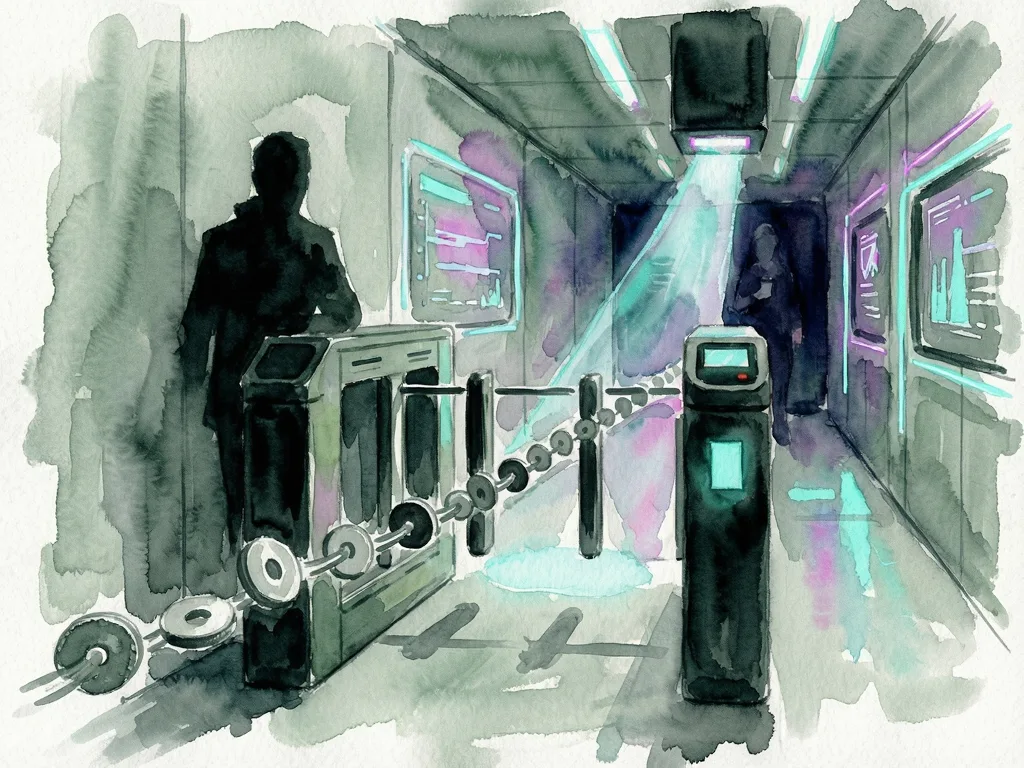
Financial executives are working to stop deepfakes.
Deepfake fraud pressures finance teams to verify payments through known channels and stronger controls.

The central conclusion is that the fraud risk facing corporate finance departments has become more credible, more scalable, and harder to separate from normal business communication. The new survey from Early Warning Services’ Certos identifies AI-enabled fraud as a live operational pressure. The fact that finance departments are described as grappling with this issue is important: it suggests the problem is not hypothetical or confined to a narrow set of victims. It is already reaching teams that are expected to handle money, verification, and trust.
Why the Finding Points to a Structural Change
Corporate finance is not just an accounting function. It is one of the few places in a company where identity, payment, and authority intersect. A fraudster who can appear legitimate to a finance team does not need to break into a bank system. They may only need to make a payment request, a vendor change, or an urgent transfer look credible enough to pass the first screen.
The Early Warning Services’ Certos survey result points to a shift in that first screen. Fraud is no longer limited to poorly written messages or obviously fake requests. AI-enabled deception can make fraudulent communication look polished, personalized, and contextually believable. That changes the operational environment for finance departments, which are often asked to act quickly while still maintaining control.
Finance Teams Are the Natural Target
Corporate finance departments typically touch payments, vendor records, banking details, payroll, receivables, close processes, and executive reporting. These are exactly the areas where fraud can produce direct financial loss or reputational damage.
The risk is not only external attack. It is also process risk. A finance worker may be under pressure to meet a payment deadline, support a vendor transition, or act on what appears to be an executive instruction. Fraudsters exploit that pressure. When AI is involved, the pressure can be amplified because the fake communication can mimic tone, formatting, and internal language more easily than before.
For readers, the practical implication is clear: the weakest link is often not technology alone. It is the speed and confidence with which a human accepts a request as genuine.
How AI Can Make Fraud More Effective
AI-enabled fraud can take several practical forms. It can help generate emails that sound like a known colleague, supplier, bank, or client. It can support fake documents, synthetic identities, or fabricated transaction narratives. It can also make voice or video impersonation more convincing, which matters when finance teams rely on callbacks or approval signals from familiar people.
There is also a scale effect. Manual fraud often depends on one attacker crafting one message. AI-assisted fraud can produce many variants quickly, test which ones work, and adapt after failures. For a finance department, that means the volume and quality of deceptive requests may both rise.
The deeper risk is not that every fraud succeeds. The risk is that the cost of trying falls for the fraudster while the cost of verification rises for the company. When verification becomes too slow, businesses feel pressure to loosen controls. When controls stay strict, legitimate payments may be delayed. Finance teams are forced to choose between speed and safety under conditions of uncertainty.
What the Survey Result Implies for Controls
The Early Warning Services’ Certos finding suggests that finance leaders should treat AI-enabled fraud as a control design problem, not only a cybersecurity checklist item. The issue is not just whether staff can spot a fake email. It is whether the organization has enough independent friction to stop a payment before it leaves the company.
A layered response is more realistic than a single tool or policy. Finance teams should require verification through already-known contact channels for payment changes, bank-detail changes, and urgent transfers. Approval duties should be separated so that one person cannot both create and authorize a risky payment. Exception processes should be short enough to work during real fraud attempts, but strict enough that “urgent” cannot be used as an automatic override.
Training should also change. If staff are trained only on obvious phishing examples, they may miss messages that look professionally written, reference real projects, or imitate internal style. Better training should test the harder scenario: a message that looks normal, comes from a familiar-sounding source, and asks for a small change that enables a larger payment.
Uncertainties and Risks That Remain
The survey result signals pressure, but several important questions remain unclear. The available summary does not specify the sample size, the industries covered, the company sizes included, the geographic mix, or the exact definition used for AI-enabled fraud. It also does not show whether the pressure comes mainly from text-based deception, synthetic voice or video, fake documents, automated phishing, or a combination of these.
That uncertainty matters because controls that work in one organization may fail in another. A large finance operation with strict segregation of duties may handle this differently from a small accounting team where one person does many tasks. A company that processes many international payments may face different regional and banking constraints than a business that mainly pays local suppliers.
There is also a risk of overreaction. If every unusual payment request is blocked, legitimate vendors and employees may suffer delays. That can create pressure to relax controls, which can open the door to fraud. The balance depends on transaction volume, payment methods, vendor base, regulatory obligations, and the organization’s tolerance for false positives.
What This Means for Readers
For finance staff, the message is to treat familiarity and polish as warning signs, not proof. A message that sounds right, looks official, and feels urgent should still be checked through a channel the organization already trusts.
For business owners, the message is to ask simple but uncomfortable questions: Who can authorize payments? How are banking changes verified? What happens if a request appears to come from an executive? Is there a second check for unusual transfers? If the answers are unclear, the organization is exposed.
For risk, compliance, and technology teams, the message is to include AI-generated deception in threat modeling. Fraud scenarios should test not only malicious attachments or stolen credentials, but also realistic impersonation, payment redirection, and social engineering that exploits normal business urgency.
Disclosure
This article is an independent informational analysis and is not affiliated with Early Warning Services’ Certos. It is not official guidance and is not investment advice. Fraud-prevention, payment-verification, reporting, and monitoring services may involve fees, and availability or requirements may be subject to regional restrictions, industry rules, payment-network conditions, and local legal frameworks.
SubjectsDeepfake FraudCorporate Financepayment controlsVendor VerificationSocial Engineering
Read next

Letters 0
- No letters yet. Be the first to write in.