
Indian merchants are preparing for Unified Payments Interface charges amid a surge in cash inflows.
India's Unified Payments Interface fee on purchases over $20 ends zero-fee status, raising costs and boosting cash use as merchants resist.
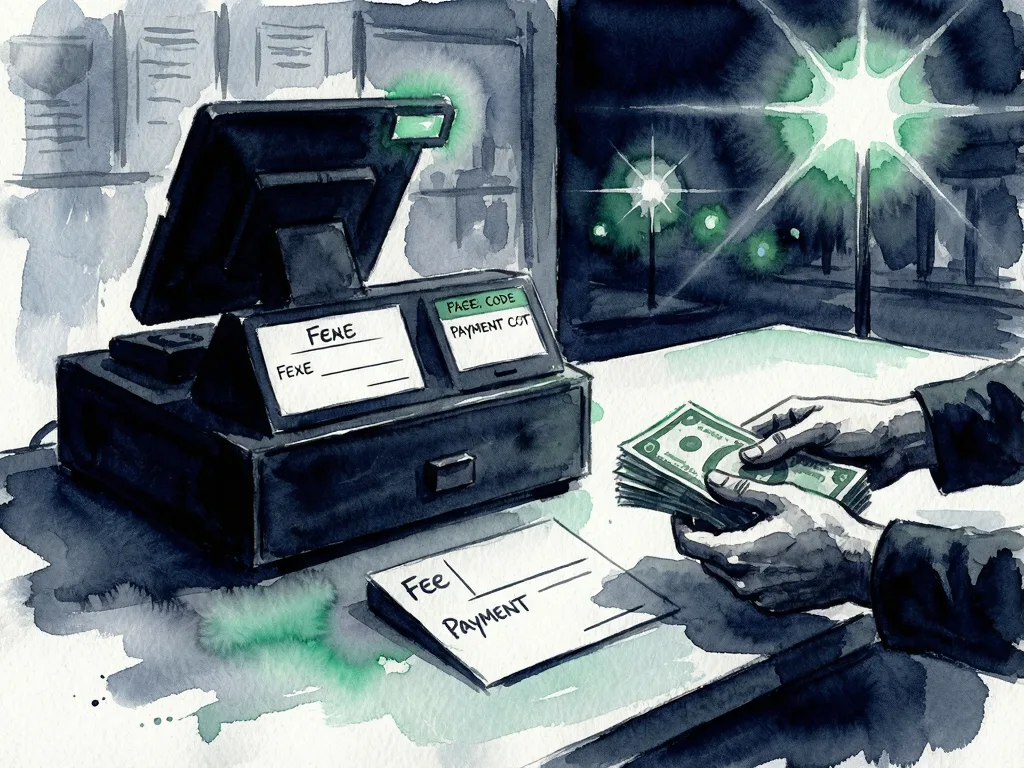
India’s Unified Payments Interface Will Introduce a 0.4 Percent Merchant Fee on Purchases Above $20, and Cash Use Could Rise
The core judgment
India’s Unified Payments Interface is the country’s most popular method to pay merchants. The new merchant discount rate of 0.4 percent for purchases above $20 (₹2,000) is set to take effect soon, with full effect scheduled for November 2026. The fee is modest in size, but it ends a six-year period in which the interface had zero merchant fees attached to transactions. That change gives businesses and customers a reason to reconsider whether to keep cash, even as the interface has grown since it was launched in 2016.
What the fee changes, and what it does not
Person-to-person transactions will remain free with zero fees attached, while small vendors classified as person-to-person merchants, those receiving up to ₹1 lakh a month through the interface, are also exempt. The new charge therefore does not apply to every payment. It applies to purchases above $20 (₹2,000), and it is scheduled to take full effect in November 2026.
The reported resistance is still strong. According to a poll by Local Circles, 83 percent of the 32,000 respondents said they are not willing to take on the extra costs with the 0.4 percent surcharge. That does not prove that merchants or consumers will stop using the interface, but it shows that the fee is being read as an extra cost.
The cost recovery argument
The National Payments Corporation of India defended the merchant fee as a means to cover the $2.1 billion (₹200 billion) annual costs to maintain the interface. The case for the fee is therefore about sustainability: a payment network that has become one of the leading digital payment services in the world, processing more than 242 billion transactions last year and becoming the new standard for digital person-to-person and account-to-account payments, may need a funding model that does not rely only on zero merchant fees.
The scale makes the policy tradeoff harder to ignore. The interface handled 50 percent of global real-time digital payments across 2025, processing 228 to 240 billion annual transactions with total volume reaching $3.5 trillion. One of the reasons why it has been a success in India is its seamless convenience for small payments, which is also why the 0.4 percent merchant discount rate starts at $20.
The cash signal
The cash response is the part that gives the story depth. With merchant charges set to come into full effect in November 2026, both merchants and consumers are beginning to hold onto cash in parallel with the interface’s growth since it was launched in 2016. This is in spite of Prime Minister Narendra Modi’s demonetisation efforts of the Indian Rupee in 2016 in a bid to curb tax evasion and other illicit financing.
Madan Sabnavis, Chief Economist of the Bank of Baroda, believes “people have actually been accumulating more and more cash.” Findings from The Financial Times further backed this cash resurgence, with up to $448 billion (₹42.7 trillion) of cash in circulation according to the Reserve Bank of India.
Other reported indicators point in the same direction. Despite the interface’s success, in late 2025 and in the present day, local cash usage saw an uptick from automatic teller machine withdrawals. Total currency circulation has grown from 37.24 lakh crore in the financial year 2024-25 to 42.43 lakh crore in mid-to-late 2026, with an annual growth rate reaching 11.1 percent, down from 11.9 percent in 2025, but an increase from 5.3 percent in 2024.
Madhavi Arora, Chief Economist for Emkay Global Financial Services, projects cash circulation will grow at 12 percent this year, with inflation playing a key role in this, which has risen to 5.5 percent in India this year.
Uncertainty and risk
The uncertainty is whether the fee will change behavior enough to matter. The source shows a poll of stated unwillingness and several cash-related data points, but it does not show how many merchants will absorb the 0.4 percent cost, pass it to customers, or stop accepting the interface for larger purchases. Cash growth may also reflect inflation, as Madhavi Arora’s projection links it to inflation, not only the merchant fee.
For readers, the practical question is narrower. Small vendors receiving up to ₹1 lakh a month remain exempt, and person-to-person payments remain free. The fee lands on purchases above $20 (₹2,000), where convenience has historically mattered less than at the smallest ticket sizes. If merchants and consumers still prefer cash despite the interface’s scale, the new fee could become a stress test for a payment network that grew by removing friction, not adding it.
Fee and scope disclosure
This article is informational and does not provide investment advice. The reported fee is a merchant discount rate of 0.4 percent for purchases above $20 (₹2,000), with full effect scheduled for November 2026. Person-to-person transactions remain free with zero fees attached, and small vendors classified as person-to-person merchants receiving up to ₹1 lakh a month through the interface are exempt. The reporting scope is India’s Unified Payments Interface.
Image credit: ssi77 / Shutterstock.com
SubjectsUnified Payments Interfacedigital paymentsIndiaCash UsageUPI
Read next

Letters 0
- No letters yet. Be the first to write in.