
Payment Expert Podcast asks whether cryptocurrency exchanges can protect customers after the Binance hack.
Binance hack exposes custody risk from hot wallets, exchange concentration, and weak internal controls; freezes and pledges are limited protection.
Core judgment: a single breach exposed a centralised custody model
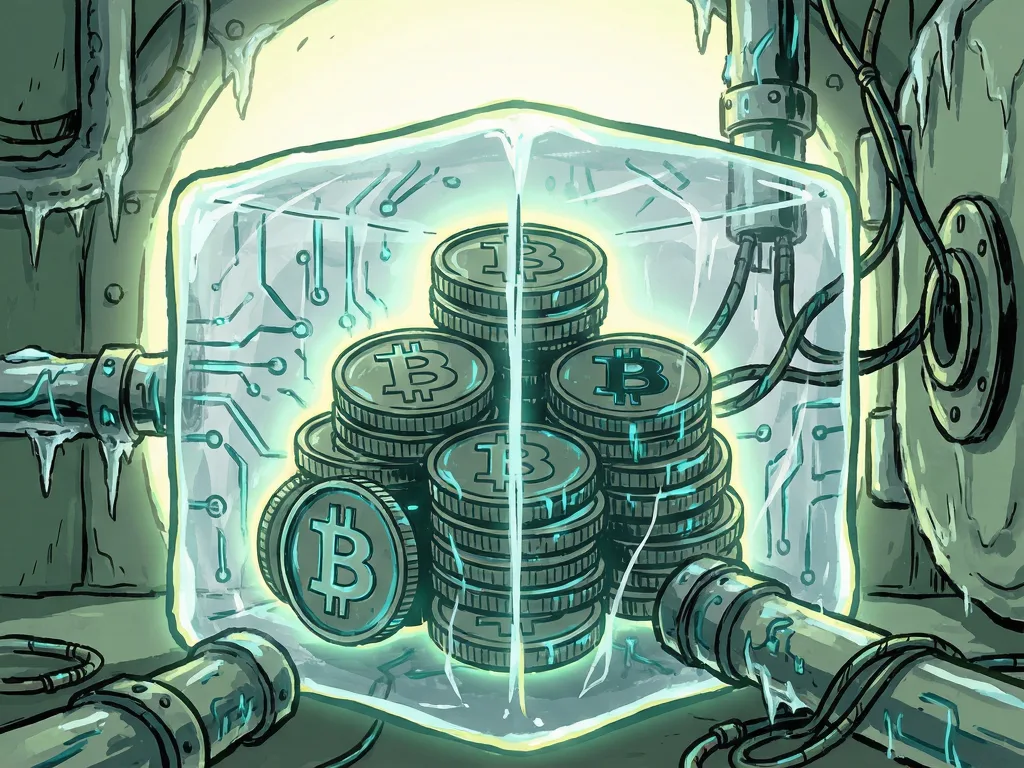
The Payment Expert Podcast examined how one compromised laptop led to the largest crypto theft on record at Binance, and the case shows that the main risk for many crypto users is not only price volatility but custody design. A stolen or compromised employee device became enough to move approximately $6.36 billion out of Binance wallets on ten blockchains on 29 October, most of it in about 20 minutes. The incident suggests that when large exchanges hold user assets, control over withdrawal systems, hot wallets, and internal access can concentrate risk in a way that individual users cannot monitor directly.
The deeper problem is not that the attack used an exotic method. The podcast noted that neither the Binance incident nor a separate theft at Mercado Bitcoin used a new technique, and that attackers are targeting the largest exchanges. The scale came from existing weaknesses: an employee device, access to a service container, unauthorised withdrawal transactions, and the fact that customer funds are pooled inside platforms that most holders rely on instead of running their own wallets.
How the $6.36 billion moved
TRM Labs attributed the Binance attack to TraderTraitor, North Korea’s state-backed hacking unit, and the FBI has since said North Korea was responsible. Binance said its initial investigation pointed to a compromised laptop, which let an attacker reach a service container and submit unauthorised withdrawal transactions.
The podcast discussed how access through an employee’s device made the withdrawals appear authorised until the funds had left. That detail matters. It is not simply a case of a weak password or a stolen key. If an attacker can operate inside a platform’s own transaction pipeline, the system may treat the movement as legitimate until the loss is large enough to trigger detection. Binance later said it had found additional points of breach and has yet to publish a full post-mortem, so the full chain of failures remains uncertain.
Hot wallets make platform assets a repeat target
The Binance case was not isolated. Mercado Bitcoin lost assets from its hot wallets on 2 November, with Chainalysis estimating about $49 million was drained across 17 blockchains. Hot wallets stay connected to the internet and pool customer funds, which the podcast said makes them a target. Brazil’s largest crypto exchange said customers would not lose assets, with an attacker not yet named.
The pattern is clear: large amounts sitting in internet-connected custody systems attract attackers. The risk is not only technical but structural. If users keep assets on exchanges, the platform becomes a single point of failure. The more assets and trading activity that concentrate in a few venues, the higher the reward for an attacker who finds one internal access path.
Concentration: 42.7% of top-ten spot volume
Most holders leave their crypto with an exchange rather than run their own wallet, which the podcast said has concentrated both assets and risk in a few platforms. Binance is central to that concentration. According to CoinGecko, Binance accounted for 42.7% of spot volume across the ten largest centralised exchanges in Q3 2026, up from 38.7% in Q2.
That market share means a failure at one venue is not only a Binance problem. It becomes a stress test for the broader exchange model. If one platform can hold such a large share of trading activity, its internal controls, incident response, and customer protection policy become effectively systemic. The podcast framed the Binance subject of record hack as part of a wider exchange concentration issue: fewer platforms hold more assets, and more users depend on those platforms for custody.
The stabilisers: freezes, reserves, and a discretionary pledge
The response to the Binance hack also relied on central control. Tether froze about $1.6 billion of USDT linked to the theft, and Circle CEO Jeremy Allaire said his firm froze more than $800 million of USDC. The podcast team discussed how freezes and corporate reserves differ from crypto’s founding promise that no single party controls the system.
This creates a practical tension. On one side, users benefited from rapid containment: stablecoin issuers could freeze stolen funds. On the other side, that containment depended on companies making discretionary decisions. Binance has set aside about $6.34 billion of company funds to cover all losses, alongside its Secure Asset Fund for Users (SAFU), which holds about $1 billion. It has no legal obligation to do so.
The podcast said the pledge protects the exchange’s standing with its 323 million registered users, but leaves open what happens if a future hack exceeds what it can pay. The protection is therefore reputational and financial, but not a legal guarantee. The $6.36 billion loss was almost covered by the $6.34 billion set aside, with SAFU adding about $1 billion, yet the coverage mechanism depends on the company choosing to act and having enough resources.
The coverage gap: FDIC-style backstops, MiCA, and Binance’s exclusion
Bank customers in most markets have a statutory backstop, such as the US Federal Deposit Insurance Corporation’s cover of up to $250,000 per depositor per bank. Crypto has no equivalent universal guarantee. The nearest crypto equivalent is Article 75 of the EU’s Markets in Crypto-Assets Regulation (MiCA). It makes authorised custodians liable for client losses from incidents attributable to them, capped at market value at the time of loss.
Binance falls outside that framework because it withdrew its MiCA licence application in Greece in June and stopped serving EU customers. It remains among the largest crypto exchanges globally with a presence in more than 100 countries. That leaves a gap between user expectations and legal protection. Many users may assume that if a platform is large, well-known, and holds their assets, some form of mandatory recovery rule applies. The source facts show that it may not.
For EU customers, the consequence is direct: Binance stopped serving them, so the MiCA custodian liability rule does not apply to its current relationship with that market. For users in other regions, the protection may depend on platform policy, company reserves, incident response, and whether the exchange chooses to cover losses.
What readers should take from the two hacks
The Binance and Mercado Bitcoin incidents point to the same lesson: exchange custody is efficient, but it shifts risk into the platform’s internal systems. Hot wallets are useful for liquidity, yet they are exposed because they are online and pooled. Large market share makes a venue more important, yet it also makes it a more attractive target. Fast freezes and corporate funds can limit damage, but they are not the same as a statutory customer guarantee.
There are still unknowns. Binance has not published a full post-mortem, and Mercado Bitcoin had not named an attacker. The podcast’s analysis shows that neither incident required a new attack method. That makes the uncertainty harder to ignore: if known techniques can cause billions in losses, users cannot assume that “novel” attacks are the only risk.
For readers, the implication is not to treat any single platform as automatically safe. The facts show that one compromised laptop was enough to trigger a record crypto theft, and that hot wallet exposure could drain tens of millions across many blockchains. The protection model depends on company reserves, issuer freezes, and platform discretion, while legal coverage varies by jurisdiction and custodian status.
Disclosure
This is an independent article, not an official Binance, Mercado Bitcoin, TRM Labs, Chainalysis, CoinGecko, Tether, Circle, or podcast publication. It is not investment advice. Fees and regional restrictions can affect access and outcomes; the source notes Binance stopped serving EU customers and remains present in more than 100 countries.
SubjectsBinanceSecurityTraderTraitorCrypto ExchangesCustody
Read next

Letters 0
- No letters yet. Be the first to write in.