
Digital wallet usage reaches 21 percent among financially stressed grocery shoppers.
Financial stress is reshaping grocery shopping, boosting digital wallets, online grocery, and value-focused checkout tools for budget control.
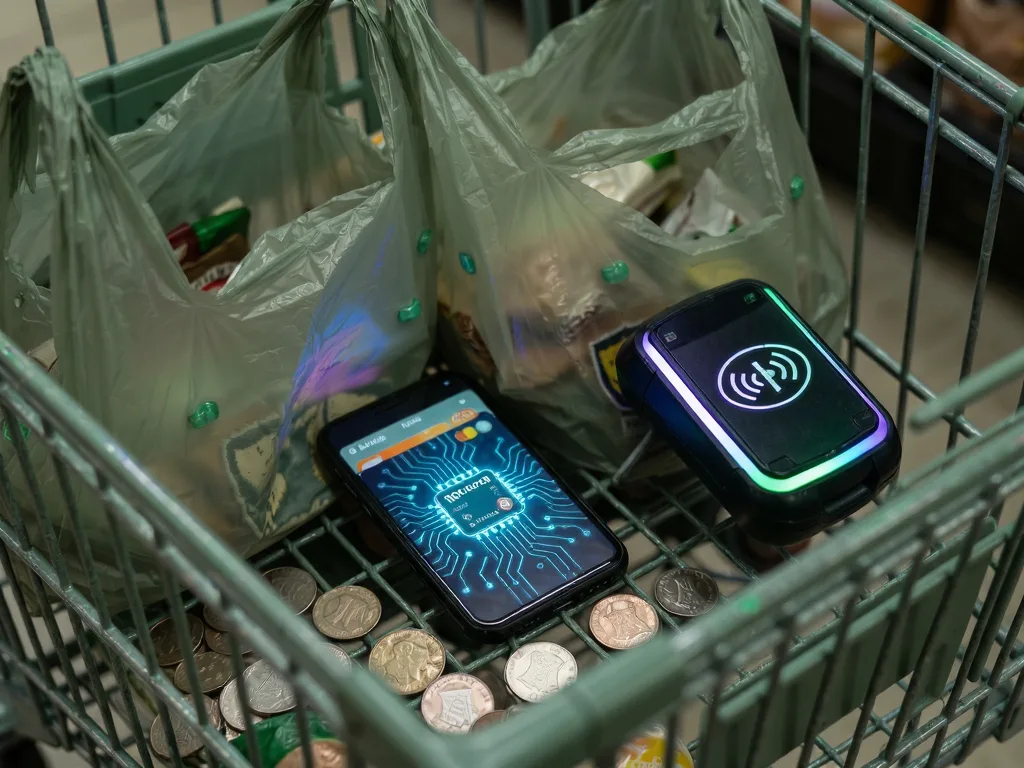
The central finding of “The New Checkout: Crimped Consumers Lean Into Online Retail and Digital Wallets,” a PYMNTS Intelligence report, is that financial stress is not simply reducing grocery spending. It is reshaping how households shop, where they look for value, and which payment tools they trust at checkout. The report is based on a survey of 2,108 U.S. adults conducted from Nov. 14 to Dec. 8, 2025.
Stress can change the basket without changing the household’s need to buy essentials
High-stress consumers spent an average of $109 on their latest grocery purchase, compared with $95 among low-stress consumers. That difference could suggest more pressure, not more comfort. The report notes that larger purchases may reflect bigger households or attempts to consolidate shopping into fewer trips.
For grocers and payment providers, the practical lesson is that the checkout experience is becoming a cost-management point. Customers are not only paying for food; they are trying to understand what a purchase means for the rest of their budget.
Digital wallets are moving from convenience to financial control
The clearest shift appears in payment behavior. Among high-stress consumers, 21% used a digital wallet for their latest grocery purchase, compared with 8% of low-stress consumers. That is a 13-percentage-point gap. Adoption among the high-stress group rose from 10% in March 2024 to 21% in November 2025.
The report suggests that access to installment payments and spending information may help explain why digital wallets are gaining ground. A wallet can function as a household’s financial dashboard, placing payment choices and spending information within reach at the moment of purchase.
This is where the opportunity lies. A digital wallet is no longer only a faster checkout method. For stressed households, it may be a tool for seeing, splitting, and controlling spending.
Walmart draws a larger share of financially stressed online grocery shoppers
Walmart appears to benefit from this value-seeking behavior. Among high-stress online grocery shoppers, 56% made their latest purchase at Walmart, compared with 50% of low-stress shoppers. The difference was wider in stores: 37% versus 26%.
Those results suggest that consumers facing tighter budgets are not choosing one channel over another. They are searching for value across shopping channels. The report points to an opening for grocers: make savings easier to find wherever customers choose to buy, whether online, in store, or through a mix of both.
Online grocery appeals to consumers under pressure
High-stress consumers were 6 percentage points more likely than low-stress consumers to purchase groceries online. The report suggests that digital discounts and greater budget control could contribute to that difference. Convenience may also play a role for people with limited time to visit a store.
Still, the findings do not establish which explanation carries the most weight. Online grocery may be gaining under financial pressure because it offers savings, control, time flexibility, or all three at once. That uncertainty matters for merchants and payment providers: a feature that looks like convenience may also function as a budget tool.
Parents, millennials and Gen Z are under pressure, but grocery spending remains stable
About one in four parents with children under 18 experienced high financial stress, as did roughly one in four millennials and Gen Z consumers. Yet grocery purchase amounts overall remained relatively stable, averaging $98 in November 2025 versus $95 in January.
That stability is important. Households are still buying essentials. The pressure is not disappearing from grocery demand; it is moving into the checkout decision. Grocers have an opportunity to support repeat purchases through accessible savings and useful payment choices.
What this means for grocers and payment providers
The report points to a practical path: help customers manage costs while keeping checkout straightforward. Digital wallets, installment access, spending summaries, and clearer value signals may all matter more when households are under pressure.
PYMNTS Intelligence says it works with businesses to uncover insights that fuel intelligent, data-driven discussions on changing customer expectations, a more connected economy and the strategic shifts necessary to achieve outcomes. It describes its work as relying on rigorous research methodologies and a commitment to objective quality, offering trusted data to businesses. As a partner, companies would have access to its team of PhDs, researchers, data analysts, number crunchers, subject matter veterans and editorial experts. The report also asks readers to add PYMNTS Intelligence to their preferred sources list so its news, data and interviews appear in their feeds.
The survey covers U.S. adults, and the source does not provide fee or regional-restriction details for digital wallets or retailers. This is an independent summary of the report, not investment advice.
Subjectsdigital walletsfinancial stressgrocery shoppingonline grocerypayment behavior
Read next


Letters 0
- No letters yet. Be the first to write in.